



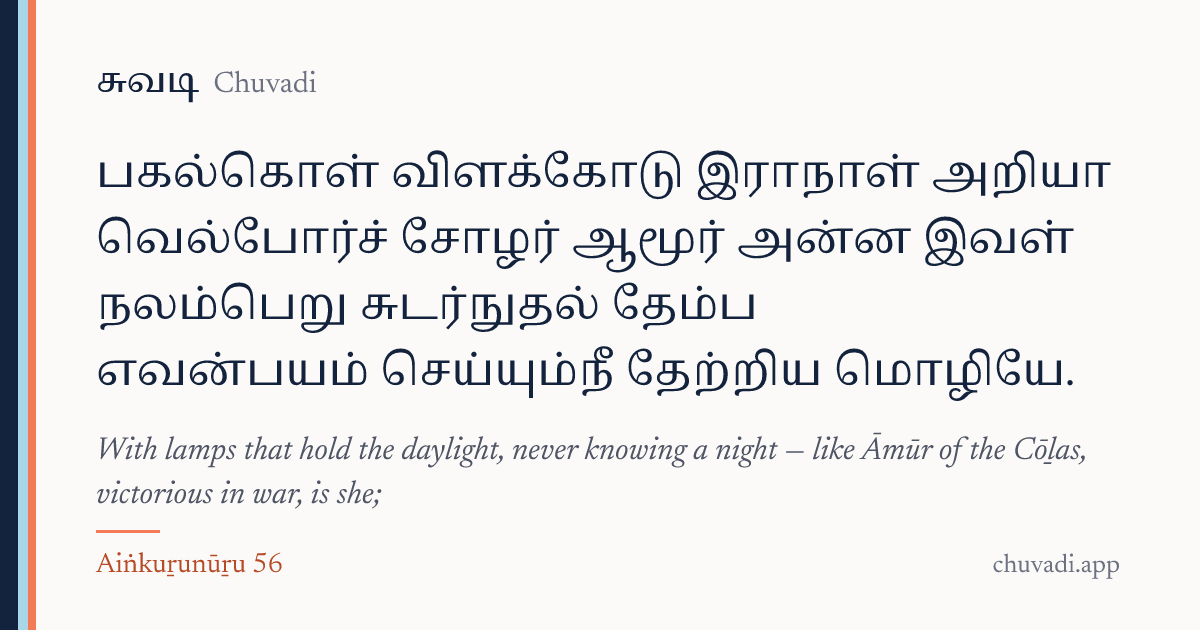

ஐங்குறுநூறு 56 · தோழி கூற்றுப் பத்து
பாடல் · The poem
Tap a word to see where else it occurs.
பொருள் · Meaning in TamilAI
பகலை ஒத்த ஒளியை உடைய விளக்குகளால் இரவு என்பதையே அறியாத, போரில் வெற்றி பெறும் சோழர்களின் ஆமூரைப் போன்றவள் இவள். அழகு பெற்று ஒளிவீசிய இவளுடைய நெற்றி வாடிப் போகும்போது, நீ இவளைத் தேற்றுவதற்காகச் சொன்ன சொற்கள் என்ன பயனைத் தரும்?
மருதத் திணை; தோழி தலைவனிடம் கூறியது. ஆமூரின் ஒளியைத் தலைவியின் ஒளிவீசும் நெற்றிக்கு ஒப்பாக்கி, அந்த ஒளி இப்போது மங்குவதைக் காட்டுகிறாள். காக்கப்படாத வாக்குறுதிகளால் பயன் இல்லை என்று இடித்துரைக்கிறாள்.
ஆங்கிலம் · English translationAI
Translation
- With lamps that hold the daylight, never knowing a night —
- like Āmūr of the Cōḻas, victorious in war, is she;
- now that her bright brow, once so lovely, is wasting,
- what good will they do, the words you gave to reassure her?
What the poem says
The comparison now shifts to Āmūr, a town of the Cōḻa kings, described as so full of lamps that it never knows darkness. The heroine is like that town: radiant, her brow shining. The friend, speaking to the hero, sets that radiance against what is happening now, as her brow loses its glow.
The hero once soothed the heroine with promises (tēṟṟiya moḻi, "words that made her trust"). The friend asks what use those words are now. Promises that are not kept do nothing for a woman who is visibly pining.
The picture of a town lit all night is a conventional way of praising a prosperous city. Nothing in the poem tells us more about Āmūr than this.