




ஐங்குறுநூறு 7
பாடல் · The poem
Tap a word to see where else it occurs.
பொருள் · Meaning in TamilAI
ஆதன் வாழ்க, அவினி வாழ்க! அறம் மிகச் சிறக்கட்டும், அறம் அல்லாதது அழியட்டும் என்று எங்கள் தாய் வேண்டிக்கொண்டாள். நாங்களோ, கொத்தான பூக்கள் உடைய மருத மரத்தில் கூட்டமாகக் குருகுகள் தங்கும் குளிர்ந்த துறை உடைய ஊரைச் சேர்ந்தவன், இவளைத் தன் ஊருக்கு அழைத்துக்கொண்டு செல்லட்டும் என்று வேண்டிக்கொண்டோம்.
மருதத் திணை; தோழி கூறுவதாகக் கொள்ளலாம். தலைவன் தலைவியை மணந்து தன் இல்லத்துக்குக் கொண்டு செல்ல வேண்டும் என்பதே விருப்பம். நான்காம் அடி பதிப்பில் சிதைந்துள்ளது; மருதமும் குருகுக் கூட்டமும் என்றே பொருள் கொள்ளப்பட்டுள்ளது, இச்சொற்களின் சரியான வடிவம் உறுதியாகத் தெரியவில்லை. சுற்றத்தோடு ஒரே மரத்தில் தங்கும் குருகுகள், சேர்ந்து வாழும் இல்லறத்தைக் குறிக்கலாம்.
ஆங்கிலம் · English translationAI
Translation
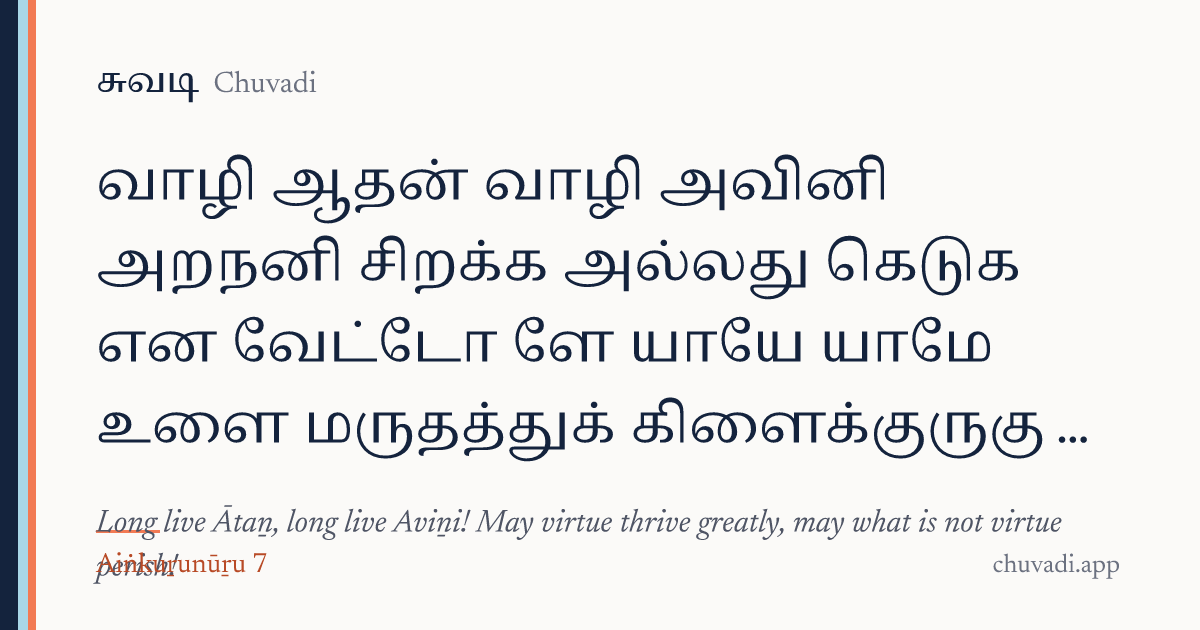
- Long live Ātaṉ, long live Aviṉi!
- May virtue thrive greatly, may what is not virtue perish!
- So our mother wished. And we,
- where flocks of herons settle on the tufted-flowered maruta,
- may the man of the town with cool ghats, to his own town,
- take her with him and go: so we wished.
What the poem says
The mother's prayer is moral: that aṟam, right conduct, should flourish and its opposite be destroyed. The young women's prayer is that the hero should take the heroine away to his own town, that is, bring her into his household as his wife. As in poem 6, this assumes a marriage still to come. The speaker is most likely the friend.
The fourth line is damaged in this edition: உளை மருதத்துக்கி கிளைக்குரு does not read cleanly. It seems to name the maruta tree with tufted (uḷai) blossoms and a kin-flock (kiḷai) of herons (kuruku), and the translation follows that sense, but the exact wording is uncertain. If that reading is right, herons resting together with their kin on one tree make a fitting image for a couple living together in one home.