



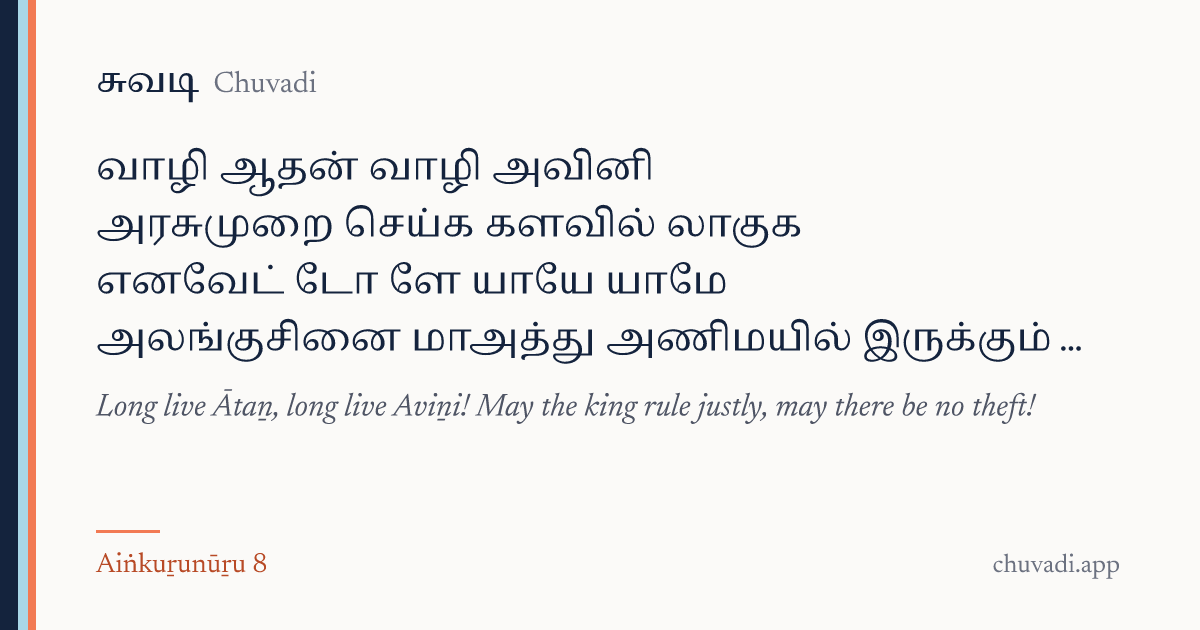

ஐங்குறுநூறு 8
பாடல் · The poem
Tap a word to see where else it occurs.
பொருள் · Meaning in TamilAI
ஆதன் வாழ்க, அவினி வாழ்க! அரசன் முறைப்படி ஆட்சி செய்யட்டும், களவு இல்லாமல் போகட்டும் என்று எங்கள் தாய் வேண்டிக்கொண்டாள். நாங்களோ, அசையும் கிளைகள் உடைய மாமரத்தில் அழகிய மயில்கள் தங்கியிருக்கும், பூக்கள் நிறைந்த ஊரைச் சேர்ந்தவன் இங்கே செய்த சூளுரை உண்மையாகட்டும் என்று வேண்டிக்கொண்டோம்.
மருதத் திணை; தோழி கூறுவதாகக் கொள்ளலாம். தலைவன் தந்த வாக்கு பொய்க்கக் கூடாது என்பதே விருப்பம். ஐந்தாம் அடி பதிப்பில் சிதைந்துள்ளது; "பூக்கஞல் ஊரன் சூள் இவண்" என்று திருத்திப் பொருள் கொள்ளப்பட்டுள்ளது. "களவு" என்ற சொல் திருட்டையும் மறைவான காதலையும் குறிக்கும்; இரண்டாம் பொருளும் இங்கு இருக்கலாம்.
ஆங்கிலம் · English translationAI
Translation
- Long live Ātaṉ, long live Aviṉi!
- May the king rule justly, may there be no theft!
- So our mother wished. And we,
- where lovely peacocks perch on the mango's swaying boughs,
- of the man of the flower-crowded town, may the oath, here,
- come true: so we wished.
What the poem says
Just rule and a land without thieves are the mother's wishes. The young women ask that an oath the hero once swore, here, in this place, should prove true. A lover's oath (cūḷ) is a recurring concern in marutam: the hero swears he will not leave or stray, and the women fear he will break his word. The speaker is again most likely the friend.
The peacock resting on a swaying mango bough is an image of beauty at ease, which may hint at the heroine's hope of a settled life with him.
Line 5 is garbled in the edition. புக்கஞல் ஊரன் is the decade's formula பூக்கஞல் ஊரன், and சுளீவண் is best read as சூள் இவண், 'the oath, here'. That reading fits the refrain well, but it is a correction, not the printed text. 'There be no theft' (kaḷavu il) may also carry a second sense, since kaḷavu is the word for secret, unmarried love; the poem may be wishing for an end to secrecy.