



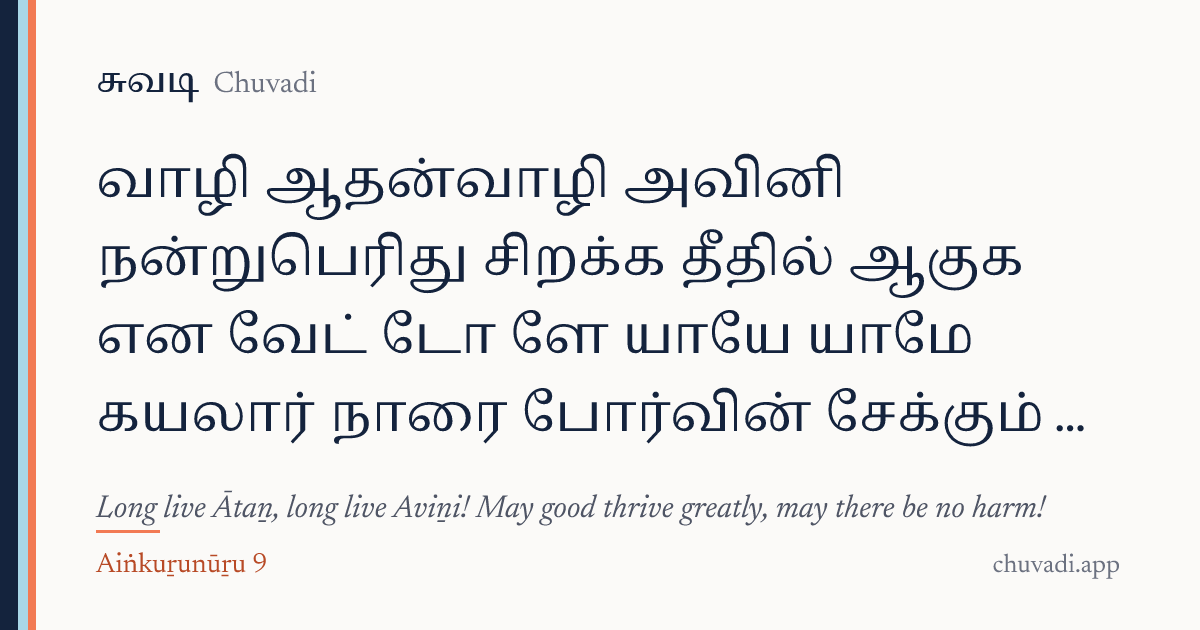

ஐங்குறுநூறு 9
பாடல் · The poem
Tap a word to see where else it occurs.
பொருள் · Meaning in TamilAI
ஆதன் வாழ்க, அவினி வாழ்க! நன்மை பெரிதும் சிறக்கட்டும், தீமை இல்லாமல் போகட்டும் என்று எங்கள் தாய் வேண்டிக்கொண்டாள். நாங்களோ, கயல் மீனை வயிறார உண்ட நாரை நெற்போரில் உறங்கும் குளிர்ந்த துறை உடைய ஊரைச் சேர்ந்தவனின் நட்பு, ஊரார் பேசும் அம்பலாக ஆகிவிடக் கூடாது என்று வேண்டிக்கொண்டோம்.
மருதத் திணை; தோழி கூறுவதாகக் கொள்ளலாம். அம்பல் என்பது ஊரார் மறைவாகப் பேசும் பழிச்சொல்; களவுக் காதல் வெளிப்பட்டுவிடுமோ என்ற அச்சம் இதில் தெரிகிறது. மீன் உண்டு நெற்போரில் உறங்கும் நாரை, இன்பம் நுகர்ந்து யாரும் அறியாமல் இருக்கும் தலைவனைக் குறிக்கலாம்; இது உறுதியில்லை.
ஆங்கிலம் · English translationAI
Translation
- Long live Ātaṉ, long live Aviṉi!
- May good thrive greatly, may there be no harm!
- So our mother wished. And we,
- where the stork, full of carp, sleeps in the stacks of sheaves,
- of the man of the town with cool ghats, may the friendship
- never become gossip: so we wished.
What the poem says
The young women here pray that their bond with the hero should not become ampal, the whispered talk of the town. In akam poetry, gossip (ampal, and its louder form alar) is what threatens a secret love before marriage. The poem therefore seems to belong to the period before a wedding, like poems 6 and 7. The speaker is most likely the friend, who has most reason to fear what people say.
The stork that has gorged on carp and now sleeps in the stacked sheaves of paddy is a picture of a creature that has had its fill and lies unseen. It may suggest the hero, satisfied and resting where no one notices; whether the poet intends that is uncertain.
The edition's spacing (ஆதன்வாழி, வேட் டோ ளே) is a matter of word division and does not affect the sense.