




அகநானூறு 102
பாடல் · The poem
Tap a word to see where else it occurs.
பொருள் · Meaning in TamilAI
பிடரிமயிருடைய விலங்கைப் போன்ற வலிமையுடைய கானவன், உயர்ந்த தினை விளைந்த பெரிய புனத்தில் பரண் மேல் பிழிந்த கள்ளால் மகிழ்ந்து கிடந்தான். அரைத்த சந்தனத்தில் ஊறிய கரிய கூந்தல் மெல்ல வரும் தென்றலில் உலர, ஓயாத கைகளால் தன் அடர்ந்த நீண்ட மயிரைக் கோதிக்கொண்டு, குறமகள் பெரிய மலையின் பக்கத்தில் குறிஞ்சிப் பண்ணைப் பாடினாள். அப்போது, தினைக்கதிரைப் பறிக்காமலும், நின்ற இடத்திலிருந்து நகராமலும், மூடாத பசிய கண்கள் உறக்கம் பெற்று, சட்டென்று போரை விரும்பும் இளம் களிறு உறங்கும் நாட்டின் தலைவன், சந்தனம் பூசிய மார்பில் வரிவண்டுகள் ஒலிக்க, மாலையும் கண்ணியும் அணிந்து, வலக்கையில் வேலோடு, காவலர் அறியாதபடி கவனமாக, தாழிடாத கதவை மெல்லத் தள்ளி உள்ளே வந்து, ஏக்கத்தால் மெலிந்த என் மார்பைத் தழுவி, தோள்களைச் சேர்ந்து, இனிய சொற்களைக் கலந்து பேசிச் சென்றான், தோழி! அப்படியிருக்க, இன்று நாம் காண்பது என்ன? அவன் அருள் செய்யாததால், பலரும் ஒன்றுகூடி மகிழ்ந்து பேசும் அலராகிவிட்டது, அடர்ந்து சுருண்ட கூந்தலுடைய என் ஒளிரும் நெற்றியின் பசலை!
இது குறிஞ்சித் திணை; களவில் வந்து பின் வராமல் விட்ட தலைவனை நினைத்துத் தலைவி தோழியிடம் கூறுவது. காவலன் கள்மயக்கத்தில் கிடக்கக் குறமகளின் பாட்டால் களிறு உறங்குவது, தலைவன் இடையூறின்றி வந்ததையும் அவன் தலைவியால் வசமானதையும் இறைச்சியாக உணர்த்துகிறது. பதினாறு முதல் பதினெட்டு வரையான அடிகளின் தொடர்பு முழுமையாக உறுதியில்லை.
ஆங்கிலம் · English translationAI
Translation
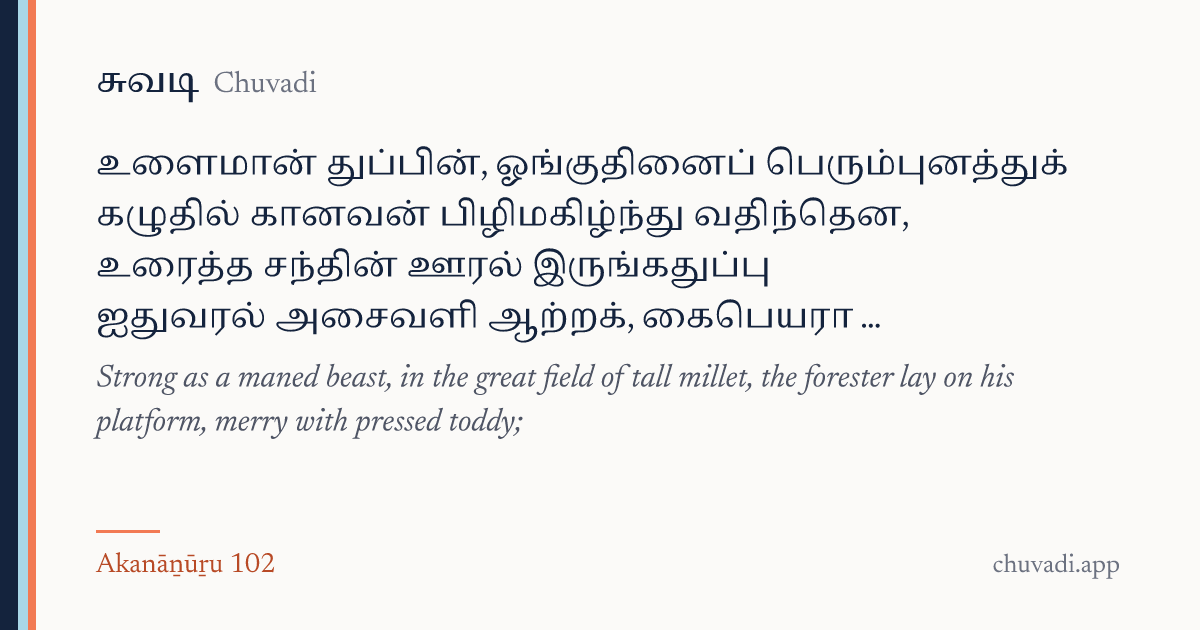
- Strong as a maned beast, in the great field of tall millet,
- the forester lay on his platform, merry with pressed toddy;
- her dark hair, soaked in ground sandal,
- drying in the gently coming breeze, with never-resting hands
- she combed out her long, thick hair, the hill girl,
- and on the side of the great mountain sang kuṟiñci;
- and, not taking the millet ears, not moving from where it stood,
- its green eyes that never close winning sleep, all at once
- the young bull that loves fighting sleeps — lord of such a land,
- with striped bees humming on his sandal-smeared chest,
- wearing a garland and a chaplet, a spear in his right hand,
- taking care the guards should not know, gently
- pushing the unbarred door, he came in,
- embraced my breast, wasted with longing, joined my shoulders,
- mingled sweet words, and went away — my friend! —
- so why is it that today we see — because he
- gives no grace, it has become rumour,
- the kind that people gather together to relish —
- the pallor of my bright brow, with its dark, coiled hair?
What the poem says
The heroine speaks to her friend. She remembers a night when her lover came secretly into the house and held her, and she asks why, now that he no longer shows her his love, her pallor has become the talk of the town.
The description of his country is a small, perfect scene. The forester guarding the millet lies drunk on his platform. A hill girl dries her sandal-scented hair in the breeze, combing it, and sings a kuṟiñci song on the mountainside. A young bull elephant, which had come for the millet, stops, does not touch the grain, stands still, and falls asleep, its ever-watchful eyes closed by her music.
The scene works as iṟaicci on several levels. The guard is asleep, so the way is open; a fierce creature is gentled by a girl's song, as the hero was once won by the heroine. Then comes the memory itself: he came with bees humming on his sandal-smeared chest, spear in hand, slipped past the guards, pushed open the door that had been left unbarred, embraced her, spoke sweetly and left.
The ending is bitter. Because he has stopped coming, the paleness of her brow has turned into the kind of rumour people love to gather and share. The sense of lines 16 to 18 is compressed; 'oruṅku vantu uvakkum paṇpiṉ' may describe the gossip or, less likely, her once-happy brow. 'Maned beast' (uḷaimāṉ) may mean a lion or a horse.