




அகநானூறு 109
பாடல் · The poem
Tap a word to see where else it occurs.
பொருள் · Meaning in TamilAI
பல இதழ்களையுடைய மென்மையான மலர் போன்ற மையுண்ட கண்களும், நல்ல யாழின் நரம்பு இசைப்பது போன்ற இனிய சொற்களும் உடைய, எனக்கு இன்பம் தரும் ஒருத்தி வாழும் ஊர் — கொம்பால் நிலத்தை உழும் ஆண்யானைகளின் கூட்டம் திரளும், காடு தன் கொடிகளால் அடிமரங்களைக் கட்டியுள்ள நெடிய மரச்சோலையில் விளையாட்டு விருப்பமுடைய வெளில் துள்ளி ஆடும், மூங்கில் வளரும் அகன்ற நிலத்துக்கு அப்பால் உள்ளது. வெண்மையான நுனியுடைய அம்புகள் விசையோடு எய்யப்பட்டதால் வீழ்ந்தவர்களின், எண்ணிக்கை அறிய முடியாத, தழைகளால் மூடிய பதுக்கைகள் உள்ள பாலைவழியின் கிளைவழிகள் கொள்ளையர் கைக்குச் சென்றுவிட்டதால், அங்கே சென்றவர்கள் மடிந்துபோன பாலைநிலத்தைக் கடப்பவர்கள் கையில் பொருள் இல்லாவிட்டாலும், அவர்களுடைய உடலைப் பற்றி, இனிய உயிரைக் கொல்லாமல் விடுவதில்லை. தப்பி ஓடிய குற்றத்துக்காகப் பெரிய யானைகளின் தந்தங்களையும் வரியுடைய தோல்களையும் வரியாகப் பெறும் அறமில்லாத வேந்தன் ஆளும், வறண்ட பல குன்றுகள் எங்களுக்கும் அந்த ஊருக்கும் இடையே குறுக்கே கிடக்கின்றன!
இது பாலைத் திணை; பொருள்வயின் பிரிந்து சென்ற தலைவன் தலைவியின் ஊர் தொலைவில் இருப்பதை நினைந்து கூறுவது. கொள்ளையரும் அறமற்ற வேந்தனும் உள்ள வழி, இருவருக்கும் இடையிலான பிரிவின் கொடுமையைக் காட்டுகிறது. பன்னிரண்டு, பதின்மூன்றாம் அடிகளின் பொருளும் 'வெளில்' என்ற சொல்லின் பொருளும் உறுதியாகத் தெரியவில்லை; அந்த வேந்தன் யார் என்று பாடல் கூறவில்லை.
ஆங்கிலம் · English translationAI
Translation
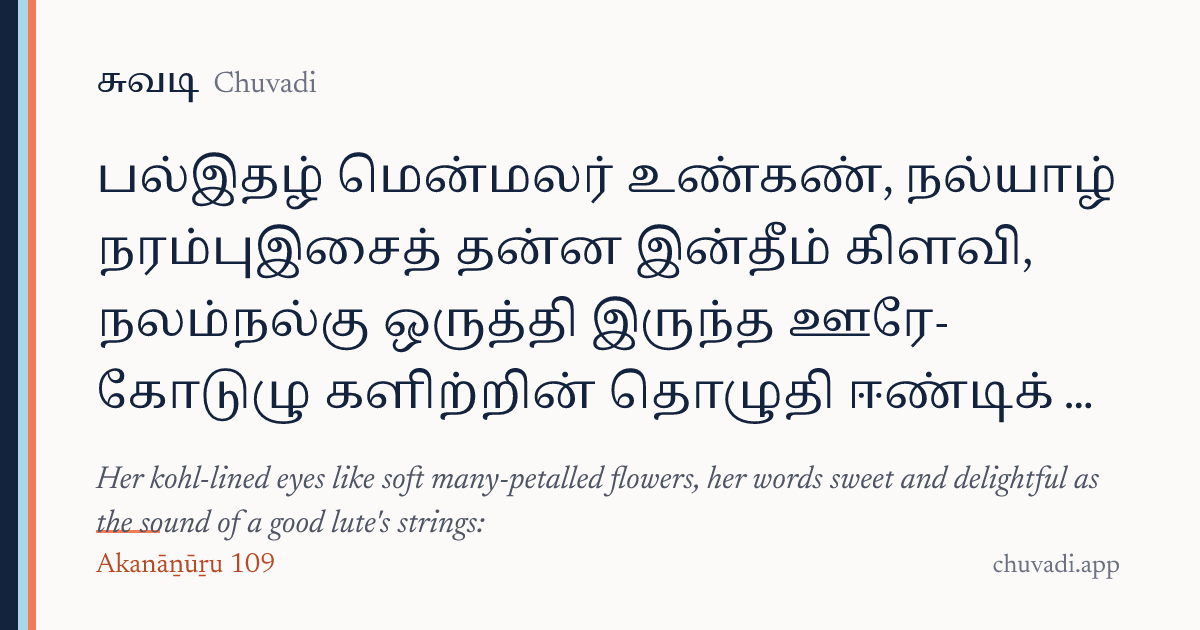
- Her kohl-lined eyes like soft many-petalled flowers, her words
- sweet and delightful as the sound of a good lute's strings:
- the town where she lives, the one woman who gives me joy —
- where herds of elephants that plough the ground with their tusks gather,
- in groves of tall trees whose trunks the forest has bound together,
- where the playful veḷil frisks, in the wide land where bamboo grows;
- those who fell where the white-tipped arrows were loosed
- lie under leaf-heaped cairns past all counting,
- and since the forks of the wasteland fell into the raiders' hands,
- those who travelled there have died; those who cross that desert,
- even when they have no wealth in their hands, the raiders seize their bodies
- and do not spare their sweet lives; for the crime of slipping away and escaping,
- he levies great elephants' tusks and striped hides,
- the unrighteous king who rules there;
- and many parched hills lie between us and it!
What the poem says
The hero speaks, probably to his own heart or to a companion, after he has set out on his journey. He thinks of the girl he has left, her eyes like soft flowers and her voice as sweet as lute strings, and of the town where she lives, and realises how much hostile country now lies between them.
That country is described in two parts. First the forest: elephant herds that churn the ground with their tusks, tall trees bound together by creepers, bamboo thickets. Then the robbers' land: forks of the road where travellers shot by white-tipped arrows lie under cairns heaped with leaves, too many to count, and where raiders kill even those who carry nothing, simply taking their lives.
Over this land rules a king the poem calls 'unrighteous' (aṟaṉ il vēntaṉ). He levies elephant tusks and striped hides, perhaps tiger skins. The exact sense of lines 12 and 13 is uncertain: it seems to say that he exacts these as a penalty on those who try to slip away or escape, but it may describe tribute in general. The poem does not name him, and he should not be identified.
The word veḷil in line 6 is not securely understood; it may name a small animal, perhaps a squirrel, or something else that 'plays' in the bamboo. Pālai is the fitting tiṇai: the hero measures his separation in the distance and danger between him and her.