



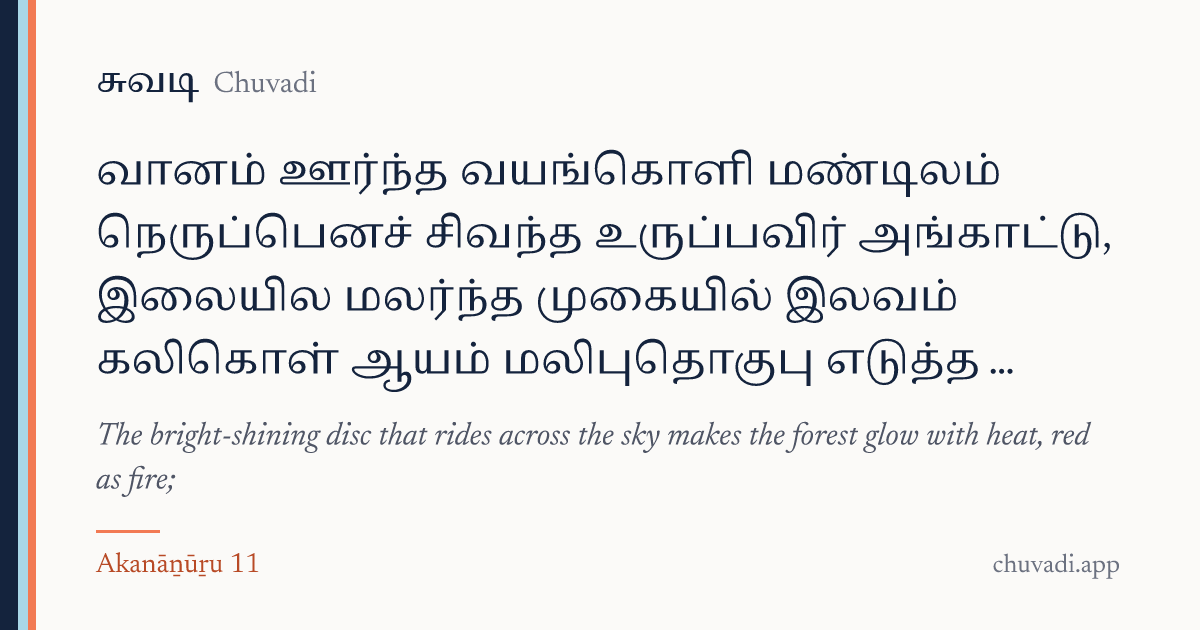

அகநானூறு 11
பாடல் · The poem
Tap a word to see where else it occurs.
பொருள் · Meaning in TamilAI
வானில் ஊர்ந்து செல்லும் ஒளிமிக்க கதிரவனால் நெருப்பைப் போலச் சிவந்து வெப்பம் வீசும் அந்தக் காட்டில், இலவமரம் இலையே இல்லாமல், மொட்டு ஒன்றும் மிஞ்சாமல் மலர்ந்து நிற்கிறது. ஆரவாரத்தோடு திரளாகக் கூடிய மக்கள் ஏந்திய அழகிய விளக்குகளின் நீண்ட வரிசைபோல அது அழகாகத் தோன்றுகிறது. குளங்கள் புழுதியாகிவிட்ட பயனற்ற அந்தக் காட்டை அவர் என்னோடு சேர்ந்து கடந்திருந்தால், நறுமணம் கமழ, விரித்த ஆடைபோலக் குவிந்த மணலுடைய காட்டாற்றின், பூங்கொத்துகள் நிறைந்த தாழ்ந்த கிளைகள் உள்ள மணல்மேட்டில், உடலுக்குள் உடல் புகுந்ததுபோலக் கைகளால் இறுகத் தழுவும் அணைப்பை அவரும் பெற்றிருப்பாரே! இப்போது நீர் சொட்டும் ஒளிமிக்க மலர்களைப் போல, ஓயாமல், வற்றிய குளத்தை நிரப்புவதுபோல நாள்தோறும் அழுவதையே தொழிலாகக் கொண்ட குற்றமற்ற என் கண்களும் அப்போது உறங்கியிருக்குமே!
இது பாலைத் திணை; தன்னை உடன் அழைத்துச் செல்லாமல் பிரிந்த தலைவனை நினைந்து தலைவி தோழியிடம் கூறுவதாகக் கொள்ளலாம். விளக்கு வரிசை போல மலர்ந்த இலவம், கொடிய காட்டிலும் அவரோடு பகிர்ந்திருக்கக்கூடிய அழகைக் காட்டுகிறது; வற்றிய குளத்தை நிரப்புவது போன்ற கண்ணீர், வறண்ட காட்டோடு அவள் துயரத்தை இணைக்கிறது. இறுதி அடிகளின் தொடரமைப்பு செறிவானது; 'ஓ மறந்து' என்பது 'ஓய்வதை மறந்து' என்று கொள்ளப்பட்டது.
ஆங்கிலம் · English translationAI
Translation
- The bright-shining disc that rides across the sky
- makes the forest glow with heat, red as fire;
- there the ilavam has flowered leafless, with no bud left unopened,
- like the lamps that a noisy crowd, gathering in great numbers, has lifted up,
- a long row of lovely flames, it shows its splendour;
- that barren forest, where the pools have turned to dust —
- if he had crossed it together with us, then, sweetly scented,
- on the heaped sand of the forest river, like spread-out cloth,
- on a sandbank where low branches bend with dense clusters,
- an embrace of clasping arms, as if body entered body,
- he too would surely have had! And these lovely eyes,
- like bright flowers dripping with water, never ceasing,
- as if they were filling a dried-up pond, day after day
- now given over to weeping —
- these faultless eyes would surely have found sleep!
What the poem says
The heroine speaks, most likely to her friend, after the hero has left for the wasteland without her. Her complaint is simple: if he had taken her with him, he would not have lost their love and she would not be weeping.
The opening describes the road he has taken. The sun rides the sky and turns the forest red with heat; the ilavam (silk-cotton) has burst into flower with no leaves at all, and its red blossoms stand like a long row of lamps carried by a festive crowd. It is a strange festival-brightness in a land where the pools have dried to dust. The beauty of the flowering ilavam in the dead forest suits her mood: even that terrible place has something lovely in it, and she would have shared it with him.
The middle lines are what might have been. Had they gone together, he could have held her on the sands of a forest stream, under branches heavy with flowers, in an embrace 'as if body entered body'. The 'too' (avarum) is pointed: he has deprived himself, not only her.
The ending turns to her eyes. Now they weep every day, without stopping, like flowers dripping water, as if trying to fill a dried pond; with him they would have slept. The image of the empty pond links her tears back to the dry forest. The syntax of lines 11–15 is compressed, and 'ō maṟantu' is taken as 'forgetting to stop'.