




அகநானூறு 111
பாடல் · The poem
Tap a word to see where else it occurs.
பொருள் · Meaning in TamilAI
அங்கே உள்ளத்தில் மகிழ்ச்சி கொள்ள முடியாமலும், பகைவரின் எள்ளும் நெஞ்சத்திலிருந்து வரும் இகழ்ச்சிச் சொற்களுக்கு நாணியும் அவர் திரும்பி வருவார், தோழி, நீ வாழ்க! அரச யானை சுமந்து செல்லும் துணிக்கொடியைப் போல, அசையும் உச்சியுடைய ஞெமை மரத்தில் சுற்றிப் பின்னிய சிலந்தி வலை, ஓடை மரங்கள் நிறைந்த குன்றில் கோடைக்காற்றோடு அசையும்; அதை மழை என்று மயங்கிக் குழம்பிய சோர்ந்த பல யானைகள் ஒன்றுசேர்ந்து, நோவுடைய நீண்ட கைகளை உயர்த்தி, திரண்ட பாடல்களையுடைய கோடியரின் தூம்புக் குழல் போல மூச்சுவிடும். பாலைநிலத்துக் காட்டுப்பன்றியைக் கொன்ற, நன்றாக வேட்டையாடும் ஆண் செந்நாய் அதை ஓசையின்றி இழுத்துச் செல்ல, சிவந்த செவியுடைய கழுகு அதன் குருதியைக் குடிக்கும்; அக்காட்சி, நெருங்கிய போர் நிகழ்ந்த களத்தில் இரவில் புண்பட்டவர்களைத் தேடுவதற்கு ஏந்திய விளக்கைப் போலத் தோன்றும், வானைத் தொடும் குவிந்த மலைகளைக் கடந்து சென்றவர் அவர்!
இது பாலைத் திணை; பொருள்வயின் பிரிந்த தலைவன் விரைவில் திரும்புவான் என்று தோழி தலைவியை ஆற்றுவிப்பது. சிலந்தி வலையை மழை என மயங்கும் யானைகள் வழியின் வறட்சியையும் பொய்த்த நம்பிக்கையையும் காட்டுகின்றன. முதல் இரண்டு அடிகளின் பொருளும், விளக்கைப் போலத் தோன்றுவது எது என்பதும் உறுதியாகத் தெரியவில்லை.
ஆங்கிலம் · English translationAI
Translation
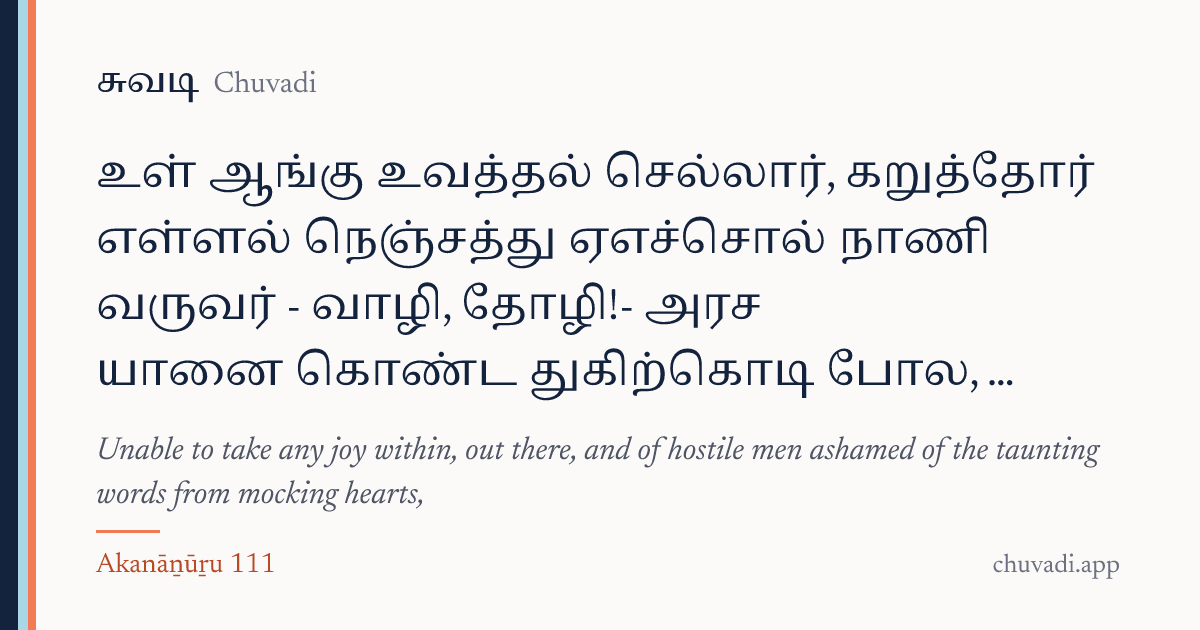
- Unable to take any joy within, out there, and of hostile men
- ashamed of the taunting words from mocking hearts,
- he will come back — long life to you, my friend! — Like the cloth banner
- carried by a royal elephant,
- the spider's web wound about the ñemai with its tossing crown
- sways in the summer wind on the hill of ōṭai trees;
- bewildered, taking it for rain, many together
- the weary elephants lift their long, aching trunks
- and breathe like the pipes of the kōṭiyar with their gathered songs;
- having killed a wild boar of the wasteland, the fine hunter,
- the male red dog, drags it off in silence,
- and the red-eared vulture drinks the blood:
- like the lamp carried by night in the thick of crowded battle
- to search out the wounded, so it appears,
- on the sky-touching, heaped mountains he has crossed!
What the poem says
The heroine's friend comforts her while the hero is away. He will come back, she says: he cannot be content where he is, and he will be ashamed of the taunts of hostile people, who would mock a man who stays away too long or fails in his duty. The first lines are compressed, and this is one reading; they might also mean that the scorn of enemies drove him to go and win wealth in the first place.
The rest of the poem describes the mountains he crossed. A spider's web stretched over a ñemai tree flaps in the hot wind like a royal elephant's banner. Weary elephants, taking the shaking web for a sign of rain, raise their sore trunks and breathe with a sound like the pipes of the kōṭiyar, wandering performers. A red dog drags off the wild boar it has killed, and a red-eared vulture drinks its blood; the scene looks, at dusk, like the lamps that are carried over a battlefield at night to find the wounded.
The images are of false hope and grim aftermath: the elephants deceived by a cobweb into expecting rain, the night search among the fallen. They show how hard the road is, which makes the friend's assurance that he will come back all the more an act of faith.
'Ōṭaik kuṉṟam' may mean a hill of ōṭai trees or a hill with a forehead-like brow; what exactly 'appears like the lamp' in lines 13 to 14 (the vulture's red ears, or the bloody scene) is not stated.