




அகநானூறு 113
பாடல் · The poem
Tap a word to see where else it occurs.
பொருள் · Meaning in TamilAI
துன்பமான காலத்திலும் நட்பிலிருந்து வழுவாமல், உடன்சென்று பின்தொடரும் மாறாத அறிவுரையோடு, சிறிய தலையுடைய இளம் பெண்யானைகளைப் பாடுநர்களுக்குத் தரும் அவர்களின் தலைவனும், போருக்குப் பின் பரிசுகளை வாரி வழங்கும் வள்ளன்மையும் மகிழ்ச்சியும் உடையவனுமான அஃதையைக் காத்து, காவலை நிலைநிறுத்திய பல வேல்களையுடைய கோசரின், இளங்கள் மணக்கும் நெய்தல் வயல்களுடைய வளமான நல்ல நாட்டைப் போன்ற என் தோள்களைத் தழுவிவிட்டு, ஆரவாரமான பழைய ஊர் அலர் எழுப்பிப் பேச, அருள் செய்யாமல் என்னைக் கைவிட்டுச் சென்றார் என் காதலர். 'எப்போதும் கற்களில் மோதியும் தளராத நடையுடைய வலிய அடிகளோடு, நீடித்து நிற்கும் வலிய சுரைக்குடுக்கையில் உணவை வைத்திருப்பவர்கள் கடந்து சென்றாலும், சமயம் பார்த்துப் பகைவர் காவலோடு தங்கியிருக்கும் உணவு நிறைந்த அரண்களிலிருந்து, குவிந்த திமிலுடைய காளைகளோடு பிறருடைய பசுக்களைக் கவர்ந்து செல்லும், அடர்ந்த கரிய பூணும் முதிர்ந்த காம்பும் கொண்ட நெடிய வேலையுடைய, விழாவைப் போலப் பல்வகைச் செழித்த இறைச்சி உணவுடைய, பின்வாங்காத பாணனின் நல்ல நாட்டுக்கு அப்பால், வழிச்செல்லும் பயணிகளைக் கொன்ற பகைவர் தம் படைக்கலங்களைக் கழுவிய சிவந்த கோடுகளுடைய சிறிதளவு நீரும், நுண்மணல் சரிந்த கரையும் உடைய வற்றிய துறையைக் கடந்து, அவர் தொலைவில் இருக்கிறார்' என்று சொல்வதால், சிறுமையுற்ற என் செய்வதறியாத நெஞ்சத்தின் துயர் நீங்க, அழாமல் இருப்பதும் எனக்கு இயலும். பருத்த அடிமரத்தின் அசையும் அழகிய கிளையில் உள்ள கூடு வெறிச்சோடியதும் வேறு நிலத்துக்குப் பறந்து செல்லும் பறவையைப் போல, உடல் இங்கேயே கிடக்க, என் உயிர் அவர் வேலை செய்யும் இடத்துக்குப் போய்ச் சேரட்டும்!
இது பாலைத் திணை; பொருள்வயின் பிரிந்த தலைவனை நினைந்து தலைவி தோழியிடம் கூறுவது. கூடு வெறுமையானதும் பறந்துபோகும் பறவையைப் போல் உயிர் அவனிடம் செல்லட்டும் என்ற உவமை, பிரிவின் உச்சத்தைக் காட்டுகிறது. பத்து முதல் பதினேழு வரையான அடிகளின் தொடர்பும், 'பாணன்' என்பது ஒரு தலைவனின் பெயரா என்பதும் உறுதியாகத் தெரியவில்லை; இங்கு வரும் அஃதை வள்ளலாகக் கூறப்படுகிறான்.
ஆங்கிலம் · English translationAI
Translation
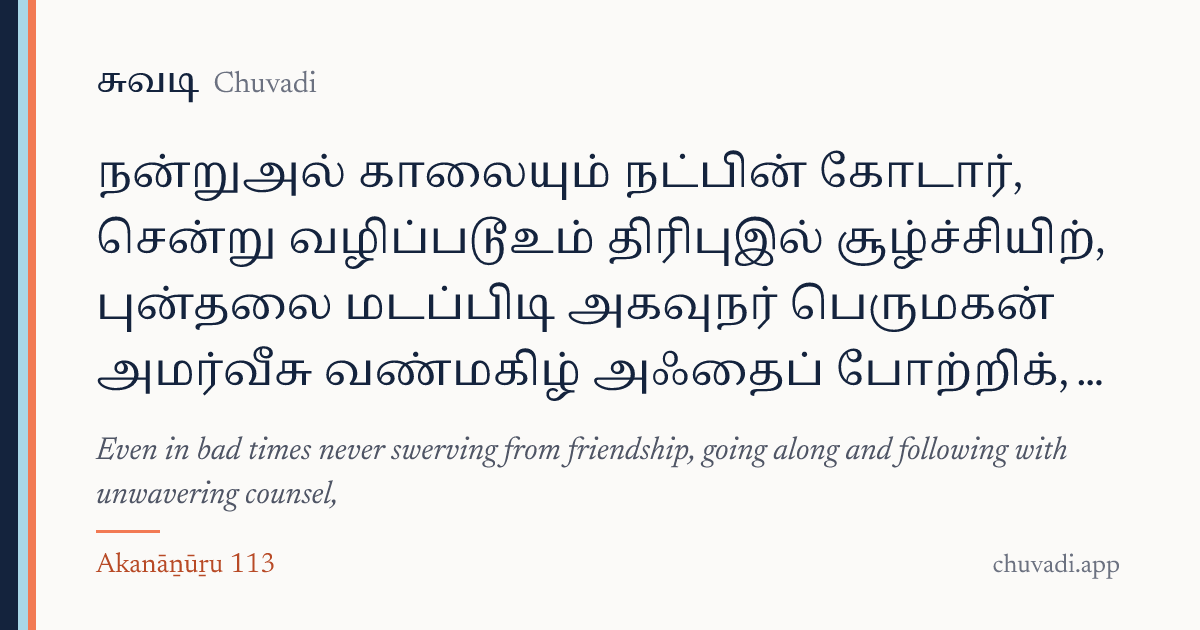
- Even in bad times never swerving from friendship,
- going along and following with unwavering counsel,
- giver of small-headed young cow-elephants, lord of the singers,
- Aḵtai of lavish joy, who scatters gifts after battle — guarding him,
- the Kōcar of many spears, who set their guard in place —
- like their rich, good land of neytal fields
- fragrant with young toddy, my shoulders he embraced,
- and then, while the old town of uproar raised gossip and clamoured,
- my lover left me without grace; 'For ever
- with strong feet whose tread never weakens though it strikes on stones,
- with food carried in stout, enduring gourds,
- though they have passed, still, watching their chance, the enemy
- lie guarded in their food-rich forts;
- he drives off others' cattle with their bulls of heaped humps,
- he of the long spear with its thick dark socket and seasoned shaft,
- of rich and plentiful meat as at a festival,
- Pāṇaṉ who never falls back: beyond his good land,
- the enemies who killed the travellers on the road
- washed their weapons in the small, red-streaked water
- of a dried-up ford with sandy, sloping banks; passing that,
- he is far away,' they say; and so, that the grief
- of my helpless heart, brought so low, may leave me,
- I may even stay here without weeping — from the thick-trunked tree,
- when the nest on its lovely swaying branch has grown bare,
- as a bird rises to go to another land,
- leaving my body here, let it go and reach
- the place where he is at his work — my life!
What the poem says
The heroine speaks to her friend. Her lover once held her, and her beauty is compared to the rich neytal fields, fragrant with fresh toddy, of the Kōcar, a warrior people who are praised here for loyalty: in bad times as in good they never left their friendship, and they stood guard for Aḵtai, a generous patron of singers who gives away young elephants. The poem gives these details and nothing more; the Aḵtai here is a man and a patron, and should not be confused with the Cōḻa king's daughter named in poem 96.
Then he left her 'without grace', and the town filled with gossip. People tell her that he is far away, beyond the land of Pāṇaṉ, a chieftain described as a raider of others' cattle with a long spear and lavish feasts, who 'never falls back'; beyond that again, past a dry ford where robbers who kill travellers wash their weapons in the little water left, red with blood. The lines 10 to 17 are compressed and hard to construe; it is not certain which details belong to Pāṇaṉ, which to his men and which to the enemies watching from their forts.
The ending is the poem's best moment. Hearing he is so far, she says she can even stop weeping, because her life will leave her body behind and fly to where he is, like a bird that leaves its bare nest and migrates to another land. The image turns despair into a strange calm: separation of body and soul answers separation of lovers.
Whether 'Pāṇaṉ' is a personal name or means 'the bard' is uncertain; the context (cattle raids, spear, land) suggests a chieftain.