




அகநானூறு 118
பாடல் · The poem
Tap a word to see where else it occurs.
பொருள் · Meaning in TamilAI
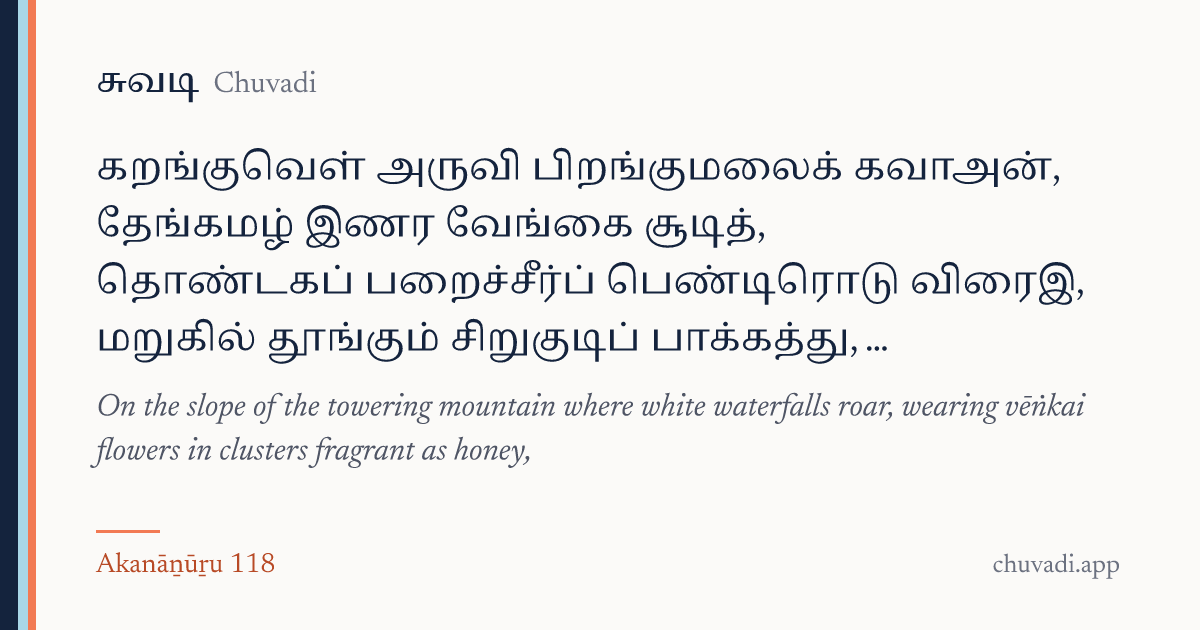
ஒலிக்கும் வெண்ணிற அருவிகள் விழும் உயர்ந்த மலைச்சரிவில், தேன்மணம் கமழும் கொத்துகளையுடைய வேங்கை மலர்களைச் சூடி, தொண்டகப் பறையின் தாளத்துக்கு ஏற்பப் பெண்களோடு கலந்து, எங்கள் சிறுகுடியின் தெருக்களில் ஆடும்போது நீ முருகனைப் போலவே தோன்றுகிறாய். வலிய வேட்டை நாய்கள் பின்தொடரப் பகலில் வந்தால் ஊரார் பழிச்சொல்லுக்கு அஞ்சுகிறோம். கரிய பெண்யானையோடும் கன்றோடும் விரைந்து ஓடிய அகன்ற வாயும் பெரிய துதிக்கையும் உடைய ஆண்யானையைப் பிடிக்கத் தவறிச் சினத்தோடு பதுங்கியிருக்கும் கொல்லும் புலி திரியும் அடர்ந்த இருளுடைய நள்ளிரவில் நீ தனியாக வருவதற்கு அதைவிட மிகுதியாக அஞ்சுகிறோம். அவள் என்ன ஆவாளோ? பல நாள் நீங்கள் கூடும் இடமாக இருந்த, கதிர்கள் முற்றிக் காய்ந்த தினைப்புனத்தில் கிளிகளை ஓட்டும் பாட்டையும் அவள் இப்போது நிறுத்திவிட்டாள். அவள் இரங்கத்தக்கவள்; உன் அன்பைத் தவிர அவளுக்கு வேறு துணை இல்லை.
இது குறிஞ்சித் திணை; தோழி தலைவனிடம் பகலிலும் இரவிலும் வர வேண்டாம் என்று மறுத்து, மணம் செய்துகொள்ளுமாறு குறிப்பாகத் தூண்டுவது. தினை முற்றியதால் தலைவி புனம் காக்கச் செல்வது நின்றுவிட்டது; அவள் வீட்டில் அடைக்கப்படுவாள் என்பது இதன் பொருள். இரையைத் தவறவிட்டுப் பதுங்கியிருக்கும் புலி இரவு வழியின் ஆபத்தைக் காட்டுகிறது.
ஆங்கிலம் · English translationAI
Translation
- On the slope of the towering mountain where white waterfalls roar,
- wearing vēṅkai flowers in clusters fragrant as honey,
- mingling with the women to the beat of the toṇṭakam drum,
- swaying in the dance in the streets of our little hill village,
- you look like Murukaṉ himself; with your strong hounds behind you,
- if you come by day, we fear the gossip; and in its fury
- the killing tiger that missed its seizure of the big-trunked tusker
- with the wide mouth, that hurried off with his dark cow-elephant and her calf,
- and now lies in wait, roams in the dense darkness of midnight;
- that you should come alone then, we fear even more.
- What will become of her? For many days
- the millet with its drying ears was the place of your meetings;
- now she has given up even the song that drives off the parrots.
- She is to be pitied: she has nothing but your kindness.
What the poem says
The heroine's friend (tōḻi) speaks to the hero, who has been meeting the heroine secretly. It is a classic kuṟiñci 'refusal of both meetings': the friend tells him that he cannot come by day, nor by night, and so leaves him only one honourable course, to marry her.
She begins with flattery. When he joins the village women dancing to the toṇṭakam drum, with vēṅkai flowers on his head, he looks like Murukaṉ, the god of the hills. But if he comes by day, followed by his hunting dogs, he will be seen and the village will talk. If he comes at night it is worse: a tiger that failed to bring down a tusker, which escaped with his mate and calf, lies in wait in the midnight dark. The image is both a real danger and a picture of thwarted, waiting threat.
The millet field was their meeting place, but its ears are now dry, the harvest is near, and the heroine has stopped singing to drive the parrots off the crop, which means she no longer goes out to the field at all. Her freedom of movement is ending; she is kept at home.
The last line is the point of the whole poem: 'she has nothing but your kindness'. The friend presses the hero to come with a proposal of marriage instead of in secret.