




அகநானூறு 121
பாடல் · The poem
Tap a word to see where else it occurs.
பொருள் · Meaning in TamilAI
நெஞ்சே! நாம் மகிழ்ச்சி கொள்ளத் தக்கவர்கள் ஆனோம். கொடிய வெப்பமுடைய வேனிற்காலம் நீண்டு, உயர்ந்த வானத்தின் கீழ்ப் பிந்திய நாள்களில், நீர் வற்றி வறுமையுற்ற சேற்றுநீர்ச் சிறுகுளத்தில், தோண்டிய குழிகளின் பக்கத்தில் உள்ள குடிக்க முடியாத கலங்கல் நீரால், கன்றோடு கூடிய இளம் பெண்யானையின் மென்மையான தலையைக் கழுவிவிட்டு, சேற்றில் புரண்டு விளையாடியதால் உருமாறிய வலிய ஆண்யானை, சிவந்த காம்புகளில் உள்ள வெண்ணிறப் பூங்கொத்துகள் அசையும்படி, வழியருகில் நிற்கும் மரா மரத்தில் தன் தினவெடுத்த முதுகைத் தேய்க்கும். வழிப்போக்கர் தங்கும் அம்மரத்தின் வரிவரியான நிழலில் இளைப்பாறி, அகன்ற மென்தோள்களையுடைய அவள் நம்மோடு வருவாள் என்று சொல்கிறார்கள். கொடிய மழவர்கள் வழிப்போக்கரிடம் பறித்துக் கிழித்து உருட்டி எறிந்த, சோறு கட்டிய வெண்ணிறக் குடையை அம்பு போல் விரையும் கடுங்காற்று தூக்கிச் செல்லும்போது, அதைத் தன் துணை என்று எண்ணி, மருண்ட ஆண் விலங்கு அதை அழைக்கும், கரிய முகமுடைய முசுக்கள் வாழும் காட்டின் வழியே அவள் வருவாள்.
இது பாலைத் திணை; தலைவி உடன்போக்குக்கு இசைந்தாள் என்று அறிந்த தலைவன் தன் நெஞ்சுக்கு மகிழ்ந்து கூறுவது. பெண்யானையையும் கன்றையும் பேணும் ஆண்யானை, தலைவியைக் காக்கப்போகும் தலைவனைக் குறிப்பாகக் காட்டுகிறது. 'உருள்கீண்டிட்ட', 'குடை' ஆகிய சொற்களின் பொருள் உறுதியாகத் தெரியவில்லை.
ஆங்கிலம் · English translationAI
Translation
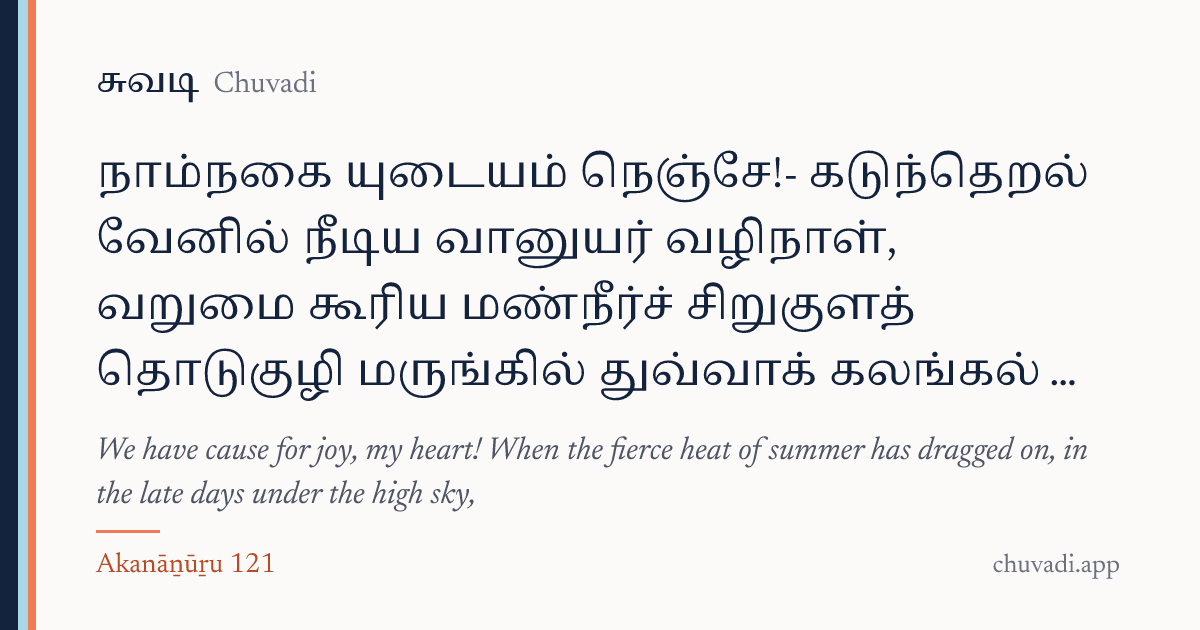
- We have cause for joy, my heart! When the fierce heat
- of summer has dragged on, in the late days under the high sky,
- in the little pond of muddy water, shrunk to poverty,
- beside the pits dug in it, with the cloudy water no one can drink,
- washing the soft head of the young cow-elephant with her calf,
- the strong tusker, changed in look from playing in the mud,
- rubbing so that the white clusters on red stems quiver,
- scrapes his itching back on the marām tree beside the track;
- resting in its striped shade, where travellers stop, along with us
- she will come, they say, the girl with broad soft shoulders,
- where the white leaf-wrap of food that the cruel Maḻavar
- tore from the travellers on the road and flung rolling
- is lifted by the fierce wind, swift as an arrow, and, taking it for a mate,
- the startled male calls out to it there,
- in the forest of the black-faced langurs.
What the poem says
The hero speaks to his own heart. He has learned that the heroine has agreed to elope with him (uṭaṉpōkku), and the opening, 'we have cause for joy', is his delight. The rest of the poem describes the forest they will cross, which for all its harshness he now sees as a path they will walk together.
The first scene is the end of a long summer. A pond has shrunk to mud with a few dug pits of undrinkable water; a tusker uses it to wash the head of his young mate and her calf, then, caked with mud, rubs his back on a marām tree beside the track, shaking its white blossoms. In the striped shade of that tree, 'they say', she will rest with him. The bull elephant caring for his mate and calf is a quiet image of the protector the hero means to be.
The second scene is harsher. Maḻavar, robbers of the wild tracts, have torn open the white leaf-wrapped food of travellers and thrown it aside; the wind lifts it, and a startled male animal, apparently a langur in this forest of black-faced langurs, calls to it, thinking it its mate. The picture of a creature calling to a false companion is odd and a little sad; it may hint at the loneliness the hero is escaping.
The words translated 'leaf-wrap' (kuṭai) and 'cruel' (uṟukaṇa) are my best readings of a compact passage; the exact sense of uruḷ kīṇṭiṭṭa, 'tore and flung rolling', is uncertain.