




அகநானூறு 140
பாடல் · The poem
Tap a word to see where else it occurs.
பொருள் · Meaning in TamilAI
பெருங்கடலில் மீன் வேட்டையாடும் சிறுகுடிப் பரதவர், கரிய கழியின் உப்பளங்களில் உழாமலேயே விளைவித்த வெண்ணிறக் கல்உப்பை, ஒரு வண்டிச் சுமைக்கு விலை கூறி வாங்கி, வெயில் காயும் பிளவுகளையுடைய மலைநாட்டுக்குக் கொண்டு செல்லும் விரைந்து ஓட்டும் தாற்றுக்கோலையுடைய உமணரின் அன்பான இளம் மகள், சில ஒளிரும் வளையல்கள் ஒலிக்கக் கைவீசி, 'நெல்லுக்கு நேர் அளவு வெண்கல் உப்பு' என்று சேரியில் பண்டமாற்று விலை கூவினாள். அப்போது அந்த அழைப்பொலியை அறிந்த வீட்டு நாய் குரைக்க, அவள் அஞ்சினாள். அப்போது செருக்குடைய கயல்மீன்கள் போரிடுவது போன்ற அவளுடைய கண்கள், மலைநாட்டுப் புனத்தைத் திருத்துபவன் எரிக்கும் புகையின் நிழலைப் போல இருண்ட பெரிய பழைய சேற்றில் அழுந்திய வண்டியின் துன்பம் தீர, அவள் தந்தை பூட்டி இழுக்கச் செய்யும் எருது வருந்தி வெப்பமான மூச்சு விடுவது போல, என்னை வருத்தும் நோயாகிவிட்டன.
இது நெய்தல் திணை; உப்பு விற்கும் உமணர் மகளின் கண்களைக் கண்டு மயங்கிய தலைவன் கூறுவது. சேற்றில் சிக்கிய வண்டியை இழுத்து மூச்சு வாங்கும் எருது, காதல் நோயால் வருந்தும் தலைவனின் நிலைக்கு உவமையாகிறது. அவன் இதைப் பாங்கனிடம் சொல்கிறானா, தனக்குள் சொல்கிறானா என்பது தெளிவில்லை.
ஆங்கிலம் · English translationAI
Translation
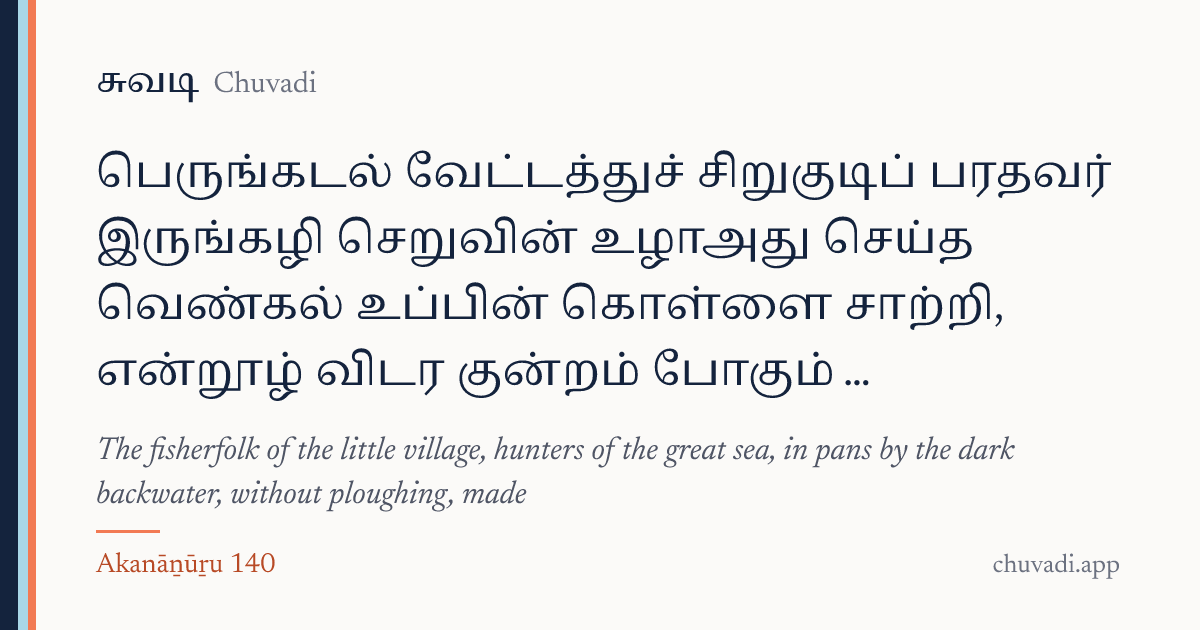
- The fisherfolk of the little village, hunters of the great sea,
- in pans by the dark backwater, without ploughing, made
- white crystals of salt; announcing the price of a load,
- going off to the hill country with its sun-scorched clefts,
- the salt merchants with their quick goads have a dear young daughter;
- swinging her arms so her few bright bangles jingled,
- "White crystal salt, measure for measure with paddy!" so
- as she called out the barter in the settlement, the house
- dog that knew such calls began to bark, and she started in fear;
- her eyes, like proud kayal fish fighting, to me,
- like the smoke-shadow of a hill farmer burning his new clearing,
- in the great old mire, with the cart sunk deep,
- to end its distress, her father hauling it out,
- like the bullock he has yoked, suffering,
- breathing hot breaths: they have become a sickness.
What the poem says
The hero speaks, probably to his companion or to himself. He has seen a young girl of the salt merchants (umaṇar) and her eyes have struck him like a disease. The poem is neytal, the seashore, and it has the bustle of trade.
The scene is set step by step. Fishermen of the coast make white crystal salt in pans by the backwater, 'without ploughing', since salt is a harvest that needs no plough. The umaṇar buy it, cry the price of a load, and take it inland by cart to the hill country. Their young daughter goes through a settlement calling 'salt, measure for measure with paddy', a barter in which salt is traded for an equal measure of rice. A house dog that knows such cries barks at her, and she starts, and her eyes flash like fighting kayal fish. That startled look is what the hero cannot forget.
The final simile comes from the same world. Her father's bullock, yoked to a cart that has sunk into an old dark bog (dark as the smoke of a farmer burning a new clearing in the hills), strains and pants to pull it free. The hero suffers and breathes hot in just that way.
The comparison is homely and exact: the girl's family's labour becomes the measure of the lover's suffering. No poet is named in this edition, and the speaker is inferred from the poem.