




அகநானூறு 142
பாடல் · The poem
Tap a word to see where else it occurs.
பொருள் · Meaning in TamilAI
இலவம் பூப்போன்ற அழகிய சிவந்த நாவால் நாடுகளுக்கெல்லாம் மேலாக அவன் புகழைக் கூறும் பெரியோர் போற்றும், பலருக்கும் மேலாக உயர்ந்து தோன்றும் குடையுடைய வள்ளல், எண்ண முடியாத படையும் வெற்றிப் போரும் உடைய மாந்தரம் பொறையன் கடுங்கோவைப் பாடிச் சென்ற வறியவர்கள் பரிசுப் பொருள்களைப் பெற்று மகிழ்ந்தது போல, நெஞ்சே! நீ வாழ்க, இப்போது மிகவும் மகிழ்வாயாக. கறைபட்ட அடியுடைய யானைகளையுடைய நன்னனின் பாழியில், உணவளிக்க அரிய அச்சம் தரும் பேய்கள் குவிந்த உணவை எதிர்கொண்ட, ஒளிரும் வாள்கள் மோதிய ஆரவாரமுடைய போரில், பறவைகளுக்குக் காவலாக விளங்கிய வாய்மை தவறாத மிஞிலி, வெள்ளம் போன்ற படையுடைய பெரும்பெயர் அதிகனைக் கொன்று மகிழ்ந்ததைப் பலரும் அறிந்தது போலத் தன் செயலையும் பலர் அறிந்துவிடுவார்களோ என்று அஞ்சி, என் காதலி மெல்ல மெல்ல வந்தாள். நீர்த்திரள் போல ஒளிரும் குற்றமற்ற வெள்ளியால் செய்த வேலைப்பாடுடைய வளையல்கள் செறிந்த முன்கையும், அளவாக வெட்டிய மணல் அலை போன்ற கரிய அடர்ந்த கூந்தல் இடம் இல்லாத சிறிய முதுகில் அணிகலனோடு அசைய, கடல்மீன்களும் உறங்கும் நள்ளென்ற நள்ளிரவில், வடிவழகு மிளிரும் கைவேலைப்பாட்டால் பொலிந்த பாவை நடக்கக் கற்றுக்கொண்டது போன்ற நடையோடு வந்தாள். மழை அலைத்ததால் கலங்கிய மலைப்பூ மாலையிலிருந்து பொன்துகள் போலத் தாது சொரிய, வளையல் வடு பதியும்படி என்னைத் தழுவினாள்; நன்கு சுருதி சேர்த்த யாழ் நரம்பு போல இனிய சொற்களைப் பேசினாள்.
இது குறிஞ்சித் திணை; இரவுக்குறியில் தலைவி வந்து தழுவியதை நினைந்து தலைவன் தன் நெஞ்சுக்கு மகிழ்ந்து கூறுவது. நடுவில் வரும் மிஞிலி, அதிகன், நன்னன் பற்றிய அடிகள் உவமையோடு எப்படி இணைகின்றன என்பது உறுதியாகத் தெரியவில்லை; 'ஊட்டரு மரபின்' என்ற தொடரின் பொருளும் ஐயத்துக்குரியது.
ஆங்கிலம் · English translationAI
Translation
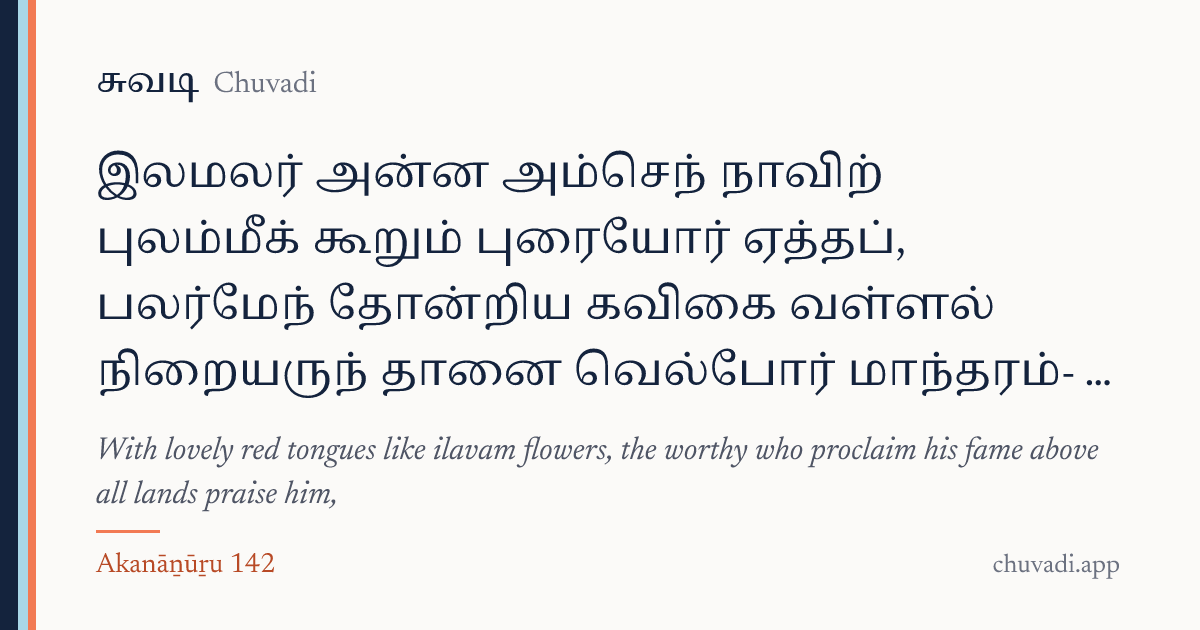
- With lovely red tongues like ilavam flowers,
- the worthy who proclaim his fame above all lands praise him,
- the patron whose canopy is raised above so many,
- Māntaram of conquering war, with an army hard to number,
- the Poṟaiyaṉ, Kaṭuṅkō: like those who went away singing him,
- the needy, with the vessels they received, greatly
- rejoice now, long live, my heart! My beloved,
- not failing in due order, striving and winning,
- Pāḻi of Naṉṉaṉ of the elephants with scarred feet,
- where fearsome ghosts, of a kind hard to feed,
- came forward to the heaped feast, Miñili of true word,
- who became a shield to the birds, of great name,
- rejoicing at killing Atikaṉ with his flood of an army,
- in the uproar of the battle of bright swords;
- fearing that many would come to know, slowly, slowly,
- with spotless silver bangles, bright as a gathering of water,
- finely wrought, crowded on her forearm,
- her dark abundant hair like rippled sand cut short
- swinging with her ornaments on her small back that has no room for more,
- in the silent midnight hour when the fish of the sea are asleep,
- like a doll splendid with skilled work that brings its form to life,
- as though it had learned to walk, so she came, with her gait,
- her garland of mountain flowers, shaken by the beating rain,
- dripping its pollen like scattered gold,
- so that the bangles left their marks, she embraced me,
- speaking sweet words, like a tuned string.
What the poem says
The hero speaks to his own heart after a midnight meeting. His beloved came to him secretly through the rain and embraced him, and he tells his heart to rejoice as the needy bards rejoice who have been given gifts by Māntaram, the Poṟaiyaṉ king Kaṭuṅkō, a generous patron praised by the worthy with 'red tongues like ilavam flowers'.
Lines 8 to 14 are the hardest in the poem. They name Pāḻi, the stronghold of Naṉṉaṉ, and Miñili 'of true word', who killed Atikaṉ, whose army was like a flood, in a battle of bright swords, with ghosts coming to feast. The poem also calls Miñili 'a shield to the birds'. How these lines connect is not clear to me: I take the din of that battle, known to many, as a measure for the gossip the heroine fears, 'fearing that many would come to know'. Beyond what the poem says about these men, nothing is added here.
The last twelve lines are the heroine's coming: slowly, at the hour when even the fish of the sea sleep, with silver bangles bright as water, her dark hair swinging down her small back, walking like a doll so finely made it seems to have learned to walk. Her rain-soaked garland of mountain flowers drips pollen like gold. She embraced him so tightly that her bangles left marks, and spoke words sweet as a tuned string.
Line 10, ūṭṭaru marapiṉ, and the phrase in line 8 are uncertain, and the whole middle section may be damaged or simply very compressed.