




அகநானூறு 144
பாடல் · The poem
Tap a word to see where else it occurs.
பொருள் · Meaning in TamilAI
'"வருவோம்" என்று அவர் சொன்ன நாள்களும் பொய்த்துவிட்டன; செவ்வரி படர்ந்த அழகிய மையுண்ட கண்களின் நீரும் நிற்கவில்லை; குளிர்ந்த கார்மழைக்குத் தோன்றிய பசுங்கொடி முல்லையின் கூரிய முனையுடைய வெண்ணிற அரும்புகள் மலர்ந்த மாலையைச் சூடும் அழகை இழந்த என் கூந்தலையும் அவர் நினைக்கவில்லை. அவர் கண்கள் அருளிலிருந்து மாறினால் மாறட்டும்; ஆராய்ந்த அணிகலன் அணிந்தவளே! நம்மவர் அறத்துக்கு அஞ்சுவதில்லை' என்று சிறிய சொற்களைச் சொல்லிப் பெரிதும் ஊடினாலும், நெஞ்சே! நீ வாழ்க, அவள் மகிழ்வாள். வானில் இடி எழுந்து முழங்கினாலும் அதற்கு எதிராக எழுந்து பிளிறும் மதயானை சுற்றித் திரியும் பாசறையில், நிலத்தை விரும்பி எழுந்த வீரர்களின் கையிலுள்ள கூரிய வாள்களின் குவிந்த முனைகள் சிதையும்படி வெட்டி, குதிரைகளின் குளம்புகளின் அருகே தெறித்த குருதி வானத்து மீன்களைப் போல ஆங்காங்கே மின்ன, போரிட்டுக் கொன்று வென்ற செல்வத்தை நம்மவர் விரைந்து சென்று சொல்லக் கேட்கும் நாளில், குளிர்ந்த மணமுள்ள மாலை கசங்கும்படி நம்மோடு ஊடல் தீர்ந்த தழுவலைப் பெற்றவளைப் போல அவள் மகிழ்வாள்.
இது முல்லைத் திணை; பாசறையில் இருக்கும் தலைவன், கார்காலம் வந்தும் தான் வராததால் தலைவி ஊடுவாள் என்று எண்ணி, வெற்றிச் செய்தி கேட்டதும் அவள் மகிழ்வாள் என்று தன் நெஞ்சுக்குக் கூறுவது. முதல் ஏழு அடிகள் தலைவி தோழியிடம் சொல்வதாகத் தலைவன் கற்பனை செய்யும் சொற்கள்.
ஆங்கிலம் · English translationAI
Translation
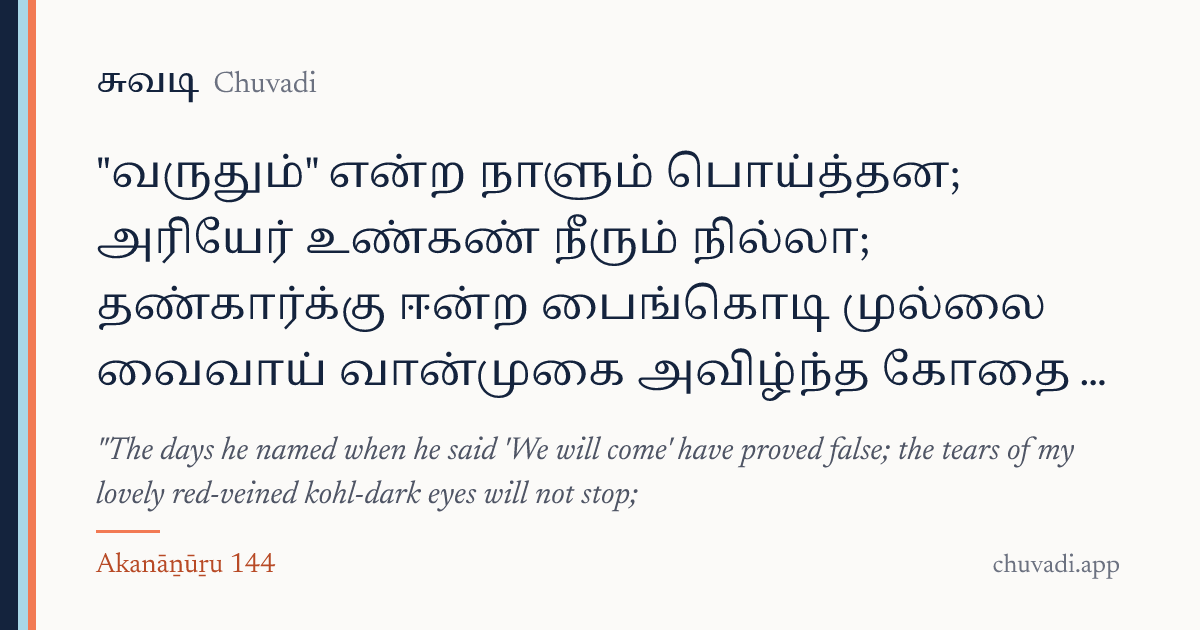
- "The days he named when he said 'We will come' have proved false;
- the tears of my lovely red-veined kohl-dark eyes will not stop;
- of the green-vined mullai that has bloomed for the cool rains,
- the garland of sharp-tipped white buds, now opened,
- my hair has lost the beauty of wearing it, and he does not think of it;
- if his eyes have turned away from kindness, let them turn; so it is,
- they have no fear of what is right, my jewelled friend, our man," so
- she may say in small words, and sulk greatly; yet
- so that the cool fragrant garland is crushed, with us,
- like one who has had an embrace that has ended all sulking,
- she will rejoice, long live, my heart! When in the sky
- the thunder rises and roars, and in rivalry rises and trumpets
- the elephant in musth that circles round the war camp,
- when the warriors who rose up eager for the land, in their hands
- the tapered points of their sharp swords blunted from hacking,
- and the blood they have flung up beside the horses' hooves
- glitters here and there like the stars in the sky,
- when they have fought the battle, and of the riches won by slaying
- our people hurry home to tell, the day that she hears it.
What the poem says
The hero speaks to his own heart from the war camp. It is the rainy season, the time he had promised to come home, and he knows how his wife will be talking. Lines 1 to 7 are her words as he imagines them, spoken to her friend: the days he named have proved false; her tears will not stop; the mullai has bloomed for the rains but she has no heart to wear it in her hair; if he has turned from kindness, so be it; men like him do not fear what is right.
He answers that her sulking will melt. When his people hurry home with news of the victory, she will be as glad as if she had already had his embrace, crushing her garland against him. This is mullai: the waiting wife, the rains, and the hope of return.
The last lines give the camp and the battle. Thunder roars in the sky and a musth elephant in the camp trumpets back at it in rivalry. The warriors' swords are blunted from hacking, and the blood flung up around the horses' hooves glitters like stars. The violence is presented as the price and proof of the victory that will bring him home.
'Our man' (namar) in line 7 is the heroine's way of naming her husband to her friend, with an edge of reproach.