




அகநானூறு 146
பாடல் · The poem
Tap a word to see where else it occurs.
பொருள் · Meaning in TamilAI
மிகுந்த வலிமையும் ஆற்றலும் உடைய பெருமித ஆண்எருமை, குளிர்ந்த மலர்கள் நிறைந்த பொய்கையில் பகல் முழுதும் திரிந்து, மருண்ட கண்களையுடைய அழகிய இளம் பெண்எருமையைத் தழுவிக்கொண்டு, தோட்டத்தை அடைந்து, வயலில் தங்கும் ஆரவாரமும் மகிழ்ச்சியும் நிறைந்த ஊரனின் ஒலிக்கும் மணிகளையுடைய நெடிய தேர், ஒளிரும் அணிகலன் அணிந்த பரத்தையர் சேரிக்குப் பல நாள்களாகச் செல்வது நிற்கவில்லை என்றால், ஒளிரும் அணிகலன் அணிந்த தோழியே! என்னைப் போல, அந்த வஞ்சகப் பரத்தனின் சொல்லை நம்பி, காற்று மோதுவதால் அசையும் மழைநீர் சொட்டும் மலரைப் போலக் கண்ணீர் மார்பில் விழ, கண்கள் பசலை பூக்க, தோழியரும் அயலாரும் மயங்கும்படி, தாய் பேணிக் காத்த சிறந்த அழகை வேண்டாதவளாகப் போகும் இரங்கத்தக்கவள் யாரோ?
இது மருதத் திணை; பரத்தையிடம் செல்லும் தலைவனைப் பற்றித் தலைவி தோழியிடம் கூறுவது. இளம் பெண்எருமையைத் தழுவி வயலில் தங்கும் ஆண்எருமை, புதிய பரத்தையோடு இருக்கும் தலைவனை உள்ளுறையாகக் காட்டுகிறது. பதிப்பில் உள்ள 'ஒள்ளிமழை' என்பதை 'ஒள்ளிழை' என்றும், 'அனியள்' என்பதை 'அளியள்' என்றும் கொண்டு பொருள் கூறப்பட்டுள்ளது.
ஆங்கிலம் · English translationAI
Translation
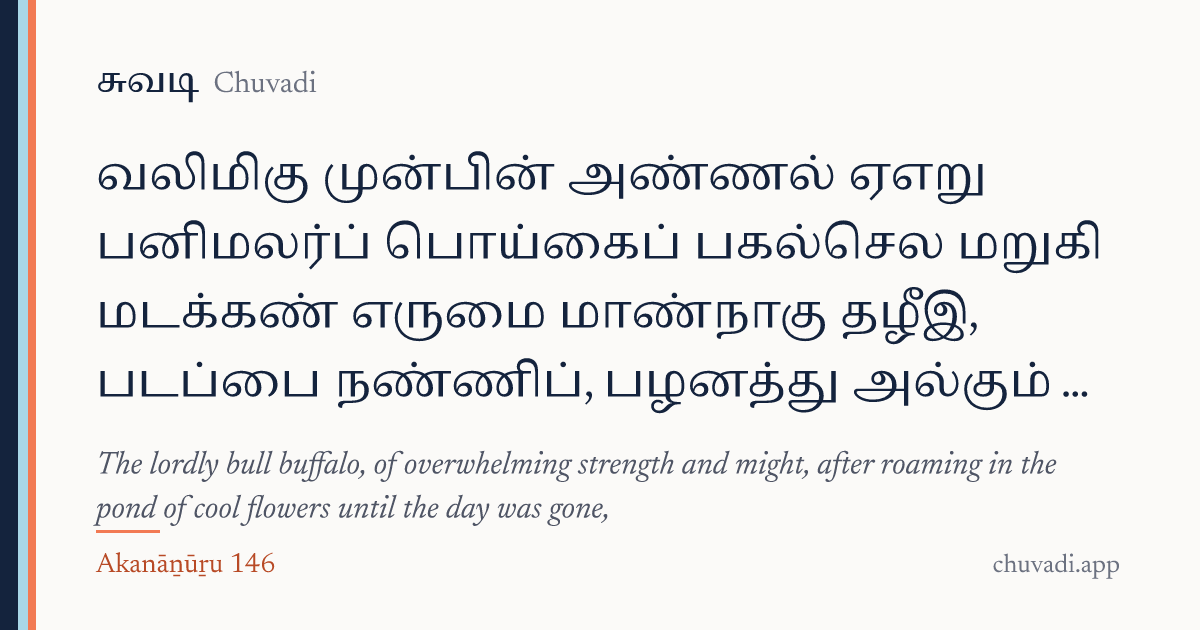
- The lordly bull buffalo, of overwhelming strength and might,
- after roaming in the pond of cool flowers until the day was gone,
- embracing the fine young she-buffalo with innocent eyes,
- comes near the garden and rests in the paddy fields:
- of the man of that town of noisy joy, the long chariot with ringing bells,
- to the quarter of the women with bright jewels, for many days,
- if it does not stop going there, then, you of shining jewels,
- who, I wonder, will be the pitiable one, like me,
- trusting the words of that deceiving rake,
- like flowers that drip with rain and sway as the wind beats them,
- letting tears fall on her breast, her eyes gone pale,
- so that her companions and neighbours are bewildered,
- who does not care for the fine beauty her mother tended?
What the poem says
The heroine speaks to her friend, addressed as 'you of shining jewels'. Her husband's chariot has been going for many days to the street of the courtesans (parattaiyar). This is marutam, the tiṇai of the husband's infidelity and the wife's sulking.
The opening image is the uḷḷuṟai. A powerful bull buffalo roams all day in a flowering pond, then takes a young she-buffalo and settles with her in the fields near the garden. The bull is the husband, the young she-buffalo the new woman, and the 'town of noisy joy' is his.
The heroine's bitterness is turned outward. If his chariot keeps going there, she asks, who will be the next pitiable woman like herself, who trusted the words of this 'deceiving rake' (māyap parattaṉ), and who will weep till her eyes go pale, bewildering her friends and neighbours, careless of the beauty her mother tended? The question is a warning that the courtesan of today will be abandoned as she was.
The edition prints two words that look like misprints: in line 6, oḷḷimaḻai, which I read as oḷḷiḻai, 'bright-jewelled'; and in line 8, aṉiyaḷ, which I read as aḷiyaḷ, 'pitiable one'. The translation follows these readings.