




அகநானூறு 149
பாடல் · The poem
Tap a word to see where else it occurs.
பொருள் · Meaning in TamilAI
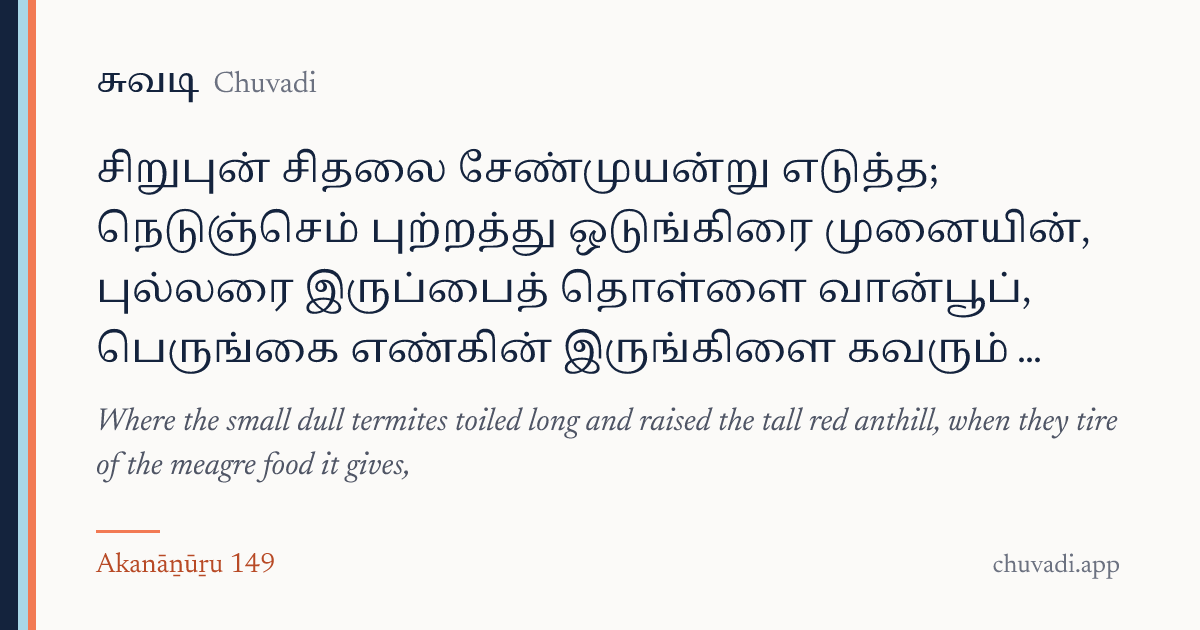
சிறிய மங்கிய நிறமுடைய கறையான்கள் நெடுங்காலம் உழைத்து எழுப்பிய உயர்ந்த செம்புற்றில் கிடைக்கும் குறைந்த உணவை வெறுத்து, பெரிய கைகளையுடைய கரடிகளின் கரிய கூட்டம், மங்கிய அடிமரமுடைய இருப்பையின் பொந்துகளில் உள்ள வெண்மலர்களைக் கவர்ந்து உண்ணும் நீண்ட பாலைவழியில் சென்று, அரிதாகச் சேர்க்கும் சிறந்த செல்வத்தை எளிதாகப் பெறுவதாக இருந்தாலும், என் நெஞ்சே! நீ வாழ்க, நான் வர மாட்டேன். சேரர்களின் சுள்ளி என்னும் பேராற்றின் வெண்ணுரை கலங்க, யவனர் கொண்டுவந்த வேலைப்பாடு மிக்க நல்ல மரக்கலங்கள் பொன்னோடு வந்து மிளகோடு திரும்பிச் செல்லும் வளம் நிறைந்த முசிறியை ஆரவாரம் எழும்படி முற்றுகையிட்டு, அரிய போரில் வென்று படிமத்தைக் கைப்பற்றிய, நெடிய நல்ல யானைகளும் கொல்லும் போரும் உடைய செழியனின், கொடிகள் அசையும் தெருக்களையுடைய கூடல் நகருக்கு மேற்கே, பல புள்ளிகளுடைய மயிலின் வெற்றிக்கொடி உயர்ந்த, ஓயாத திருவிழாக்களையுடைய நெடியோனின் குன்றத்தில், வண்டுகள் மொய்க்க நீண்டு வளர்ந்த ஆழ்ந்த சுனையின் நீலமலர்களை இணையாகக் கட்டிய மாலையைப் போன்ற இவளுடைய செவ்வரி படர்ந்த செருக்கான குளிர்ந்த கண்கள் தெளிந்த கண்ணீரைக் கொள்ளும்படி நான் பிரிய மாட்டேன்.
இது பாலைத் திணை; பொருள் தேடிப் பிரியுமாறு தூண்டும் நெஞ்சிடம், தலைவியின் கண்கள் கலங்கும் என்பதால் தலைவன் மறுத்துக் கூறுவது. செழியன் முசிறியை முற்றுகையிட்டதைப் பாடல் சொல்வதற்கு மேல் இங்கு எதுவும் சேர்க்கப்படவில்லை. நெடியோன் குன்றம் முருகனுடையதாக இருக்கலாம்; பாடல் பெயரைச் சொல்லவில்லை.
ஆங்கிலம் · English translationAI
Translation
- Where the small dull termites toiled long and raised
- the tall red anthill, when they tire of the meagre food it gives,
- the white flowers in the hollows of the dull-trunked iruppai
- are seized by the dark tribe of big-pawed bears:
- going along that long way of the wasteland, even if
- the precious wealth that is so hard to win I could gain with ease,
- I will not come, long live, my heart! Where, as the Cēras'
- great river Culli is stirred to white foam,
- the finely worked vessels the Yavaṉas brought
- come with gold and go back with pepper,
- rich Muciṟi he encircled with uproar,
- crossed through hard battle and carried off the image:
- Ceḻiyaṉ of the tall fine elephants and killing wars;
- west of his Kūṭal with its streets of fluttering flags,
- where the conquering banner of the many-spotted peacock is raised,
- with festivals never ceasing, on the hill of the Tall One,
- in the deep spring, the nīlam that grows tall where bees settle,
- like a garland of fresh blooms paired together, so that her
- red-lined proud rain-cool eyes should hold clear tears.
What the poem says
The hero speaks to his heart, refusing to go away for wealth. Even if the wealth that is so hard to win could be had easily, he will not go, because going would fill the heroine's eyes with tears.
The road he refuses is pictured in four lines: termites have toiled to raise a tall red anthill; bears, tired of the meagre food there, pull down the white flowers from the hollows of the iruppai tree. It is a scene of scarcity and labour for little reward.
The long middle is a historical comparison that shows the reach of Ceḻiyaṉ, a Pāṇṭiya king. Muciṟi, the rich port of the Cēras on the Culli river, is described as the place where the fine ships of the Yavaṉas (foreign traders from the west) churn the river to foam, arriving with gold and leaving with pepper. Ceḻiyaṉ is said to have besieged Muciṟi with uproar, won a hard battle and carried off an image (paṭimam). These are the poem's statements; I add nothing to them. West of his city Kūṭal, on the hill of 'the Tall One' (Neṭiyōṉ), where the peacock banner flies and festivals never cease, nīlam flowers grow in a deep spring.
Her eyes are like a pair of those nīlam flowers; and he will not go 'so that they should hold tears'. The god of the peacock banner on the hill is presumably Murukaṉ, but the poem names him only as the Tall One.