




அகநானூறு 166
பாடல் · The poem
Tap a word to see where else it occurs.
பொருள் · Meaning in TamilAI
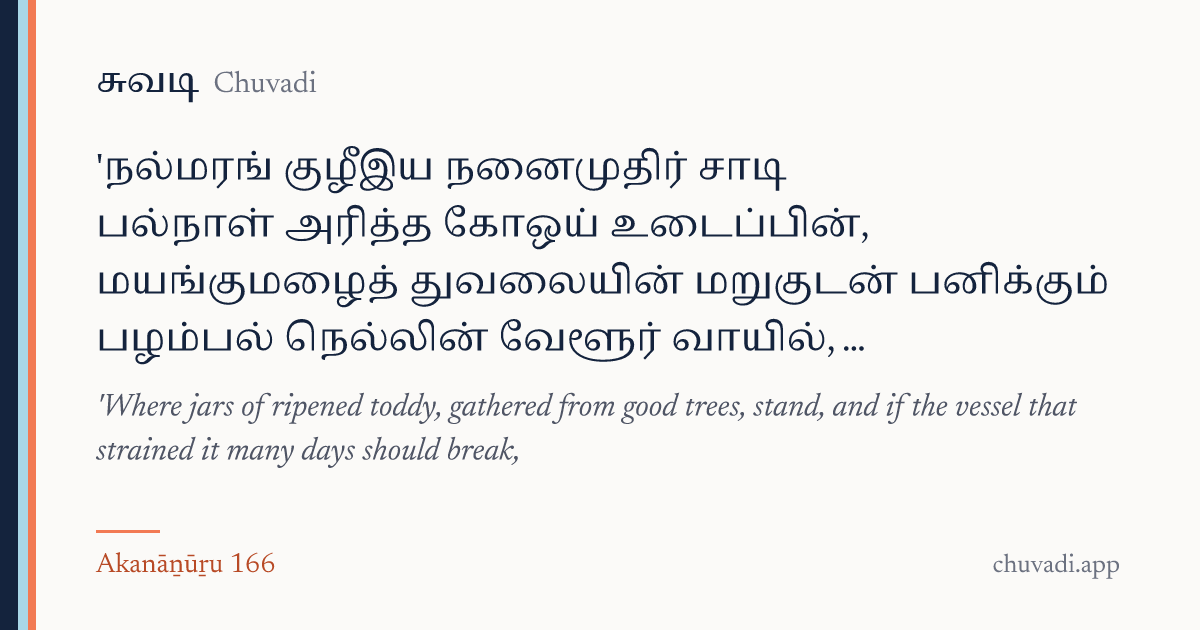
'நல்ல மரங்களிலிருந்து திரட்டிய, நன்கு முதிர்ந்த கள் நிறைந்த சாடிகள் உள்ள இடத்தில், பல நாள் வடிகட்டிய கலம் உடைந்தால், பனிமழையின் துளிகளால் போலத் தெரு முழுவதும் குளிரும், பழைய நெல் மிகுந்த வேளூரின் வாயிலில், நறுமணப் பொருள் தெளித்த மணக்கும் பூங்கொத்து மாலைகளின் மேல், புள்ளியும் வரியும் உடைய வண்டுக்கூட்டங்களும் ஊதாமல் கடந்து செல்லும், உயர்ந்த பலியைப் பெறும் அச்சம் தரும் தெய்வம், நீ ஐயப்படும், அழகுபடுத்திய கரிய கூந்தலுடையவளிடம் நான் அப்படி நடந்திருந்தால் என்னை வருத்தட்டும்!' என்று சொல்லித் தன் மனைவியைத் தேற்றும் கணவன் அவன் என்றால், தோழி, நீ வாழ்க! நேற்று, மாலை அணிந்த ஆண்யானை போன்ற முன்னணித் தெப்பத்தைத் தழுவிக்கொண்டு, மணவிழாவுக்குரிய நீராடல் அணிகளால் பொலிந்து, நம்மோடு, புதிதாக வந்த காவிரியின் கரை தொடும் வெள்ளத்தில் நீராடியவர் யார்?
இது மருதத் திணை; பரத்தை தன் தோழியிடம், தலைவியின் காதில் விழும்படி கூறுவது. தலைவன் மனைவியிடம் செய்த ஆணை பொய் என்று, நேற்று தம்மோடு நீராடியதைச் சான்றாகக் காட்டி ஏளனம் செய்கிறாள். 'தலைப்புணை', 'வதுவை ஈரணி' ஆகிய தொடர்களின் சரியான பொருள் உறுதியாகத் தெரியவில்லை.
ஆங்கிலம் · English translationAI
Translation
- 'Where jars of ripened toddy, gathered from good trees, stand,
- and if the vessel that strained it many days should break,
- the whole street turns chill as with a fine misting rain —
- at the gate of Vēḷūr, rich in old stores of paddy,
- over fragrant garlands of clustered flowers sprinkled with scent
- the swarming bees with spotted stripes pass by and do not hum —
- the dread deity who receives the high offerings there:
- if toward the woman with dressed dark hair whom you suspect
- I have been such a man, let it strike me!' — saying so,
- if he is the husband who calms his wife at home,
- then who was it — long may you live, friend! — that yesterday
- clasped the lead float, like a garlanded bull elephant,
- and, shining in festive bathing finery as at a wedding, with us,
- in the Kāviri's newly come
- flood brimming to its banks, played in the water?
What the poem says
This marutam poem is spoken by the other woman, the courtesan (parattai), to her own friend, and it is meant to reach the wife. She has heard that the hero has sworn an oath to his wife to clear himself, and she mocks it.
The oath is quoted in lines 1–9. He swears by the fearsome deity at the gate of Vēḷūr, a town so rich in old paddy and toddy that if a straining vessel breaks the whole street is chilled as by drizzle. The god there receives high offerings, and even the bees pass over its scented garlands without daring to hum. 'If I have been that kind of man toward the woman you suspect,' he says, 'let the god strike me.'
If he is such a husband, the courtesan asks, then who was it who bathed with us yesterday in the Kāviri's new flood, clinging to the lead float and dressed up as if for a wedding? The question is her proof: she was with him, and the oath is false. In marutam the hero's unfaithfulness and the wife's sulking are the usual theme; here we hear it from the rival's side, sharp and amused.
Two phrases are uncertain: the 'lead float' (talaippuṇai) compared to a garlanded elephant, perhaps for its size, and vatuvai īraṇi in line 13, read as bathing finery like a bride's; both may mean something more exact that is now lost. Vēḷūr is only named; the poem tells nothing else about it.