




அகநானூறு 168
பாடல் · The poem
Tap a word to see where else it occurs.
பொருள் · Meaning in TamilAI
உன்னோடு இரவைக் கழித்து, காதல் நோய் மிக, கண்ணீர் வழியும் கண்களோடு நாங்கள் இருக்கிறோம். இனிமேல் நீ வருவதைத் தவிர்க்க வேண்டும், வானைத் தொடும் மலைநாட்டவனே! பல பசுக்கள் உள்ள குன்றின் அடர்ந்த நிழலில் கூடிய நல்ல பசுக்கள் பரந்து நிற்கும் குழுமூரில், கொடுப்பதையே கடமையாக ஏற்ற, கோணாத நெஞ்சமுடைய உதியனின் அடுக்களையைப் போல ஓசை எழுந்து, பெருமலைச் சாரலில் அருவிகள் முழங்குகின்றன. அங்கே, அப்போதுதான் கன்று ஈன்ற கரிய பெண்யானையைத் தழுவிக்கொண்டு, ஆண்யானை தன் மெல்லநடக்கும் குட்டி உறங்கும்போது காவல் காக்கிறது. ஒடுங்கிய குகையைத் தனிமையாக விட்டுச் சென்று, கொடிய கண்களும் ஒளிரும் வரிகளும் உடைய வலிய புலி தன் நல்ல குகையில் முழங்குகிறது. வேடர்களும் உறங்கிவிட்ட அந்த இரவில், மான்கள் நடக்கும் குறுகிய வழியில் நீ வருவதா?
இது குறிஞ்சித் திணை; இரவில் வரும் தலைவனிடம் தோழி கூறுவது. குடும்பத்தைக் காக்கும் ஆண்யானை, தலைவனும் தலைவியை மணந்து காக்க வேண்டும் என்பதை உள்ளுறையாகக் காட்டுகிறது; முழங்கும் புலி வழியின் அச்சத்தைக் குறிக்கிறது. உதியனைப் பற்றிப் பாடல் சொல்வதற்கு மேல் எதுவும் இங்கே சேர்க்கவில்லை.
ஆங்கிலம் · English translationAI
Translation
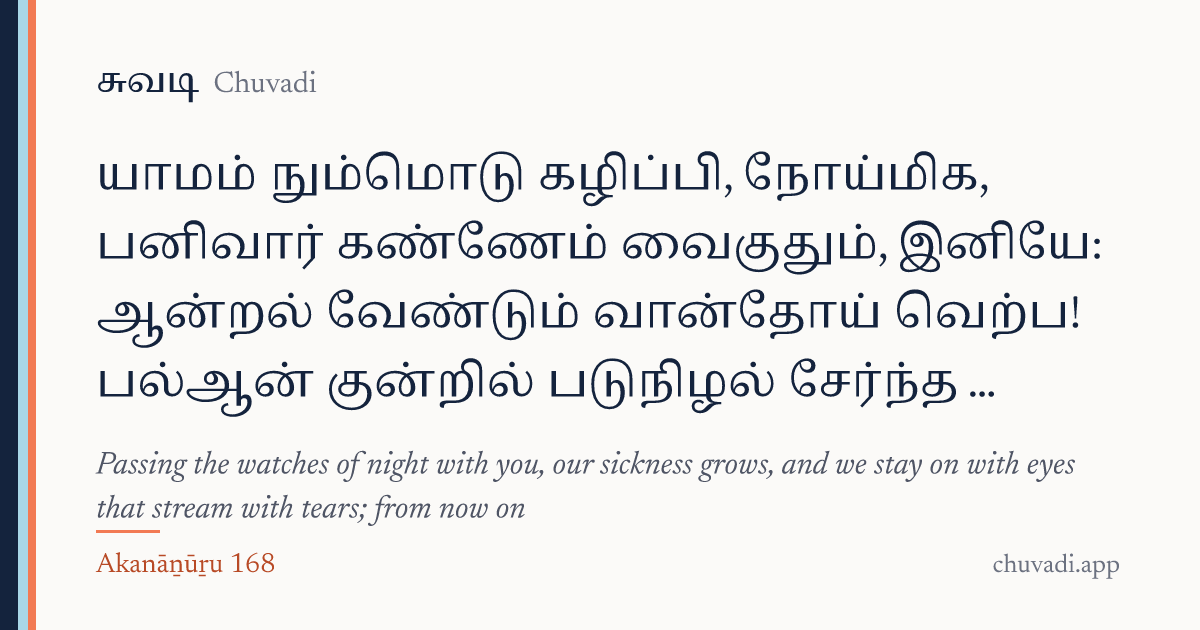
- Passing the watches of night with you, our sickness grows,
- and we stay on with eyes that stream with tears; from now on
- you must hold back, lord of the mountain that touches the sky!
- There, in Kuḻumūr, on the hill of many cattle, gathered in its deep shade,
- good cows spread out over the land;
- like the kitchen of Utiyaṉ, whose unbending heart took up the duty of giving,
- a din rises, and
- waterfalls roar on the slopes of the great range;
- there, embracing his dark mate who has just calved, the bull elephant
- guards the sleeping back of his slow-stepping calf;
- leaving its close den lonely, the fierce-eyed
- mighty tiger with bright stripes roars in its fine cave —
- in the night, when the hunters lie asleep,
- by the narrow track of the deer, that you should come this way!
What the poem says
The friend speaks to the hero, who has been coming at night to meet the heroine. The nights spent with him, she says, leave us with streaming eyes as our love-sickness grows; from now on you must stop. The plural 'we' is the friend speaking for the heroine and herself together, as friends often do.
The reason is the danger of the night path. Waterfalls on the great mountain roar with a noise likened to the kitchen of Utiyaṉ at Kuḻumūr, a place of many cattle; Utiyaṉ is praised here only as a giver of unfailing generosity, whose kitchen was always loud with cooking. On the slopes a bull elephant guards his mate, who has just calved, and their sleeping calf, while a tiger leaves its den and roars in its cave. The hunters are asleep and the hero comes alone along a deer track.
The elephant guarding his family is an uḷḷuṟai: a husband should protect his own, and the hero ought to do the same by marrying the heroine rather than risking himself by night. The roaring tiger stands for the real danger on the path.
The syntax of lines 4–8 is compressed; the Kuḻumūr comparison is taken as describing the noise of the falls. The poem says nothing more about Utiyaṉ or Kuḻumūr, and nothing is added here.