



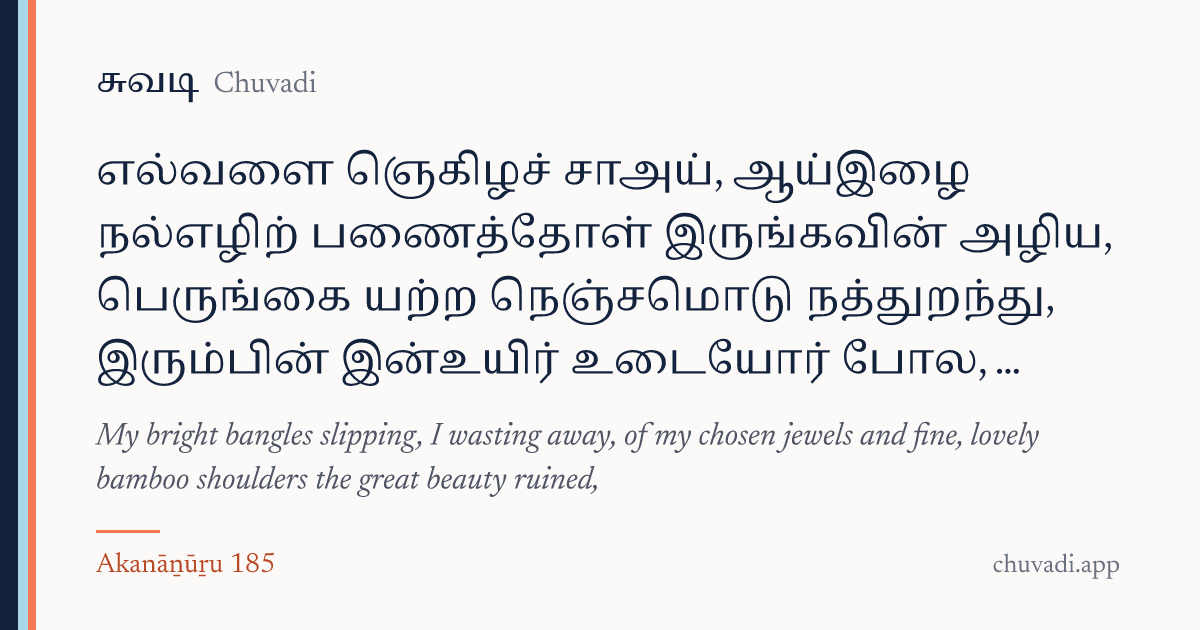

அகநானூறு 185
பாடல் · The poem
Tap a word to see where else it occurs.
பொருள் · Meaning in TamilAI
ஒளிரும் வளையல்கள் கழலும்படி நான் மெலிய, தேர்ந்த அணிகலன் அணிந்த, அழகிய மூங்கில் போன்ற என் தோள்களின் பேரழகு அழிய, மிகுந்த செயலற்ற நெஞ்சத்தோடு நம்மைத் துறந்து, இரும்பால் ஆன இனிய உயிரை உடையவர்களைப் போல மனத்தை வலிதாக்கிக்கொண்டு செல்ல வல்லவரானார் காதலர். வாடிய, ஒலிக்கும் தண்டுகளோடு உயர்ந்து நின்ற, நெல் விளைந்த நெடிய மூங்கில்கள், ஆரவாரமுடைய வீரர்களின் வில்லின் விசை போல ஒலித்து வெடிக்கும், ஈரம் அற்றுப் போகும்படி வெந்து பாறைகள் மோதும் பரப்புடைய வேனிற்காலப் பாலை வழியில், வானம் வறண்டு அருவிகள் ஓய்ந்த உயர்ந்த சிகரங்களின் பக்கத்தில், பெருவிழாவின் விளக்குகள் போலப் பலவாக ஒருசேர இலையில்லாமல் மலர்ந்த இலவ மரங்களோடு, உயர்ந்து நிற்கும் பாறைக் குவியல்களையுடைய மலையைக் கடந்து சென்றவர் அவர்!
இது பாலைத் திணை; தலைவி தோழியிடம் கூறுவதாகக் கொள்ளலாம். இரும்பு உயிருடையவர் போலப் பிரிந்தான் என்பதில் வியப்பும் கடிவும் கலந்துள்ளன. விழா விளக்குப் போல மலர்ந்த இலவம், அவள் துயருக்கு எதிராக நிற்கும் வறண்ட நிலத்தின் ஒளியைக் காட்டுகிறது. மூன்றாம் அடியிலுள்ள செயலற்ற நெஞ்சம் அவளுடையதா அவனுடையதா என்பது உறுதியாகத் தெரியவில்லை.
ஆங்கிலம் · English translationAI
Translation
- My bright bangles slipping, I wasting away, of my chosen jewels
- and fine, lovely bamboo shoulders the great beauty ruined,
- he left us, with hearts utterly at a loss;
- like men whose sweet life is made of iron,
- he hardened himself and was able, my lover: where, withered,
- the tall bamboo, standing high with rustling stalks and bearing grain,
- bursts open like the twang of the bows of boisterous warriors,
- on the stretch where rocks clash, scorched till all freshness is gone,
- there in the summer wilderness, where the sky has dried up
- and the waterfalls have ceased, beside the high peaks,
- like the lamps of a great festival, many together,
- with silk-cotton trees blooming without a leaf,
- he crossed the mountain of high-standing heaped rock!
What the poem says
The heroine speaks, most likely to her friend: the 'us' (nam) of line 3 joins the two. Her bangles slip from her wasted wrists and her shoulders, once lovely as bamboo, have lost their beauty; yet her lover was able to harden his heart and leave, 'like men whose sweet life is made of iron'.
The comparison is the poem's sharpest stroke. To leave such a woman one must be made of iron, and he was. The words mix wonder and reproach.
The road he took is a summer mountain. Dry bamboo bearing its rare grain bursts with a sound like the twang of warriors' bows; the rocks are scorched, the sky has given no rain, and the waterfalls have stopped. On the bare slopes silk-cotton trees (ilavam) flower red without leaves, like the many lamps of a great festival. The festival image is bitter here: the land celebrates while she grieves, and its brightness is the brightness of drought.
Bamboo flowering and seeding, which happens rarely and in dry times, is an old sign of hardship; the poem names the grain-bearing bamboo without further comment. The phrase perum kaiyaṟṟa neñcam in line 3 is taken as the helplessness of those left behind; it could also describe his own heart, torn as he went.