




அகநானூறு 196
பாடல் · The poem
Tap a word to see where else it occurs.
பொருள் · Meaning in TamilAI
நீண்ட கொடிகள் அசையும், கள் நிறைந்த மீனவர் சிற்றூரில், காலைத் துறையில் பிடிபட்ட பெரிய தலையுடைய வரால் மீனின், துடிப்பறையின் கண் போன்ற வட்டமான கொழுத்த துண்டுகளை விற்று, கள் உண்டு ஆடி, மீன்பிடித்தலை மறந்து உறங்கும் கணவர்களுக்கு, அவ்வூர்ப் பெண், அகன்ற ஆம்பல் இலைகளில் சூடான சோற்றுத் திரளையும், இனிய புளிப்புடைய பிரம்பின் திரண்ட பழங்களையும் இட்டு, விடியற்காலையில் படைக்கும் ஊரனே! உன்னைத் தொடமாட்டோம்; அருகில் வராதே! தந்தையின் கண்ணழகை அழித்த குற்றத்துக்காக, அச்சம் தோன்றும்படி, ஒரே சொல்லுடைய கோசரைக் கொன்று பகையை முடித்த கடுந்தேருடைய திதியனோடு தொடர்புடைய, அழுந்தையைச் சேர்ந்த, வளைந்த குழையணிந்த அன்னி மிஞிலியைப் போல நடக்கும், உனக்குத் தகுதியான அழகியைத் தழுவிய மார்பு அது!
இது மருதத் திணை; பரத்தையிடமிருந்து வந்த தலைவனைத் தலைவி மறுத்துக் கூறுவது. கள்ளுண்டு வேலையை மறந்து உறங்கும் கணவர்களுக்கும் உணவு படைக்கும் பெண்கள், தலைவனின் தவற்றையும் பொறுக்க வேண்டிய மனைவியின் நிலையைக் குறிப்பாகக் காட்டுகின்றனர். திதியன், கோசர், அன்னி மிஞிலி ஆகியோரின் தொடர்பும், யாருடைய கண் அழிந்தது என்பதும் பாடலிலிருந்து உறுதியாகத் தெரியவில்லை.
ஆங்கிலம் · English translationAI
Translation
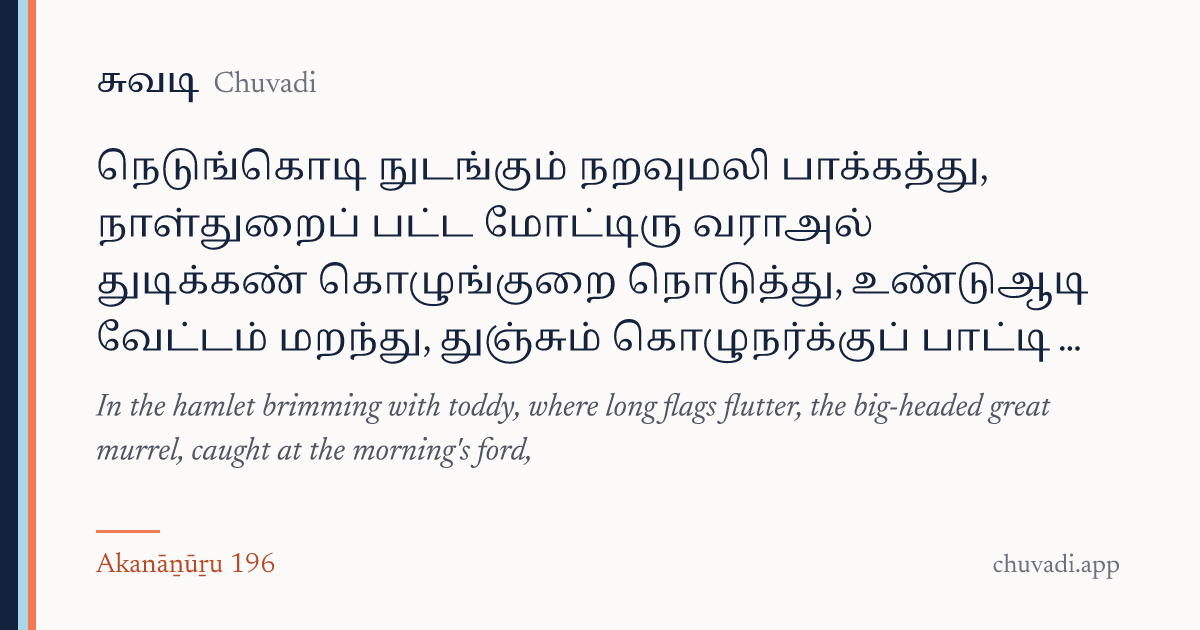
- In the hamlet brimming with toddy, where long flags flutter,
- the big-headed great murrel, caught at the morning's ford,
- its rich slices, round as a tuṭi drum, the men sell off, drink and dance,
- forget their fishing, and sleep; and for those husbands the woman
- on broad water-lily leaves sets hot rice in lumps,
- with the round fruits of the sweet-sour rattan heaped on it,
- serving it at break of dawn: lord of such a town!
- We will not touch you: do not come near! — for the wrong of ruining
- the beauty of the father's eyes, so that it struck terror,
- killing the Kōcar of the single oath, he ended the feud,
- Titiyaṉ of the fierce chariot; of Aḻuntai, with curved earrings,
- Aṉṉi Miñili — like her she carries herself,
- that lovely one fit for you, whom your chest has embraced!
What the poem says
This is a marutam poem of sulking. The wife, or her friend speaking for her, refuses the hero who has come back from a courtesan: we will not touch you, do not come near, not with the chest that has just embraced her.
The opening scene comes from a fishing hamlet beside his town. Long flags flutter over the toddy shops; the men sell their catch of murrel fish, drink, dance and sleep, forgetting their work; and at dawn the women still serve them hot rice and sour rattan fruit on water-lily leaves. The scene is uḷḷuṟai: the hero, too, has drunk his pleasure and forgotten his duties, and the wife is expected to keep serving him regardless.
The courtesan is compared with Aṉṉi Miñili of Aḻuntai, a woman with curved earrings. The poem says that a father's eyes were harmed, most likely her own father's, that this wrong was avenged when Titiyaṉ of the fierce chariot killed the Kōcar, called 'the people of one word', and ended the feud. The comparison seems to praise the courtesan's proud bearing, though in the wife's mouth it is far from friendly. The story was evidently well known to the poem's hearers; nothing beyond what the poem states is added here.
The syntax of lines 8–12 is crowded and the roles in the story are not fully clear: it is not certain whose eyes were harmed or exactly how Titiyaṉ, the Kōcar and Aṉṉi Miñili are related. The name Miñili also appears in akam.181 for a warrior; whether the two are connected cannot be told from this edition. Pāṭṭi in line 4 is taken as a woman of the hamlet.