




அகநானூறு 218
பாடல் · The poem
Tap a word to see where else it occurs.
பொருள் · Meaning in TamilAI
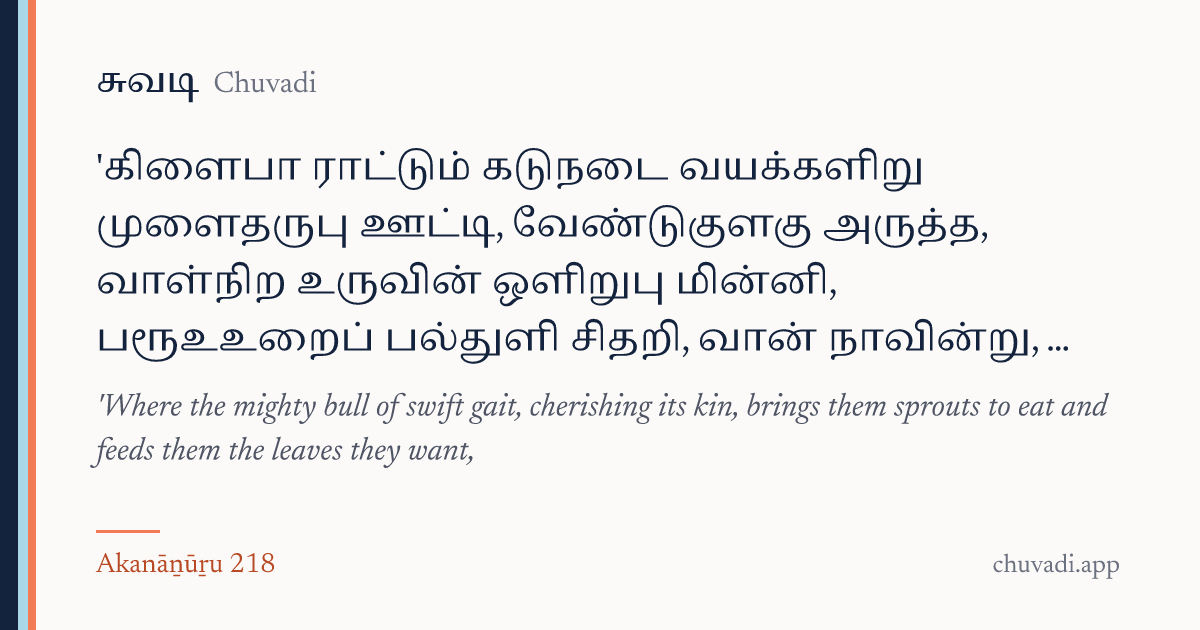
'தன் கூட்டத்தைப் பேணும், விரைந்த நடையுடைய வலிய களிறு முளைகளைக் கொண்டு வந்து ஊட்டி, அவை விரும்பும் தழைகளைத் தின்னக் கொடுக்கும் இடத்தில், வாளின் நிறமும் வடிவும் கொண்ட மின்னல் ஒளிர, பெரிய பல துளிகளைச் சிதறி வானம் முழங்கி, பெரிய மலையின் குளிர்ந்த சிகரங்கள் அதிரும்படி சுற்றி, இடியோடு கூடிய புயல் தங்கியிருக்கும் கனத்த இருளுடைய நள்ளிரவில், சிறந்த அணிகலன்களால் பொலியும், காண்பதற்கு இனிய மென்மையுடைய உன் வளைந்து திரண்ட தோள்களைச் சேர்ந்தால் அன்றி என் கண்கள் உறங்கமாட்டா' என்று நீ சொன்னாய். நீயும், இருள் குழம்பும் யாமத்தில் வழி தவறி, ஒளிரும் வரிகளையுடைய பெரிய புலி வழிச்செல்வோரைப் பார்த்துக் காத்திருக்கும் பெரிய மலைப்பிளவுகள் வருவதற்கு அரியவை என்று எண்ணாமல், வருவதை எளிதாக நினைக்கிறாய். ஆதலால், நுட்பமாகக் கலந்த சிறந்த சந்தனம் குளிர்ச்சியாக மணக்கும் உன் மார்பை ஒருநாள் நெருக்கமாகத் தழுவாவிட்டால், நாங்களும் சிறந்த வளையல்கள் கழலும்படி மெலிந்துவிடுவோம். அதை அன்னை அறிந்தாலும் அறியட்டும்! அலர் பேசும் வாயுடைய பழைய ஊர் கேட்டாலும் கேட்கட்டும்! வண்டுகள் தங்கிய தீப் போன்ற தோன்றி மலரோடு ஒளிரும் பூக்களையுடைய வேங்கை மணக்கும் குளிர்ந்த பெரிய மலைச்சரிவுக்குப் பகலில் வருவாயாக!
இது குறிஞ்சித் திணை; இரவில் ஆபத்தான வழியில் வரும் தலைவனிடம் தோழி பகலில் வரும்படி கூறுவது; அன்னை அறிந்தாலும் ஊர் அறிந்தாலும் கவலையில்லை என்பது மணத்தை நோக்கித் தூண்டுவதாகும். தன் கூட்டத்துக்கு உணவு ஊட்டும் களிறு, தலைவியைப் பேண வேண்டிய தலைவனின் கடமையைக் குறிக்கலாம். 'வான் நாவின்று' என்ற தொடரின் பொருள் உறுதியாகத் தெரியவில்லை.
ஆங்கிலம் · English translationAI
Translation
- 'Where the mighty bull of swift gait, cherishing its kin,
- brings them sprouts to eat and feeds them the leaves they want,
- with the form and colour of a sword, flashing, the lightning gleams,
- scattering heavy drops, many drops, the sky, roaring,
- makes the great mountain's cold peaks tremble, circling round,
- when the storm-thunder settles in, at the wide dark of midnight,
- your softness lovely to see, bright with splendid jewels,
- unless they rest upon your rounded, curving shoulders,
- my eyes will not close,' so you said; and you,
- in the watch when darkness confuses, straying from the path,
- where the great tiger with gleaming stripes watches for travellers,
- the clefts of the great mountain are hard to come through: not saying so,
- you think the coming easy; and therefore,
- your chest, fragrant and cool with the finely blended sandal paste
- of excellent make, if on a single day
- we cannot embrace it closely, we too
- shall waste away so that our splendid bangles slip; and that,
- let mother know it, if she knows! Let the gossip-mouthed
- old town of whispers hear it, if it hears!
- Where, with the fire-like tōṉṟi where bees have settled,
- the bright-flowered vēṅkai is fragrant,
- on the cool great slope, come by day!
What the poem says
The heroine's friend speaks to the hero, who has been coming at night. She first quotes what he once said to the heroine: on stormy midnights, when lightning flashes and thunder shakes the peaks, his eyes cannot close unless they rest on her shoulders. Then she turns his words against his recklessness. He thinks nothing of the night path through mountain clefts where a tiger watches for travellers.
Her proposal is daring. Since a single day without his embrace would make the heroine waste away, he should come by day, to the cool slope where tōṉṟi and vēṅkai are in flower. And if her mother finds out, let her; if the gossiping old town hears of it, let it hear. In kuṟiñci this is the move from night meetings to day meetings, and the friend's 'let them know' is also a push toward open marriage.
The opening image of the bull elephant feeding its kin with sprouts and the leaves they like sets a model of a male who provides for those who depend on him. It belongs to the hero's own words, so it is his country speaking back to him.
Two points are uncertain. In line 4, 'vāṉ nāviṉṟu' is unclear; I have taken it as the sky 'roaring'. In line 14, 'āram' may be sandal paste or a garland; I take sandal. The 'we' who would waste away is the heroine, with the friend speaking for her.