




அகநானூறு 229
பாடல் · The poem
Tap a word to see where else it occurs.
பொருள் · Meaning in TamilAI
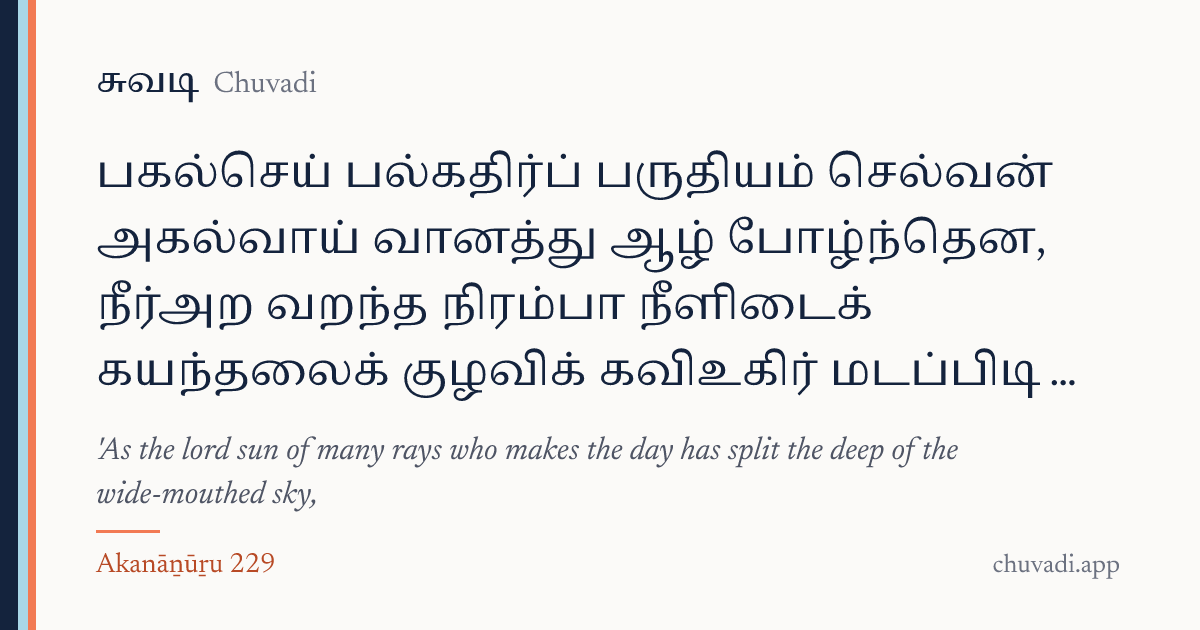
'பகலை உண்டாக்கும் பல கதிர்களையுடைய ஞாயிறு அகன்ற வானத்தின் ஆழத்தைப் பிளந்து சுடுவதால், நீர் வற்றி வறண்ட, முடிவில்லாத நீண்ட வழியில், மென்மையான தலையுடைய கன்றுகளையும் வளைந்த நகங்களையும் உடைய இளம் பெண்யானைகள் தழையுணவையும் மறுத்து, மெலிந்த விலாக்களோடு பலவாகக் கூடி, பாழடைந்த ஊரின் குடிசைகளைப் போலத் தோன்றும். அங்கே, நெடுந்தொலைவில் உள்ள மலைகளைக் கடந்து, பொய் சொல்வதில் வல்லவர் முயன்று தேடும் பெரும்பொருள் நாம் இல்லாமலேயே விரைவில் முடியட்டும். இரங்கத்தக்க சிறுமியே! பெரிய ஊடலைக் கொள்ளாதே' என்றும், காதல் நோய் மிகுந்து சிந்திய சில கண்ணீர்த் துளிகள் பல இதழ் போன்ற என் குளிர்ந்த கண்களின் பாவையை மறைக்கவும், பொன் போன்ற பசலை படரவும், புள்ளி வரிகளையுடைய என் அழகிய மாநிற மேனி அழியவும் கண்டு, 'வருந்தாதே' என்றும் நீ சொல்கிறாய், தோழி! கிளைகளில் பச்சை அரும்புகளை ஈன்ற செம்மொட்டுகளையுடைய முருக்கமரத்தின் மலரும் பூக்களைக் கோதித் தாதை உண்டு, அழகிய தளிர்களையுடைய மாமரத்தின் அசையும் உச்சியில் இருந்து, சிவந்த கண்களையுடைய கரிய குயில் கேட்போர் ஏங்கும்படி கூவும் இனிய இளவேனிலிலும், 'இப்போதே வருவோம்' என்று எனக்கு உறுதி சொன்னவர் வரவில்லை.
இது பாலைத் திணை; தன்னைத் தேற்றும் தோழிக்குத் தலைவி கூறும் மறுமொழி. பசியால் மெலிந்த பெண்யானைகள் பாழூர்க் குடிசைகள் போலத் தோன்றுவது சுரத்தின் கொடுமையையும் தலைவியின் மெலிவையும் உணர்த்துகிறது. இளவேனிலில் குயில் கூவுவது, சொன்ன பருவம் வந்தும் அவன் வரவில்லை என்பதைக் கூர்மையாக்குகிறது.
ஆங்கிலம் · English translationAI
Translation
- 'As the lord sun of many rays who makes the day
- has split the deep of the wide-mouthed sky,
- on the long, endless way parched until no water is left,
- the young she-elephants, with soft-headed calves and curving nails,
- refusing fodder, their flanks wasted, many together,
- look like the huts of a ruined village: there,
- crossing the hills of long distances,
- the great wealth the skilled deceivers labour to make,
- may it be done quickly, even without us,' so,
- 'do not cling to deep sulking, poor little girl!' and,
- the few sloping tears shed in the fullness of sickness
- drowning the pupils of my cool, many-petalled eyes,
- the gold-like pallor creeping over, my fine dark body
- with its spotted lines wasting away: seeing it,
- 'do not grieve,' you say; friend! On its branches,
- of the murukku that has put out green buds, red-tipped,
- scratching open the flowers as they unfold, drinking their pollen,
- up on the swaying top of the lovely-leaved mango,
- the red-eyed dark koel calls so that it fills one with longing:
- not even in this sweet young spring has he come,
- he who assured me, 'I will come back right away'.
What the poem says
The heroine speaks to her friend. The first ten lines repeat the friend's own advice: on that waterless road, where hungry she-elephants with their calves stand wasted like the huts of a ruined village, let the wealth he labours for be done quickly, with us or without us; do not sulk so bitterly. The friend has seen her tears and her pallor and said 'Do not grieve'. The heroine answers with the one fact that defeats consolation: it is spring, and he has not come.
The elephants of the opening are a fine pālai image. In the scorching heat the young mothers refuse fodder and stand with sunken flanks, so still and gaunt that they look like the empty huts of an abandoned village. It is the road the hero has taken, and it hints at the heroine's own wasting.
The close is spring at its sweetest. The murukku has put out red-tipped buds; the koel, a red-eyed dark cuckoo, scratches open the flowers to drink their pollen, then calls from the swaying top of a mango tree. In akam convention the coming of spring was often the season by which a lover promised to return, and the koel's call is the voice of longing. He swore he would be back 'right away'.
The word 'poyvalāḷar', 'skilled deceivers', is applied to the hero, either sarcastically by the friend or as the heroine's own bitter phrase within the quotation. The phrase 'āḻ pōḻntu' in line 2, 'split the deep', is a little uncertain.