




அகநானூறு 23
பாடல் · The poem
Tap a word to see where else it occurs.
பொருள் · Meaning in TamilAI
மண்ணின் முகம் குளிரும்படி வீசிப் பெய்த குளிர்ந்த மழையையுடைய, பறைபோல முழங்கும் மேகம் தன் வலிமை தீர்ந்து ஓய்ந்துவிட்டது. புதர்களின்மேல் உள்ள தளவின் காடையின் முள் போன்ற கூரிய சிவந்த அரும்புகள், நெருங்கிய கொத்துகளை உடைய பிடவத்தோடு ஒருசேர மலர்ந்துவிட்டன. காடே நறுமணம் கமழ்கிறது. பள்ளங்களில் உடைந்த சங்கைப் போன்ற கோடலின் பசுந்தளிர்களையும் அறுகம்புல்லின் இளந்தாள்களையும் வயிறார மேய்ந்து சலித்த, செருக்கான நடையுடைய சிறந்த ஆண்மான், தான் விரும்பும் பெண்மானைத் தழுவிக்கொண்டு குளிர்ந்த ஓடைநீரைப் பருகிப் படுத்து ஓய்வெடுக்கிறது. தோழி, நீ வாழ்க! நம் வீட்டின் அருகே உள்ள தாழ்ந்த நொச்சியைச் சுற்றிப் படர்ந்து மலரும் மௌவலின் கரிய கிளையைச் சுட்டிக்காட்டி, 'அது மலரும் காலத்துக்குள் வருவேன்' என்றாரே! அங்கே அவர் ஈட்டும் பொருள் அவ்வளவு மதிப்புடையதோ?
இது பாலைத் திணை என்று தொகுப்பின் வரிசை கூறினாலும், பாடலின் நிலக்காட்சி மழைக்காலத்தின் முல்லைக் காட்சியே; திரும்பி வருவதாகச் சொன்ன பருவம் வந்தும் தலைவன் வராததைத் தலைவி தோழியிடம் கூறுவது. பிணையோடு ஓய்வெடுக்கும் மான், தனித்திருக்கும் தலைவியின் துயரைக் கூர்மையாக்குகிறது. பதிப்பில் 'நொச்சி', 'மௌவல்' ஆகிய சொற்களுக்குப் பின் வரும் முற்றுப்புள்ளிகள் பொருந்தவில்லை. 'அனைய கொல்' என்பது 'அவ்வளவு மதிப்புடையதோ' என்று கொள்ளப்பட்டது; 'அங்கும் இப்படித்தானோ' என்றும் பொருள்கொள்ள இடமுண்டு.
ஆங்கிலம் · English translationAI
Translation
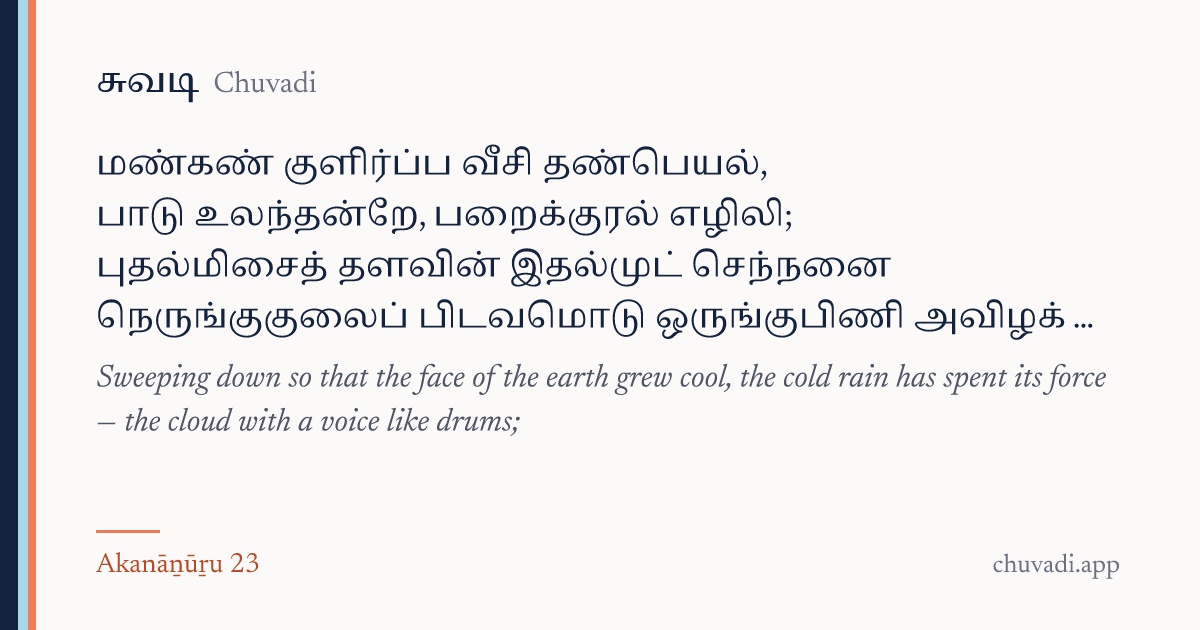
- Sweeping down so that the face of the earth grew cool, the cold rain
- has spent its force — the cloud with a voice like drums;
- on the bushes the red buds of the taḷavam, sharp as a quail's spur,
- together with the close-clustered piṭavam, have all loosened their bonds,
- and the forest is full of fragrance; in the hollows,
- the green shoots of the kōṭal, like conch shells broken open,
- and the soft blades of the grass he has had his fill of; and the proud-gaited
- noble stag, holding close his beloved doe,
- has drunk the cool running water and lain down to rest;
- is it worth so much — long may you live, friend! — by our house,
- on the low nocci, winding round it, blossoms
- the mauval; pointing to its dark branch,
- 'By that time,' he said — the wealth he is making over there?
What the poem says
The heroine speaks to her friend. Her husband left to earn wealth and promised to be back by a certain season; that season has come and passed, and he is not here. Although the tiṇai is pālai, by the anthology's arrangement, the landscape is the mullai one of the rains, the season of return.
The first nine lines show the rains complete. The thundering clouds have poured down and are now spent; the earth is cool. Taḷavam and piṭavam have burst into flower and the forest smells sweet. The stag has grazed his fill of kōṭal shoots and grass, drunk from the stream, and lies down with his doe. Everything in the scene has found rest and company, which sharpens her own loneliness.
The last four lines carry the bitter question. At the house the mauval jasmine winds round the low nocci bush and blossoms. When he left, he pointed to its dark branch and said, 'by that time', meaning he would return when it flowered. It has flowered. 'Is it worth so much,' she asks, 'the wealth he is making there?' The wealth is set against the failed promise, and against the stag who stayed with his doe.
The edition has two odd full stops, after 'nocci' (line 11) and after 'mauval' (line 12); they break the phrase 'the mauval that blossoms winding round the low nocci' and are ignored here. The opening of line 10, 'aṉaiya kol', is taken as 'is it worth so much?'; it might also mean 'is it like this there too?'.