




அகநானூறு 234
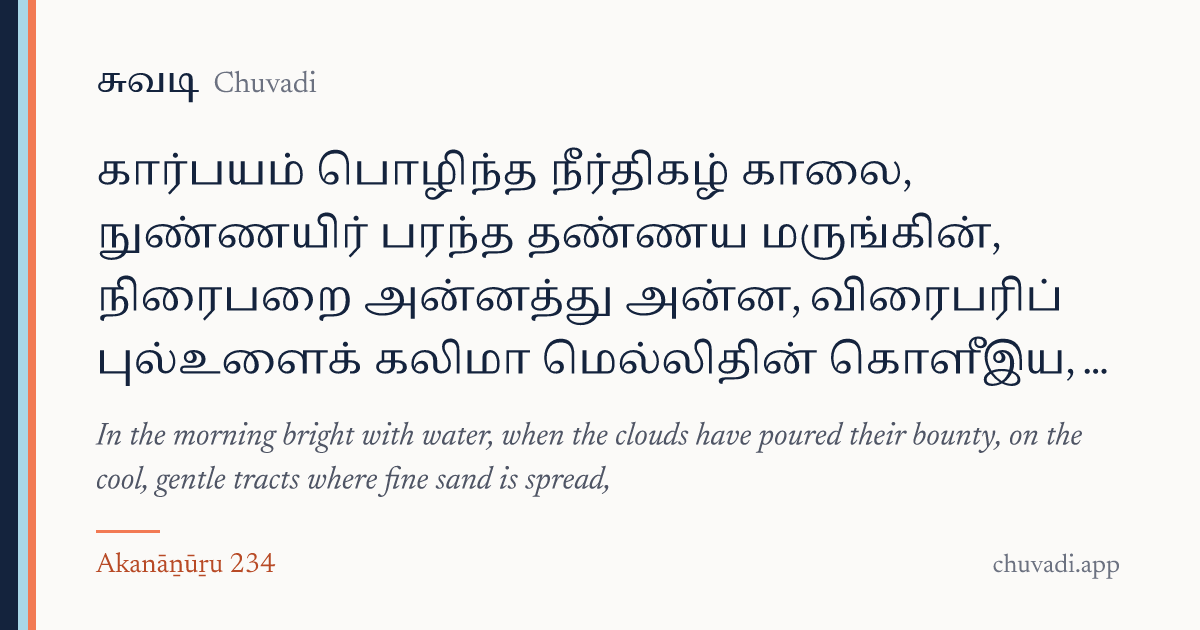
பாடல் · The poem
Tap a word to see where else it occurs.
பொருள் · Meaning in TamilAI
மேகங்கள் தம் பயனாகிய மழையைப் பொழிந்ததால் நீர் ஒளிரும் காலைப் பொழுதில், நுண்ணிய மணல் பரவிய குளிர்ந்த மென்மையான நிலத்தில், வரிசையாகப் பறக்கும் அன்னப் பறவைகளைப் போல விரைந்து செல்லும், மெல்லிய பிடரிமயிருடைய செருக்கான குதிரைகளை மெதுவாகப் பூட்டி, கடிவாளக் கயிறுகளை ஒருசேரப் பிடித்து, மணலில் அழுந்திய பல ஆரங்களையுடைய சக்கரம் மென்மையான வழியைப் பிளக்க, காற்றோ என்று மயங்கும்படி, நூல்முறைப்படி ஆராயும் கண்களும் குறை காண முடியாத சிறந்த வேலைப்பாடமைந்த நெடிய தேரில் ஏறி, நல்ல வெற்றியைப் பெறுபவனே, மிக விரைவாகச் செலுத்துவாயாக! நெருங்கிய தழைகளை உண்டு சலித்த, துள்ளும் நடையுடைய இளம் பெண்மான் ஆண்மானோடு கூடிய மகிழ்ச்சியால் துன்பமின்றித் துள்ளி விளையாடவும், அழகிய சிறகுகளையுடைய வண்டுக் கூட்டம் மெல்லச் சிறகடித்து மணமுள்ள முல்லை மலர்களின் தாதை விரும்பி ஒலிக்கவும், பகல் கழிந்த பொலிவற்ற மாலையில், காட்டை அடுத்த, வாழ்வதற்கு இனிய நல்ல ஊரில், மிகுந்த ஏக்கத்தால் வருந்தி மையுண்ட கண்களில் நீர் வழிய, அழகிய மேனியில் பசலை படர்ந்திருக்கும் அவள், மின்னலைப் போல ஒளிரும் தன் கூந்தலின் பின்னலை அவிழ்க்கும்படி விரைந்து செல்வாயாக!
இது முல்லைத் திணை; வினை முடிந்து திரும்பும் தலைவனைத் தேரை விரைந்து செலுத்தும்படி பாகனோ உடன் இருப்பவனோ கூறுவதாகத் தோன்றுகிறது; தலைவனே பாகனை இவ்வாறு அழைப்பதாகவும் கொள்ளலாம். ஆண்மானோடு கூடி மகிழும் பெண்மான், வரப்போகும் கூடலைக் குறிக்கிறது. பிரிவுக் காலத்தில் கட்டி வைத்த கூந்தலைத் தலைவன் வந்தபின் அவிழ்ப்பது மரபு.
ஆங்கிலம் · English translationAI
Translation
- In the morning bright with water, when the clouds have poured their bounty,
- on the cool, gentle tracts where fine sand is spread,
- like swans flying in a row, with swift gait,
- the proud horses with tufted manes, gently harnessed,
- holding the reins together in one hand, the deep-sunk
- many-spoked wheel cutting the soft road,
- so that one takes it for the wind, mounting it, beyond
- the eye's checking by the rules of the craft, the tall chariot so well made,
- drive it with all speed, you who win good victories!
- Where the soft young doe of leaping gait, tired of the crowded leaves,
- frisks unharmed, glad of union with the stag,
- where swarms of lovely-winged bees with soft-beating wings
- hum, longing for the pollen of the fragrant mullai flowers,
- in the dull evening when the daylight has gone,
- in the good town sweet to live in, set by the forest,
- she whose kohl-dark eyes drip tears, worn by endless longing,
- she with the pallor spread over her fine skin,
- so that she may untie the braids of her lightning-bright hair!
What the poem says
The speaker urges 'you who win good victories' to mount the chariot and drive it home at full speed. The addressee is most naturally the hero, returning from a successful campaign, and the speaker may be his charioteer or a companion; it is also possible that the hero addresses his driver with a courteous title. The poem names no one, so either reading is open.
The first half is a celebration of the ride after the rains. The ground is cool and soft with fine sand, the horses with tufted manes fly like a row of swans, the many-spoked wheel sinks into the soft road, and the chariot is so finely made that it surpasses anything the rules of the craft could check. The sense of speed and lightness is the hero's eagerness turned into motion.
The second half moves to the mullai landscape near home. A young doe frisks unharmed, glad to be with her stag; bees hum over the mullai flowers; and the dull evening falls on a forest town. There the heroine waits, her eyes wet with tears and her skin pale with longing. The doe united with its stag is the image of the reunion to come.
The last line gives the purpose: 'so that she may untie the braids of her hair'. In Sangam convention a woman whose husband is away keeps her hair bound up and unadorned, and loosens it only when he returns. The hair is 'like lightning', a striking phrase that may refer to its gleam.