




அகநானூறு 242
பாடல் · The poem
Tap a word to see where else it occurs.
பொருள் · Meaning in TamilAI
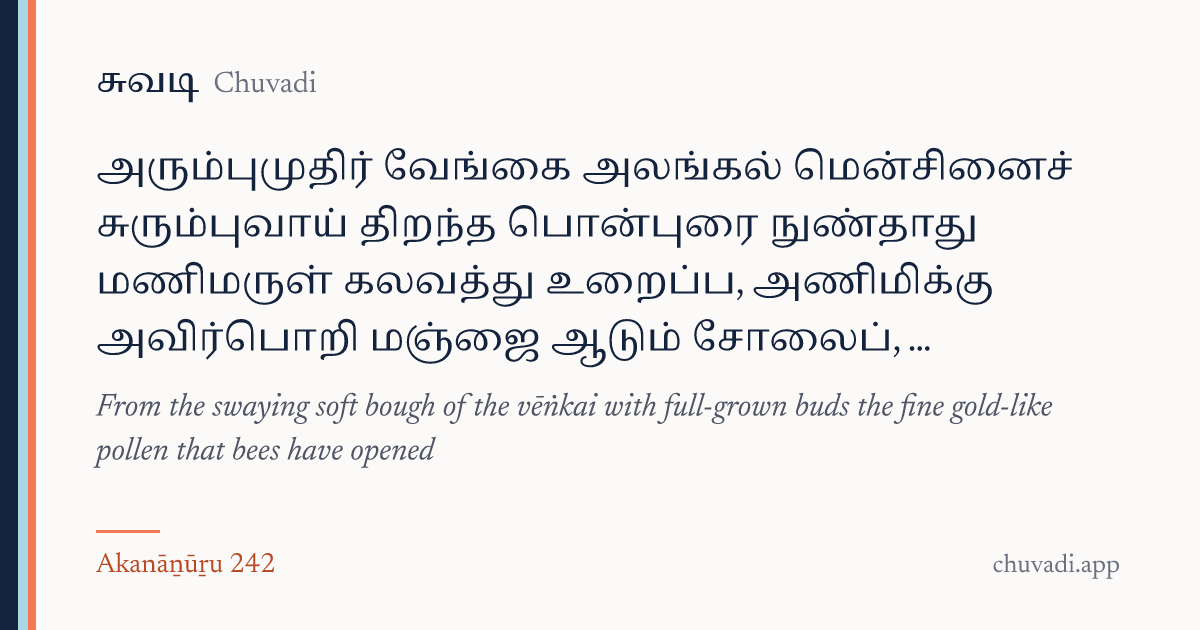
முற்றிய மொட்டுகளையுடைய வேங்கையின் அசையும் மென்கிளையிலிருந்து, வண்டுகள் வாய் திறந்து விட்ட பொன் போன்ற நுண்ணிய தாது, நீலமணி போன்ற தோகையின் மேல் உதிர, அதனால் மேலும் அழகுபெற்று ஒளிரும் புள்ளிகளையுடைய மயில் ஆடும் சோலை அது. பசிய தாளும் வளைந்த கதிரும் உடைய செந்தினை விளையும் அகன்ற புனத்தில், சிவந்த கழுத்துக்கோடுடைய கிளிகளை நம்மோடு சேர்ந்து ஓட்டியவனுடைய இயல்பால் வந்தது இந்நோய் என்பதை அன்னை அறியவில்லை. "தளிர் போன்ற நுண்ணிய நிறமும் அழகும் உடைய என் மகளின் துயரத்துக்குக் காரணத்தை அறிய வேண்டும்" என்று பல பிரப்புக் கூடைகளை வைத்து, ஒன்றும் அறியாத வேலனை அழைத்து, வெறியாடும் அகன்ற களம் பொலியும்படி தெய்வத்தைப் போற்றுகிறாள். அவள் ஆட்டுக்குட்டியின் உயிரைப் பலியிடுவதற்கு முன்னே நாம் அவனிடம் சென்றால், தோழி, மணம் கமழும் நறைக்கொடி சுற்றிய குளிர்ந்த மொட்டுகள் நிறைந்த சாரலில், பெருமலையின் பிளவுகளில் உயர்ந்த சிறிய இலைச் சந்தன மரத்தின் மென்கிளையைத் தீண்டி, மேலே தேனடை தொங்கும் உயர்ந்த சிகரமுடைய மலைநாடன் என்னை மணந்த அந்த மார்பு, முன்கையிலிருந்து கழன்று போகத் துணிந்த ஒளிரும் வளையல்களும், சீரான மூட்டுகளையுடைய பருத்த தோள்களும் அழிந்த அழகை விட்டுப் பழைய எழிலைப் பெறும்படி, அரும்பும் இளமுலைகள் அழுந்தப் பலமுறை என்னைத் தழுவுமே!
குறிஞ்சித் திணை; வெறியாட்டு நிகழும்போது தலைவி தோழிக்குக் கூறுவதாகக் கொள்ளலாம்; தோழி கூற்றாகவும் கொள்ள இடம் உண்டு. நோயின் காரணம் தலைவன் என்பது அன்னைக்குத் தெரியாததால் வெறியாட்டு வீணானது என்பதே கருத்து. எட்டா உயரத்தில் தொங்கும் தேனடை, எளிதில் அடைய முடியாத தலைவனின் உறவைக் குறிப்பதாகக் கொள்ளலாம்.
ஆங்கிலம் · English translationAI
Translation
- From the swaying soft bough of the vēṅkai with full-grown buds
- the fine gold-like pollen that bees have opened
- drips onto the sapphire-like plumage, and, all the lovelier,
- the peacock with its gleaming eyespots dances in the grove;
- in the wide field of red millet with green stalks and bending ears,
- he who drove off the red-collared parrots with us —
- that it came from what he is, she does not know; "With fine hue,
- like tender leaves, is the beauty of my daughter; the cause of her grief
- I must know", so saying, setting out many baskets of offerings,
- bringing in the vēlaṉ who knows nothing, mother
- praises the god so that the wide arena of the veṟi rite shines;
- before she gives away the young goat's life, if we go to him,
- the bright bangles, shining far, that have resolved to leave
- the forearm grown loose, and the broad shoulders with even joints,
- so that they win back their old charm after their beauty has wasted,
- with my budding young breasts sinking in, many times
- it would surely embrace me, — friend! —
- on the slopes thick with cool buds bound by fragrant naṟai creepers,
- touching the soft boughs of small-leaved sandal
- that grows tall in the clefts of the great mountain, above it
- hangs honeycomb on the distant peak —
- the chest of the lord of that mountain who made me his!
What the poem says
The heroine is wasting with love for a man she met while guarding the millet field, and her mother, not knowing the cause, has called in the vēlaṉ, the priest of Murukaṉ, to perform the veṟi rite of possession and divination. The heroine speaks to her friend, though the poem could also be given to the friend speaking of the heroine; the closing "who made me his" and the address "friend" favour the heroine.
The scene opens with a peacock dancing in a grove while pollen from the flowering vēṅkai falls on its plumage, a picture of the hill country in its beauty. In the millet field below, the young man used to help the girls scare away the parrots. The mother does not know that the girl's illness comes from him. She says she must find out the cause of her daughter's suffering, sets out baskets of offerings, brings in a priest who, the heroine says bluntly, "knows nothing", and praises the god in the decorated arena.
Before the goat is sacrificed, says the heroine, if they could only go to him, his embrace would restore her: her bangles, which have "resolved to leave" her thinning wrists, would stay, and her shoulders would regain their old beauty. The mountain he comes from is described lavishly, with sandal trees in the clefts and honeycomb hanging from the high peak; such rich, hard-to-reach sweetness fits the man she cannot freely reach. The point, common in kuṟiñci, is that the rite is aimed at the wrong cause. Line 12–13 are slightly ambiguous in their joining; the reading taken here is natural but not certain. This edition names no poet.