




அகநானூறு 248
பாடல் · The poem
Tap a word to see where else it occurs.
பொருள் · Meaning in TamilAI
தோழி, இதைக் கேட்டு நீ சிரிக்காதே! நேற்று இரவு, வலிய வேட்டை நாய்களைத் தாக்கி, தன் வலிய குட்டிகளைக் காத்து, இளைஞர்கள் நெருங்குவதைத் தடுத்து நிறுத்தி, தன் கூட்டத்தோடு நான்கு முலைகளையுடைய பெண்பன்றி தப்பிச் செல்லும்படி செய்து, காட்டை விட்டு வந்து, கடக்க அரிய குறுகிய இடுக்கு வழியில் மனிதரை எதிர்நோக்கி நின்றது அஞ்சாத கண்களையுடைய ஒரு பன்றி. அதைக் கண்ட கானவன் அருகே சென்றான்; தான் தொடுத்த கூரிய அம்பு மூட்டுவரை பாயும் வலிமை உடையதாக இருந்தும், அதனை எய்யாமல், "அரிய வழியில் பகைவரைத் தடுக்கும் எம் பெருவீரனைப் போல இருக்கிறது" என்று சொல்லித் திரும்பிச் செல்கிறான். அத்தகைய குன்றுநாட்டின் தலைவன், அடர்ந்த புதர் சிக்கியதால் முறுக்கு அவிழ்ந்து கிழிந்த, பூக்கள் வாடிய மாலை, உயர்ந்து திரண்ட வலிய தோள்களில் காளையின் திமிலில் கட்டிய கயிறு போல அழகாக அசைய, நம் வீட்டுக்கு வந்து நின்றான். அன்னை அவனைக் கண்டாள்; உடனே என் முகத்தைப் பார்த்து, "நீ நல்லவள்தான்!" என்று சொல்லிச் சிரித்துக்கொண்டே போய்விட்டாள்!
குறிஞ்சித் திணை; தலைவி தோழிக்குக் கூறுவதாகக் கொள்ளலாம். அன்னை தலைவனைக் கண்டு களவை அறிந்துகொண்டதை அவள் கேலிச்சொல் காட்டுகிறது; இது மணத்துக்கு வழி வகுக்கலாம். வீரத்துக்காக வேட்டுவன் விட்டுவிட்ட பன்றி போற்றத்தக்க தலைவனையும் நினைவூட்டுகிறது. எட்டாம் அடியின் அமைப்பும் பொருளும் உறுதியாகத் தெரியவில்லை.
ஆங்கிலம் · English translationAI
Translation
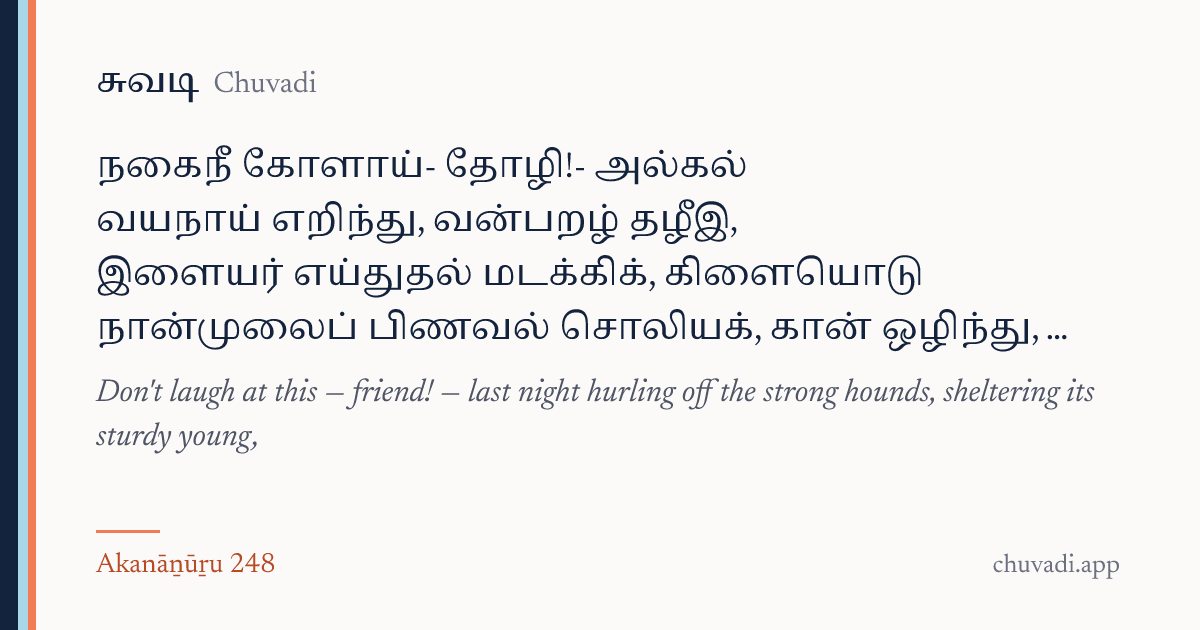
- Don't laugh at this — friend! — last night
- hurling off the strong hounds, sheltering its sturdy young,
- turning back the young hunters' advance, so that with the herd
- the four-teated sow slipped away, leaving the woods,
- in the cramped neck of a narrow gap it stood, watching for men,
- the fierce-eyed boar; seeing it, the forest hunter
- drew near, but the sharp-tipped arrow he had fitted,
- strong enough to pierce to the joint, he would not let fly as his weapon would carry,
- saying "it is like our great hero who bars the hard path",
- and turns away without shooting — in that hill country, its lord,
- because the dense thicket caught at him, his garland torn, its twists undone,
- the garland with drooping flowers on his raised, rounded, strong shoulders
- swinging beautifully like the rope on a bull's hump,
- came to the house and stood there; mother saw him,
- and quickly looked into my face,
- said "You are a fine one!", laughed, and went away!
What the poem says
The heroine tells her friend, half in alarm and half in amusement, how her mother found out about her lover. "Don't laugh," she begins, for the story has its comic side. The speaker could also be the friend, but "looked into my face" most naturally means the girl herself.
The hero's country is introduced through a hunting scene. A boar, cornered, beats off the hounds, shields its young and holds back the hunters long enough for the sow and the herd to escape; then it stands alone in a narrow gap, waiting for the men. A hunter comes close with an arrow fitted, but will not shoot. "It is like our great hero who bars the hard path," he says, and turns away out of respect for its courage. Line 8 is difficult and its exact construction is uncertain; the sense taken here is that he holds back a shot that could have killed.
The hero arrives at the house fresh from the thickets, his garland torn and its flowers drooping, swinging on his broad shoulders like the rope on a bull's hump. He stands at the door, and the mother sees him. She glances at her daughter's face, says "you are a fine one!" and walks off laughing. The mother's ironic remark shows she has understood everything. The poem leaves the consequence open, but discovery by the family is often the step that leads to marriage. The brave boar admired and spared may also reflect the hero, a man worth respecting. This edition names no poet.