




அகநானூறு 25
பாடல் · The poem
Tap a word to see where else it occurs.
பொருள் · Meaning in TamilAI
'உயர்ந்த கரைகளை உடைய காட்டாற்றின் கடும் வெள்ளம் வற்றிவிட்டது. ஒளிரும் நீரோட்டம் படிந்த கலப்பு மணலுடைய அகன்ற துறையின் குளிர்ந்த குளத்தருகே உள்ள ஒவ்வொரு சோலையிலும், பசுமையான மகரந்தம் அணிந்த காஞ்சி, மலர்கள் நிறைந்த மணல்மேடுகளில் புதிய திருமண மணத்தை மிகுதியாகப் பரப்புகிறது. மாம்பூக்களைக் கொத்திய நீலமணி நிறமுடைய கரிய குயில், நடுவில் அமர்ந்து ஒலிக்கும் குரலில் நாள்தோறும் ஏதோ சொல்வதுபோல மாறிமாறிக் கூவுகிறது. இலவம் தன் பூக்களைக் கொத்தாக உதிர்த்த இடத்தில், பூத்த கிளைகளுடைய கோங்கின் நுண்ணிய மகரந்தம் விழுவது, வணிகர் பவளச் செப்பில் பொன்னைக் கொட்டுவதுபோல இருக்கிறது. இகழ்பவரும் இகழாத இந்த இளவேனில் காலமே, வாக்குக் கொடுத்தவர் குறித்த அடையாளம்' என்று நீ சொல்கிறாய். 'நான் வராததால் உன் துயருற்ற மையுண்ட கண்கள் கண்ணீர் சொரிய, உலர்ந்த நெஞ்சத்தோடு நான் வருந்துகிறேன், சிறுமகளே! என் உயிர் துன்புறட்டும்!' என்று மென்மையான இனிய சொற்களைச் சொல்லிக்கொண்டு அவர் விரைவில் வருவார், தோழி, நீ வாழ்க! பகைவர் வந்த போர்களை வென்ற, வில் ஏந்திய பெரிய கையை உடைய பொதியில் தலைவனும் பொன்தேர் உடையவனுமாகிய திதியனின் இனிய இசைக்கருவிகள் போல ஒலிக்கும், பாறைமேல் அருவிகள் விழும் காட்டைக் கடந்து சென்றவர் அவர்!
இது பாலைத் திணை; தலைவன் குறித்த இளவேனில் வந்தும் அவன் வராததால் வருந்தும் தலைவியைத் தோழி தேற்றுவது. காஞ்சியின் 'திருமண மணமும்' குயிலின் கூவலும் இணைசேரும் பருவத்தைக் காட்டுவதால் தலைவியின் தனிமை மேலும் கூர்மையாகிறது. பதிப்பில் மேற்கோள் குறிகள் ஒழுங்கின்றி உள்ளன; முதல் பதின்மூன்று அடிகள் தலைவியின் சொல் என்றும், பதின்மூன்று முதல் பதினாறு வரை தலைவன் சொல்லப்போகும் சொல் என்றும் இங்கே கொள்ளப்பட்டது.
ஆங்கிலம் · English translationAI
Translation
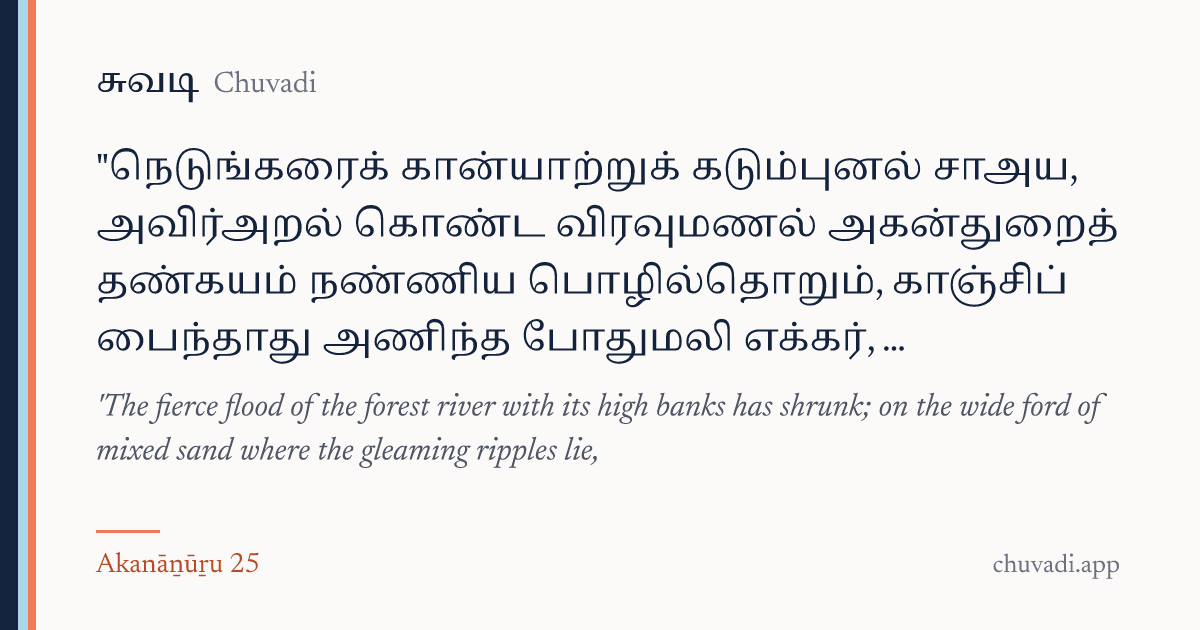
- 'The fierce flood of the forest river with its high banks has shrunk;
- on the wide ford of mixed sand where the gleaming ripples lie,
- in every grove near the cool pool, the kāñci,
- decked with green pollen, on sandbanks crowded with blossom,
- spreads its wedding fragrance thick and new;
- the great dark koel, sapphire-hued, that has pecked at the mango buds,
- perched in the midst, with its resonant calling voice, every day
- calls out in its turn, as if it were telling us something;
- there, where the ilavam has shed its flowers in clusters,
- the fine pollen from the flowering branches of the kōṅku falls, as when traders
- pour gold into a coral casket —
- the season of the young year, which even scorners do not scorn:
- surely he who made the promise set this as the sign,' you say; 'that your
- sad, kohl-dark eyes should drip with tears
- because I did not come — with a withered heart
- I grieve, little girl! May my life suffer for it!' — so
- speaking soft, sweet words, quickly
- he will come — long may you live, friend! — the warriors
- who marched to battle he overcame, he of the great bow-bearing hand,
- the lord of Potiyil, Titiyaṉ of the golden chariot —
- like his instruments of sweet music, resounding,
- the waterfalls pour over the rocks of the forest — he who has crossed it!
What the poem says
The heroine's friend comforts her. The heroine has been saying that spring, the season her husband promised to return by, has arrived and he has not; the friend answers that he will come soon and will himself apologise.
The first thirteen lines are the heroine's own words, as the friend repeats them. The forest river has dropped after the rains; the kāñci on the sandbanks spreads its 'wedding fragrance'; the koel, having pecked at mango buds, calls day after day as though telling them something; the red ilavam flowers have fallen and the golden pollen of the kōṅku drops into them, like gold poured into a coral box. This is iḷavēṉil, early spring, 'which even scorners do not scorn'. 'Surely,' the heroine had said, 'this was the sign he set.'
The friend then imagines what he will say when he arrives: 'Because I did not come, your eyes have streamed with tears; I grieve, little girl; let my own life suffer for it.' He will say such soft, sweet things and come quickly.
The man is described, as often in pālai, as the one who crossed the forest. Here its waterfalls are compared with the instruments of Titiyaṉ, lord of Potiyil, a bowman who won the battles his enemies came to fight and who owns a golden chariot. The poem says only this about him. The edition's quotation marks are uneven (a double mark opens line 1, closes in line 13, and closes again in line 16 without an opening); the reading here takes lines 1–13 as the heroine's words and lines 13–16 as the hero's imagined words.