



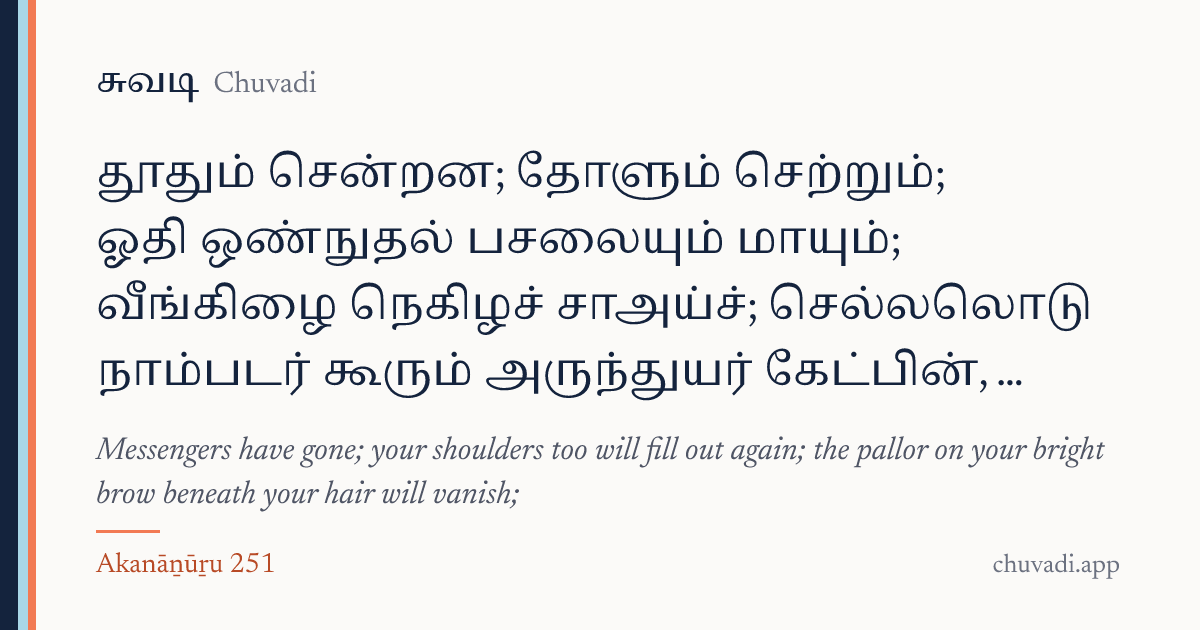

அகநானூறு 251
பாடல் · The poem
Tap a word to see where else it occurs.
பொருள் · Meaning in TamilAI
தூது சென்றுவிட்டது; உன் தோள்களும் மீண்டும் பருத்து நிறையும்; கூந்தலுக்குக் கீழே உள்ள ஒளிரும் நெற்றியில் படர்ந்த பசலையும் மறையும். செறிந்த அணிகள் கழல, நீ மெலிந்து, வருத்தத்தோடு நாம் அடையும் மிகுந்த பெருந்துயரத்தை அவர் கேட்டால், நந்தர்களின் செல்வத்தையே பெற்றாலும் அங்கே தங்க மாட்டார், தோழி, வாழ்வாயாக! வெற்றிக்கொடியும் காற்றுப் போல் விரையும் அழகிய தேர்களும் உடைய கோசர், மிகப் பழைய ஆலமரத்தின் கீழ் உள்ள வலிய கிளைகளையுடைய பொதியிலில், பகைவர் முனையை அழித்த நாளில் இனிய ஒலியுடைய முரசைக் குறுந்தடியால் அடித்து முழங்கினர். மோகூர் பணியாததால் பகைவராக வந்த பெரும்படையுடைய புதியவரான மோரியர், தம் அழகிய தேர்ச்சக்கரங்கள் உருண்டு செல்லும்படி வெட்டிச் செப்பனிட்ட, ஒளிரும் வெள்ளருவிகளையுடைய பாறைவழிக்கு அப்பால், குற்றமற்ற வெண்கொம்புகளையுடைய பெருமித யானை தன் வாயிலிருந்து தப்பிவிட்டதால், அரிய நிறமுடைய வலிய புலி பெருநிலம் குழியும்படி குத்தி, செருக்கோடு காவலின்றித் தங்கும் தேக்கமரம் நிறைந்த சோலை உள்ள, முடிவில்லாத நீண்ட வழியில் சென்றவர், அரத்தால் அறுத்த உன் அழகிய சங்குவளையல்களைக் கழலச் செய்தவர்.
பாலைத் திணை; பிரிவால் வருந்தும் தலைவியைத் தோழி தேற்றுவது. நந்தரின் செல்வம் பெருஞ்செல்வத்துக்கு உவமையாகக் கூறப்படுகிறது. கோசர், மோகூர், மோரியர் பற்றிப் பாடல் சொல்வதற்கு மேல் இங்கு விளக்கவில்லை; மோரியர் வடநாட்டு மௌரியர் என்பது பொதுவான கருத்து. "செற்றும்" என்பதை இப்போது மெலிகின்றன என்றும் கொள்ள இடமுண்டு.
ஆங்கிலம் · English translationAI
Translation
- Messengers have gone; your shoulders too will fill out again;
- the pallor on your bright brow beneath your hair will vanish;
- as your swelling ornaments slip, as you waste, with the sorrow
- we suffer and the bitter grief that grows, if he hears of it,
- even if he should gain the wealth of Nantaṉ, there
- he will not stay — long may you live, friend! — where with victorious flags
- the Kōcar, with adorned chariots as swift as the wind,
- at the meeting-place under the ancient old banyan with its sturdy boughs,
- made the sweet-sounding drum roar under the drumstick
- on the day they shattered the enemy front; because Mōkūr
- would not submit, coming on as enemies,
- the newcomer Mōriyar, with a vast army,
- so that the wheels of their adorned chariots might roll, cut through
- the rock, with its gleaming white waterfalls; beyond it,
- the strong tiger of rare colour, from whose jaws
- the noble elephant with spotless white tusks escaped,
- strikes the ground till the great earth gives, and in its pride
- rests there unguarded, in the grove crowded with teak;
- he went through the endless, long tract —
- he who loosened from their place your lovely file-cut bangles!
What the poem says
The heroine's friend comforts her. Messages have already gone to him, she says; once he hears how the heroine is wasting, how her bangles and ornaments slip and pallor spreads over her brow, he will not stay away, not even for the treasure of Nantaṉ. The treasure of the Nanda kings was proverbial in Sangam poetry, and the poem uses it only as a measure of the greatest possible wealth (compare akam.265).
The remainder sets out where he has gone, using two pieces of history the poem itself names. The Kōcar, with victorious flags and chariots swift as wind, once beat their drums at a meeting-place under an ancient banyan on the day they shattered an enemy front. And when Mōkūr would not submit, the Mōriyar, called "newcomers", came against it with a great army and cut a passage through the rock so their chariots could pass. The Mōriyar are usually taken to be the Mauryas of the north, and their road-cutting is mentioned in other Sangam poems too, but the poem itself gives only these details; who the Kōcar fought, and how Mōkūr was involved beyond refusing to submit, is not said.
Beyond that rock-cut road lies a teak forest where a tiger, cheated of an elephant that slipped from its jaws, strikes the ground in fury and rests unafraid. The tiger's frustration and the escaped elephant need not carry a hidden meaning, though some may see in it the sense that the heroine's lover will escape the dangers of the road. The opening "will fill out" (ceṟṟum) is taken as a promise of recovery; it could also describe present shrinking, which would make the opening a lament rather than comfort. This edition names no poet.