



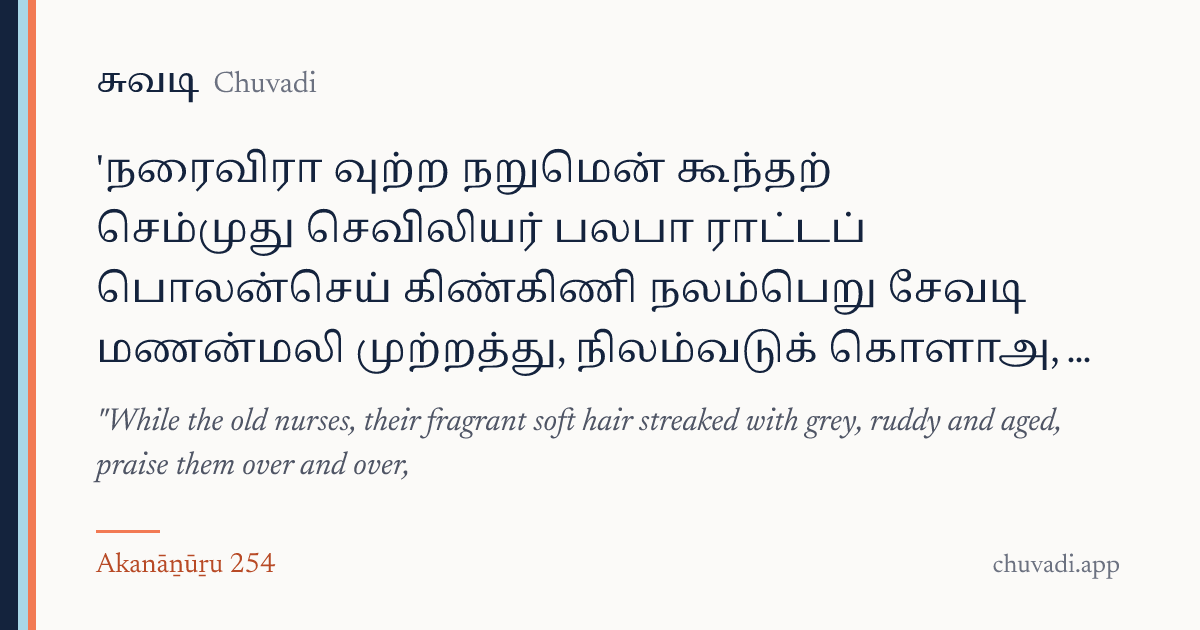

அகநானூறு 254
பாடல் · The poem
Tap a word to see where else it occurs.
பொருள் · Meaning in TamilAI
"நரை கலந்த மணமுள்ள மென்மையான கூந்தலையுடைய முதிய செவிலியர் பலமுறை பாராட்ட, பொன்னாலான கிண்கிணி அணிந்து அழகுபெற்ற சிவந்த சிறுபாதங்கள், மணல் நிறைந்த முற்றத்தில் நிலத்தில் சுவடு பதியாமல் நடக்கின்றன. வீட்டில் வாழும் சிவந்த கால்களையுடைய ஆண்புறா தன் துணையோடு குறுகிய பறத்தலைப் பழகி மேலே எழுகிறது. விளையாடும் கூட்டத்திலுள்ள சிறுவர்களைக் காணும்தோறும் நல்ல நெற்றியையுடைய அந்த இளமங்கை நம்மை நினைப்பாள். தனிமையோடு அவள் வாழும் கலக்கமான துன்பம் நீங்கும்படி, வேந்தனுக்குரிய வினையோடு வேறு நாட்டில் தங்கியிருந்து, இப்போது வினையை முடித்துவிட்டோம். ஆதலால் நீயும், தொழுவத்தில் நிற்பதை வெறுக்கும் தொழில் பழகிய குதிரைகளைக் கொண்டு, அணிகள் பூண்ட நெடிய தேரின் சக்கரம் நிலத்தில் பதிய, நுண்ணிய மின்னல் கொடி போலப் பசும்பயிரை அறுத்துக்கொண்டு, தளவமும் முல்லையும் சேர்ந்து மலர்ந்து குளிர்ந்து மணம் கமழும், உதிர்ந்த பூக்கள் நிறைந்த காட்டுநிலத்தின் நீண்ட வழி பின்னே போகும்படி தேரைச் செலுத்து" என்று நான் சொன்னவுடனேயே, தாமதிக்காமல், விரைவாக, மாலையிலுள்ள மணிகளால் குதிரைகளைத் தூண்டவும் வேண்டாமல், நாம் மகிழ்ச்சி பெறும்படி ஊரின் அருகே கொண்டு வந்துவிட்டாய்!
முல்லைத் திணை; வினைமுடித்துத் திரும்பிய தலைவன் தேர்ப்பாகனைப் பாராட்டுவது. சிறுவர் விளையாட்டைக் கண்டு தலைவி தன்னை நினைப்பாள் என்பது இல்லறத்தின் இனிமையை நினைவூட்டுகிறது. "தார்மணி மாஅறிவுறாஅ" என்ற அடியின் பொருள் உறுதியாகத் தெரியவில்லை.
ஆங்கிலம் · English translationAI
Translation
- "While the old nurses, their fragrant soft hair streaked with grey,
- ruddy and aged, praise them over and over,
- the little red feet made lovely by golden anklet-bells
- on the sand-strewn courtyard leave no mark upon the ground;
- the red-legged male pigeon that lives in the house
- practises short flights with its mate and rises up;
- each time she sees the little ones of the playing band,
- the young woman with the fine brow thinks of us;
- so that the bewildering grief in which she lives alone may go —
- having stayed in a foreign land on the king's business,
- now that we have come and finished the work, you too,
- with the work-trained horses that hate standing in the stable,
- so the wheel of the long chariot adorned with ornaments cuts in,
- like a fine streak of lightning, slicing the green crops,
- where taḷavam joins with mullai, cool,
- through the pastureland heaped with fallen flowers that hold their fragrance,
- so the long way falls behind, drive on!" — this I
- had only said, and without delay, swiftly,
- without even stirring the horses with the bells of their garlands,
- you brought us near the town, so that we have our joy!
What the poem says
The hero speaks to his charioteer as they reach home after a mission for the king. Most of the poem repeats what he said when they set out on the return: picturing his wife at home, he asked the charioteer to drive fast. The charioteer did so at once and has brought him to the edge of the town, so the poem ends in thanks and gladness.
His picture of home is gentle and domestic. In the sandy courtyard, children with little golden anklet-bells toddle about so lightly that their feet leave no mark, while grey-haired old nurses praise them; the house pigeon practises short flights with its mate. Each time his wife sees these little ones at play, he says, she thinks of him. The scene may imply that the couple has no child yet, or that she longs for him at the sight of family life; the poem does not specify.
Mullai is the tiṇai of waiting and return in the rainy season, and the drive passes through its proper landscape: pastureland where mullai and taḷavam jasmine bloom and fallen flowers lie heaped and fragrant. The horses, trained for work and impatient in the stable, cut through the green crops like streaks of lightning. Line 19, "without stirring the horses with the bells", is uncertain and may mean that the horses ran so smoothly that the bells hardly sounded. This edition names no poet.