



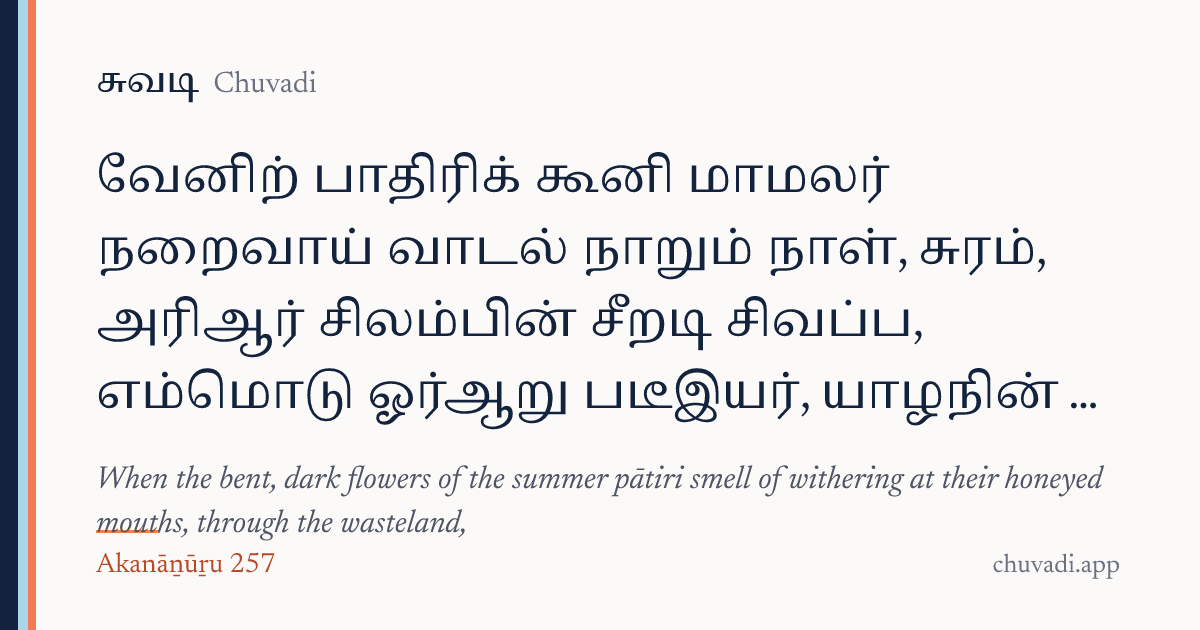

அகநானூறு 257
பாடல் · The poem
Tap a word to see where else it occurs.
பொருள் · Meaning in TamilAI
வேனில் காலத்துப் பாதிரியின் வளைந்த கரிய மலர்கள் தேனுடைய வாய் வாடி நாறும் இந்நாளில், பாலைவழியில், பரல்கள் நிறைந்த சிலம்பணிந்த உன் சிறிய பாதங்கள் சிவக்கும்படி எம்மோடு ஒரே வழியில் வர விரும்புகிறாய். உன் அடர்ந்த கூந்தலைச் செறிவாக வாரி முடித்து, மொட்டே இல்லாமல் முழுதும் மலர்ந்த சிறந்த மராமரத்தின், வண்டுகள் சூழும் பூக்களைச் சூடியிருக்கிறாய். அப்படி அணிசெய்த தேன் ஒழுகும் கூந்தலில் கூட்டமாக மொய்க்கும் சிறிய வண்டுகளை ஓட்டிக் காக்கவும் உனக்குத் தெரியவில்லை. அழகு தோன்ற, நுண்ணிய வேலைப்பாடுடைய ஒளிரும் வளையல்கள் முன்கையில் ஒலிக்க, மென்மையான மூட்டுகளையுடைய பருத்த தோள்கள் விளங்கக் கைகளை வீசி நடக்கிறாய். நடப்பதில் நீ மிகவும் வல்லவள்தான்! கள்வர்கள் பகைமிகுந்த கிளைவழிகளில் செல்வோரைக் காண்பதற்காக ஏறி நோக்கும் கவைத்த தளிருடைய யாமரத்தின் நார் நிறைந்த அடிப்பகுதியில் நீர் வரும்படி துளைத்து யானை சுவைத்துத் துப்பிய சக்கை, கல்வியறியாத உமணர்க்குத் தீமூட்டும் விறகாகும். துன்பம் தரும் அவ்விடத்தில், புதர் படர்ந்த தாழ்ந்த புற்றில் தங்கியுள்ள இரையை விரும்பி, வெள்ளைப் பாம்பு நெளியும்படி இழுக்கும் இளங்கரடி திரியும் மலைவழி அது!
பாலைத் திணை; உடன்வர விரும்பும் தலைவிக்குத் தலைவன் வழியின் கொடுமை கூறி மறுப்பது. மலரணிந்த அவளுடைய மென்மையும் கொடிய வழியின் கடுமையும் எதிரெதிராக வைக்கப்பட்டுள்ளன. "நடப்பதில் நீ வல்லவள்தான்" என்பது அன்பான கேலிச்சொல்.
ஆங்கிலம் · English translationAI
Translation
- When the bent, dark flowers of the summer pātiri
- smell of withering at their honeyed mouths, through the wasteland,
- so that your little feet with grain-filled anklets turn red,
- to share one road with us — you see — your
- full hair you gather up thick,
- and braid in it the blossoms of choice marām opened past all bud,
- circled by bees; and in your honey-dripping hair so adorned
- where bees crowd, small and many,
- you cannot even drive them off and guard it; so that you look lovely,
- with bright bangles of fine make jingling on your forearm,
- swinging your soft-jointed broad shoulders till they shine,
- you are good at walking, surely! — where, so the robbers
- may watch the paths at the hostile forks,
- the yā tree with forked shoots serves as a lookout,
- and on its fibrous trunk, gouged for water to come,
- the stripped fibres an elephant has chewed
- become kindling for the unlettered salt-traders;
- in that place full of suffering, where, on a low-ridged
- anthill overgrown with thicket, wanting the food lodged there,
- pulling out a white snake so it writhes,
- a young bear forages — on that mountain!
What the poem says
The hero speaks to the heroine, who wants to go with him on his journey through the wasteland. His answer is gently ironic. She would walk the hot track in summer, when even the pātiri flowers wilt, until her little feet in their anklets turned red. She has gathered her hair and decked it with marām blossoms, and she cannot even keep the bees out of it; she swings her arms as she walks, her bangles jingling. "You are good at walking, surely!" he says, meaning that she is not.
The second half shows what she would face. Robbers use a forked yā tree as a lookout over the paths. Elephants have gouged its trunk for moisture and chewed the bark, and the stripped fibre is gathered as kindling by salt-traders, called "unlettered", perhaps as rough wandering folk. On the anthills a young bear digs for termites and pulls out a white snake. Everything in the landscape is either dangerous or harsh.
The contrast between her delicate, flower-decked beauty and the cruelty of the road is the poem's whole argument; it is a refusal to take her, given with tenderness. The particle yāḻa in line 4 adds emphasis and has no simple English equivalent; it is rendered "you see". In line 15 the subject of "gouged" is understood to be the elephant of the following line. This edition names no poet.