




அகநானூறு 279
பாடல் · The poem
Tap a word to see where else it occurs.
பொருள் · Meaning in TamilAI
"நண்பர்களின் இல்லாமையையும், உறவினர்களின் துன்பத்தையும், நம்மோடு பொருந்தாமல் வாழ்பவர்களின் செல்வப் பெருக்கத்தையும் கண்டு, பொன்போல் ஒளிரும் சுணங்கோடு நெருங்கிப் பருத்த மென்முலைகளாகிய முற்றத்தைக் கடந்து செல்லாதவர்களே ஒரே ஊரில் தங்கி வாழ்வதைப் பொறுத்திருக்க முடியும்" என்று எண்ணிப் புறப்பட்டோம். ஆனால் இருள் செறிந்த இரவிலும் பகலிலும் மீண்டும் மீண்டும் உள்ளத்தில் மூண்டு என் வலிமையைச் சுட்டெரிக்கும் கூரிய நெருப்பு, முயற்சி என்னும் மழையால் அணையவில்லை. நாள்தோறும் நாம் இங்கே காட்டில் வருந்தி, ஏக்கத்தால் துன்புற்றுக் கொண்டிருக்க, இனிய நரம்புத்தொடையுடைய விளரிப் பண் பாடும் சிறிய யாழோடு, பூக்கள் நிறைந்த சோலையில் மகிழ்ந்து கூவும் குயிலும் சேர்ந்து, நாம் கூடி உறங்கிய தூக்கத்திலிருந்து எழுப்பும், நீர் தெளிந்த விடியற்காலையில், நம்மைப் போன்ற மனவலிமையை மேற்கொண்டு, அழகிய நடையுடைய சிறந்த பெண் அன்னத்தைப் போல மெல்ல மெல்ல நடந்து, செயலற்ற நெஞ்சோடு வந்து சேரும், மை போன்ற மென்மையான கூந்தலையுடைய மாமை நிறத்தவள் எப்படி இருப்பாளோ?
பாலைத் திணை; பொருள்வயின் பிரிந்த தலைவன் வழியில் தலைவியை நினைத்து வருந்துவது. பொருள் தேடச் செல்வதற்குக் காரணமான கருத்தை முதலில் கூறி, அது தன் ஏக்கத்தைத் தணிக்கவில்லை என்கிறான். "ஒட்டாது உறையுநர்" என்பதன் பொருள் உறுதியாகத் தெரியவில்லை.
ஆங்கிலம் · English translationAI
Translation
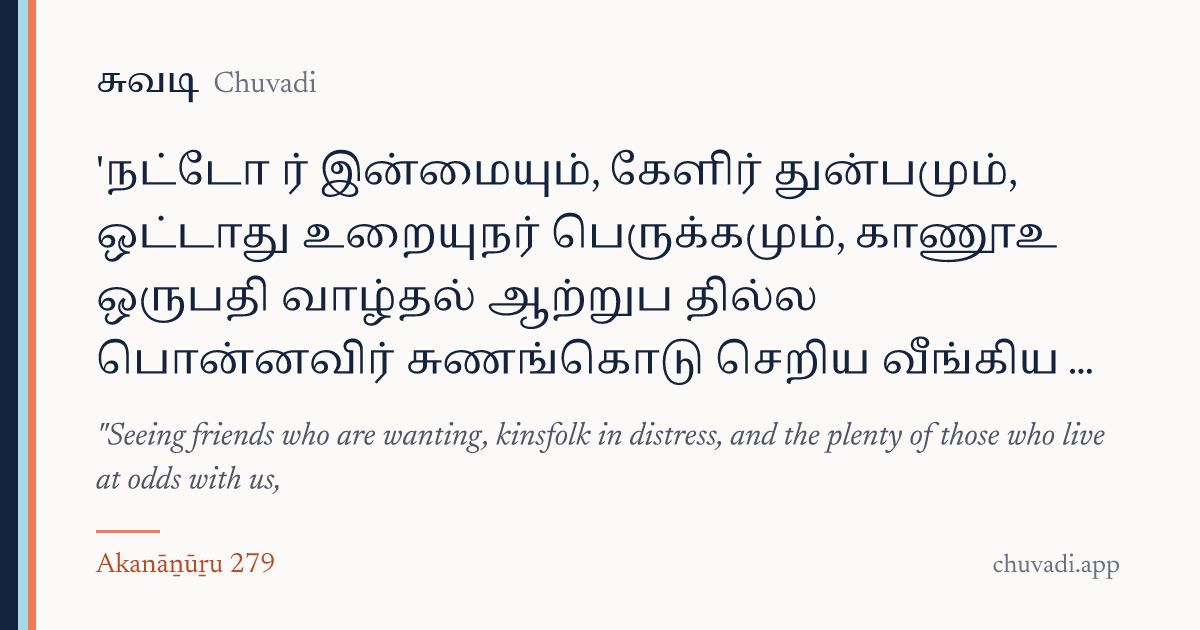
- "Seeing friends who are wanting, kinsfolk in distress,
- and the plenty of those who live at odds with us,
- they can bear to live on in one place, surely,
- only those who never go beyond the courtyard of soft breasts,
- swelling close together with spots glowing like gold!" — so thinking,
- through the dense night and through the day, again and again,
- the sharp fire smouldering in my heart that burns up my strength
- is not quenched by the rain of hard effort; and every day
- as we toil here in the wilds, suffering in our longing,
- how will she be, then — when with sweetly strung
- viḷari strings the small lute gives delight,
- and with the cuckoo of joyful voice in the flower-filled grove
- rouses us from our shared sleep, at the dawn when the water clears,
- taking on a strength like ours, with a lovely gait
- walking softly, gently, like a fine female swan,
- her heart helpless, coming near,
- the dark one, with hair smooth as kohl?
What the poem says
The hero speaks to himself while away on the journey for wealth. He begins with the reasoning that sent him away, in a sentence that sounds like a proverb: when friends are in need, kin in trouble and rivals prospering, only a man who never leaves the courtyard of his wife's breasts could bear to stay in one place. The quotation marks show that this is a saying he repeats, perhaps with some bitterness.
The reasoning has not helped. A sharp fire burns in his heart night and day, and the "rain" of effort does not put it out. As he toils in the wilderness he wonders how she is faring. He imagines her at dawn, at the hour when the music of the small lute and the cuckoo in the grove used to wake them both from sleep together and the water had just cleared. She, trying to be as strong as he is, walks softly like a female swan, but with a helpless heart.
The poem reverses the usual pālai pattern, in which the woman worries over the traveller; here the man worries over the woman at home. The images of dawn, lute, cuckoo and swan are gentle and domestic, set against the "forest" (kaṭaṟu) in which he labours. Line 2's "those who live at odds with us" is a reasonable reading of an uncertain phrase, and "taking on a strength like ours" in line 14 may also mean that she has the steadiness he himself relies on. This edition names no poet.