



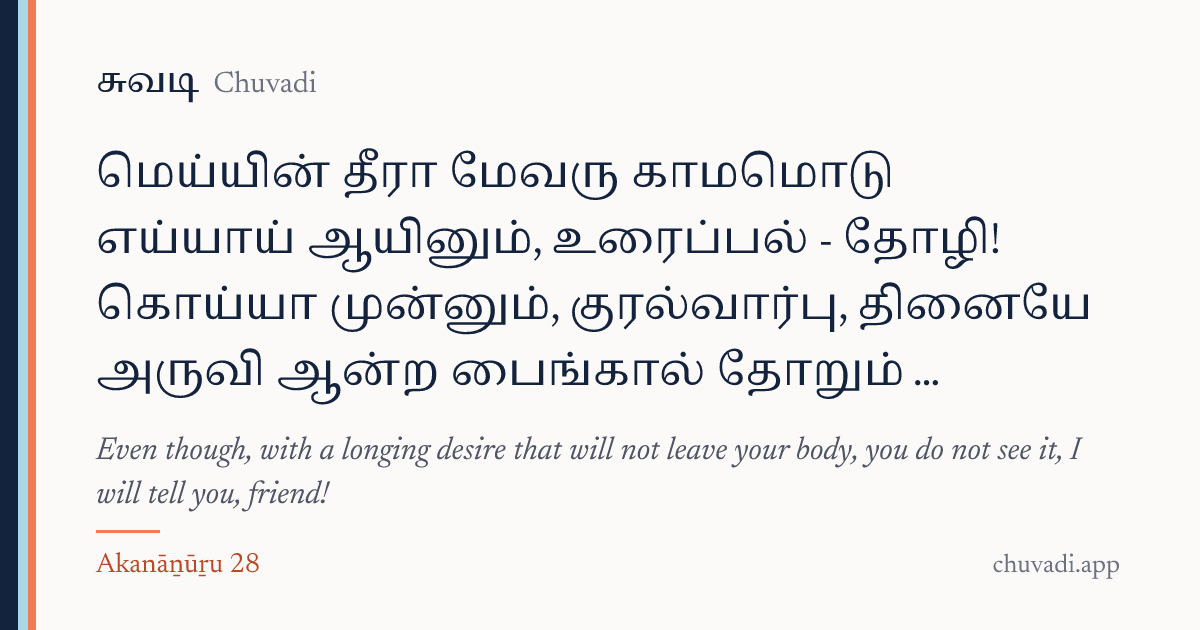

அகநானூறு 28
பாடல் · The poem
Tap a word to see where else it occurs.
பொருள் · Meaning in TamilAI
உடலைவிட்டு நீங்காத ஆசை நிறைந்த காதலால் நீ அதைக் கவனிக்கவில்லை என்றாலும் நான் சொல்கிறேன், தோழி! கதிர் கொய்வதற்கு முன்பே, தொங்கும் கதிர்களை உடைய தினைப்புனத்தில், கதிர் போய்விட்ட ஒவ்வொரு பசுந்தாளிலும் வெறும் அடித்தாள்கள் பல தோன்றிவிட்டன. நீயோ, எல்லா மணத்தையும் வெல்லும் நறுமணமுடைய, தேன் சொட்டும் கண்ணி அணிந்து, ஆர்வமிக்க நாய்களோடு பல மலைகளிலும் திரியும் வேட்டுவனைப் பெற்றதிலேயே மனநிறைவு அடைந்துவிட்டாய். உன் பூக்கள் நிறைந்த மேகலை அசையும்படி, மீண்டும் மீண்டும் எழுந்து, கிளிகளை ஓட்டும் தெளிவான கூக்குரலை இடையிடையே எழுப்பிக்கொண்டு, அங்குமிங்கும் நீ நடமாடாவிட்டால், அன்னை 'இவளுக்குச் சிறுகிளிகளை ஓட்டத் தெரியவில்லை' என்று சொல்லிப் பிறரைக் கொண்டுவந்து காவலுக்கு நிறுத்திவிடுவாள். அப்படி ஆனால், அவனுடைய மலர்ந்த அகன்ற மார்பை அடைவது அரிதாகிவிடும்!
இது குறிஞ்சித் திணை; தினைப்புனக் காவலில் இருக்கும் தலைவியிடம் தோழி கூறுவது. கிளி கவர்ந்த வெறும் தாள்கள் அவர்களின் களவை வெளிப்படுத்தக்கூடிய சான்றாகவும், அறுவடைக்காலம் நெருங்கி இனிச் சந்திப்பு அரிதாகும் என்பதன் குறிப்பாகவும் அமைகின்றன. நான்காம் அடியில் 'அருவி ஆன்ற' என்பதன் பொருள் உறுதியாகத் தெரியவில்லை; இங்கே 'கதிர் நீங்கிய' என்று கொள்ளப்பட்டது.
ஆங்கிலம் · English translationAI
Translation
- Even though, with a longing desire that will not leave your body,
- you do not see it, I will tell you, friend!
- Even before it is reaped, with its ears hanging down, in the millet,
- on every green stalk where the ears have been taken,
- many bare stubbles have appeared; and you,
- with a honey-dripping wreath whose fragrance outvies all others,
- the man with eager dogs who ranges over many hills —
- the hunter, you are content just to have him; ah, if, your
- flowered girdle swaying, rising up again and again,
- now and then calling the clear cry to scare off the parrots,
- you do not move about here and there, then mother,
- saying, 'She does not know how to chase off little parrots,'
- will bring in others and post them here; and then
- it will be hard to reach, that broad chest of his!
What the poem says
The heroine's friend speaks to her. The two girls have been set to guard the family's millet field against parrots, which in kuṟiñci poems is the usual cover for the heroine's secret meetings with her lover. The friend warns her that the arrangement is in danger.
The heroine is so absorbed in love that she has not noticed what is happening in the field: the millet is not yet harvested, but the parrots have been at it, and empty stalks are showing everywhere. The friend teases her a little. 'You are content just to have him,' the hunter with his fragrant wreath and eager dogs who roams the hills. In this poetry the hero of the hill country is often a hunter, and the description fits him.
Then the practical point. If she does not get up, again and again, her flowered girdle swaying, and call out to drive off the parrots, her mother will conclude that she cannot do the job and will send others to guard the field. The girls will be withdrawn, and the meetings will end. 'Then that broad chest of his will be hard to reach.'
The poem is light in tone and very concrete. The bare stalks are evidence that could give the lovers away; they also hint that the time of the harvest, and so the end of the girls' freedom in the field, is near. 'Aruvi āṉṟa' in line 4 is taken here as 'where the ears have been taken'; the phrase may describe the stalks differently.