



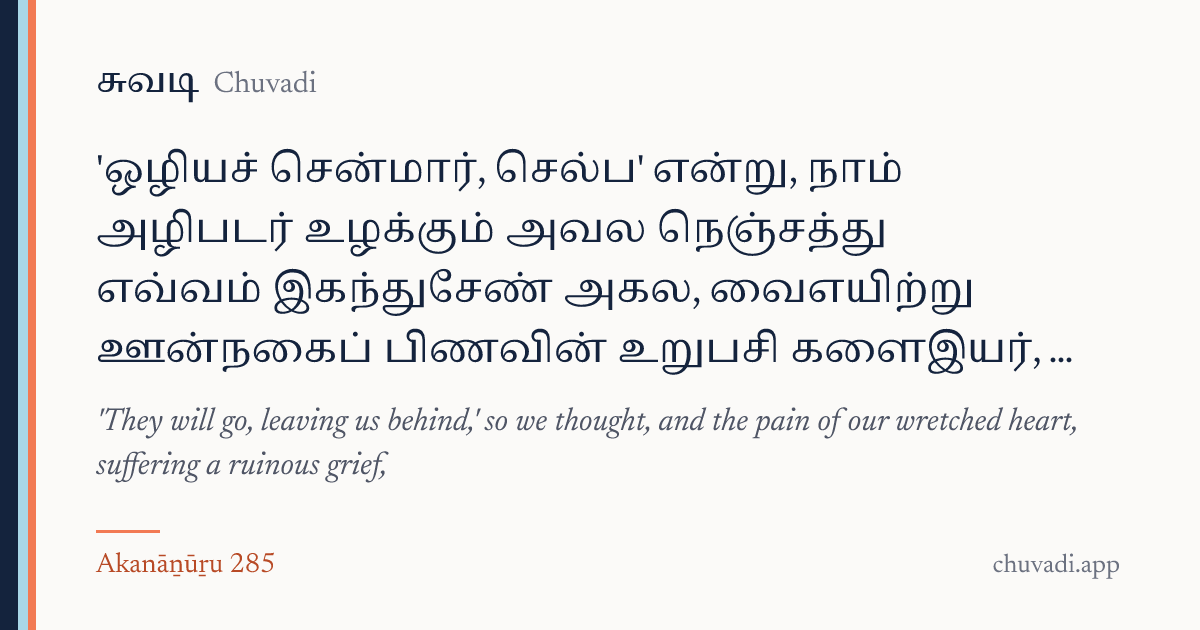

அகநானூறு 285
பாடல் · The poem
Tap a word to see where else it occurs.
பொருள் · Meaning in TamilAI
«நம்மை விட்டுவிட்டு அவர் போய்விடுவார்» என்று எண்ணி, அழிக்கும் துயரத்தில் உழன்ற நம் வருத்தமான நெஞ்சின் துன்பம் இனித் தொலைவில் நீங்கும். கூரிய பற்களும் ஊனுக்காக இளிக்கும் வாயும் உடைய தன் பெண்நாயின் கொடும்பசியைத் தீர்க்க, காட்டில் திரியும் இளம் பெண்மான் அலறும்படி, அதன் கலைமானின் ஓடும் தொடையைச் செந்நாய் ஆண் அறுத்தது; அதுவும் வெயிலைப் பொறாமல் இளைக்கும் வெம்மையான வழி அது. வரிகள் நெருங்கிய பெரும் புலியின் கரிய தோலைப் போல, கல் எறியப்பட்டுப் பல கிழிசலாகக் கிழிந்த ஆடையும், வாடிய குடையும் உடைய வழிப்போக்கர் உயர்ந்த மரத்தில் ஏறுவர்; இனத்தை விட்டுப் பிரிந்து இரை தேடி எழுந்த பருந்து அவர்களின் அசையும் காதுகளைப் பார்க்கும். அத்தகைய வழியில், «மூங்கில் போன்ற தோளும் குவளை மலர் போன்ற மையுண்ட கண்ணும் உடைய இவளும் நம்மோடு வருவாள்» என்று காதலர் சொன்னார். வா தோழி! பலமுறை தழுவிக்கொள்வோம்!
இது பாலைத் திணை; தலைவியைத் தன்னோடு அழைத்துச் செல்வதாகத் தலைவன் சொன்னதைத் தோழி தலைவியிடம் மகிழ்ந்து கூறியதாகக் கொள்ளலாம்; தலைவியே தோழியிடம் கூறியதாகவும் கொள்ளலாம். பெண்நாயின் பசி தீர்க்க வேட்டையாடும் செந்நாய், துணையைக் கைவிடாத தலைவனை நினைவூட்டுகிறது. கல் எறிந்து கிழிந்த ஆடை, பருந்து பார்க்கும் அசையும் காது ஆகியவற்றின் பொருள் உறுதியாகத் தெரியவில்லை.
ஆங்கிலம் · English translationAI
Translation
- 'They will go, leaving us behind,' so we thought,
- and the pain of our wretched heart, suffering a ruinous grief,
- is to pass and go far away: for, to end the fierce hunger
- of his she-wolf with sharp teeth that grin for flesh,
- making the young doe that roams the forest cry out, of her stag
- the running thigh was torn off by the red wild-dog male,
- who now, at odds with the sun, grows faint in that heat; like the close-striped
- dark hide of the great tiger, the vēṅkai,
- with garments torn into many rags by the stones flung at them,
- travellers with withered umbrellas climb up a tall tree,
- and the vulture, risen apart from its flock to hunt a beast,
- watches their moving ears — on such a road, 'She of the bamboo shoulders,
- she of the kohl-dark eyes like kuvaḷai, she too will come with us,'
- so the lover has said!
- Come, friend, let us embrace again and again!
What the poem says
The voice is most naturally that of the heroine's friend speaking to the heroine, though this edition names no speaker and it could be the heroine speaking to the friend. Both had dreaded that the hero would leave on his journey without them. Now he has said that 'she too will come with us', and the speaker calls for an embrace of joy.
The road he will take is drawn in full pālai colours. A red wild dog has torn the leg of a stag to feed his hungry mate, while the doe cries out; even the dog wilts in the heat. Travellers whose clothes hang in rags, like the striped hide of a tiger, climb a tall tree with their broken umbrellas, and a vulture that has left its flock watches them. The terror of the road makes the hero's decision to take the heroine along all the more striking: she will share even this.
The predator who hunts to ease his mate's hunger is a common pālai image of a male providing for his partner, and it suits a hero who will not leave his beloved behind.
Several details are uncertain. Ūṉnakai in line 4 is taken as 'grinning for flesh'. Line 9, 'torn by stones flung', may refer to robbers stoning travellers or to the rough ground; it is not clear. What the vulture watches, 'moving ears', is equally unclear. The pālai label fits.