



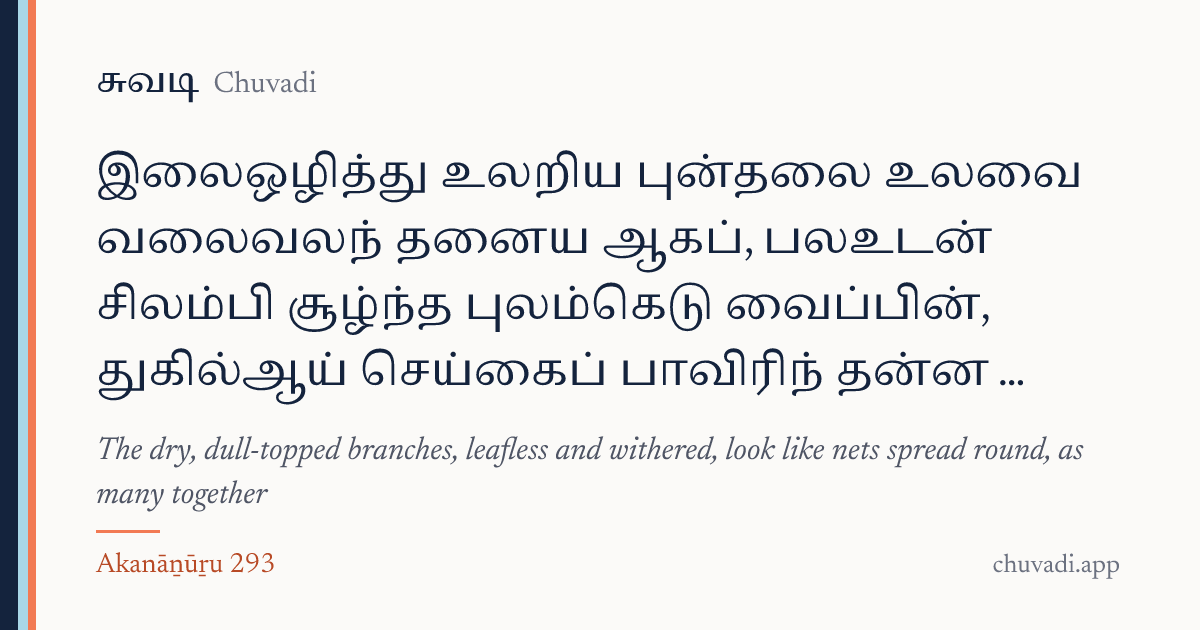

அகநானூறு 293
பாடல் · The poem
Tap a word to see where else it occurs.
பொருள் · Meaning in TamilAI
இலை உதிர்ந்து காய்ந்த, மங்கிய உச்சியுடைய உலர்ந்த கிளைகளைப் பல சிலந்திகள் சேர்ந்து சுற்றியதால் அவை சுற்றிக் கட்டிய வலைபோல் தோன்றும் பாழான இடங்கள்; நல்ல ஆடை நெய்வதற்காக விரித்த பாவைப் போல வெயில் ஒளிர்ந்து அசையும் கொடிய வெப்பமுடைய களர்நிலம்; குயிலின் கண் போன்ற நிறமுடைய காய்கள் முற்றி, மணிக்காசு போன்ற கருநிறப் பெரிய கனிகளாகி, உகாமரத்தின் மென்மையான கிளைகளிலிருந்து வழிச்செல்வோர் கடக்கும்போது உதிரும்; அத்தகைய வேனிற்கால வெம்மையான சுரத்தில் அவர் தனியாகவே செல்வார் என்கிறார்கள், தோழி! நாமோ, இரக்கமற்ற இடையர்கள் தாயிடமிருந்து பிரித்துக் கட்டிவைத்த, நெஞ்சுக்கு இனிய கன்றைப் போல, வருந்தி வருந்திக் கொடிய சொற்களைச் சொல்வோம் என்கிறார்களாம். நம் காதலர் ஏன் இப்படி மயங்கினார்?
இது பாலைத் திணை; தன்னை அழைத்துச் செல்லாமல் தனியே பிரிய எண்ணும் தலைவனைப் பற்றித் தலைவி தோழியிடம் கூறியது. தாயைப் பிரிந்து கட்டப்பட்ட கன்று, கைவிடப்படும் தலைவியின் நிலையைக் காட்டுகிறது. «என்ப» என்பது தலைவன் சொன்னதைப் பிறர் சொல்லக் கேட்டதைக் குறிப்பதாகக் கொண்டுள்ளோம்.
ஆங்கிலம் · English translationAI
Translation
- The dry, dull-topped branches, leafless and withered,
- look like nets spread round, as many together
- spiders have wrapped them, in the desolate places;
- like the warp laid out for weaving fine cloth,
- the sun's glare shimmers and wavers on the scorching salt flats;
- the unripe fruits, coloured like the koel's eye, ripen
- into big fruits, dark as gem beads,
- and fall from the ukā's soft boughs as one goes by:
- through that hot summer wasteland, alone,
- he will go, they say, friend! And we,
- like a calf, dear to the heart, that heartless herdsmen have tied up
- apart from its mother, grieving and grieving,
- would speak bitter words, they say:
- what has so bewildered him, our lover?
What the poem says
The heroine speaks to her friend; this edition names no speaker. She has heard that the hero means to leave on a journey alone, without taking her, on the excuse, as she reports it, that she would cry and complain like a calf separated from its mother. She cannot understand what has confused him.
The first part draws the summer wasteland he will cross: bare branches wrapped by spiders until they look like nets, salt flats where the heat-haze ripples like threads stretched on a loom, and ukā trees whose small fruits, red as a koel's eye when unripe, turn dark like gem beads and drop as travellers pass. The details are precise and dry, a landscape of heat and emptiness.
Her own image is the calf tied up by careless herdsmen away from its mother, crying again and again. She uses it with some bitterness: he thinks she would be a burden of tears, when the true pain is being left behind. The repeated eṉpa, 'they say', may refer to the hero's words reported to her, or to what others say of his plans; it is taken here as report.
The ukā is identified here with the tree of that name in pālai poetry; the line is slightly uncertain. The pālai label fits.