




அகநானூறு 310
பாடல் · The poem
Tap a word to see where else it occurs.
பொருள் · Meaning in TamilAI
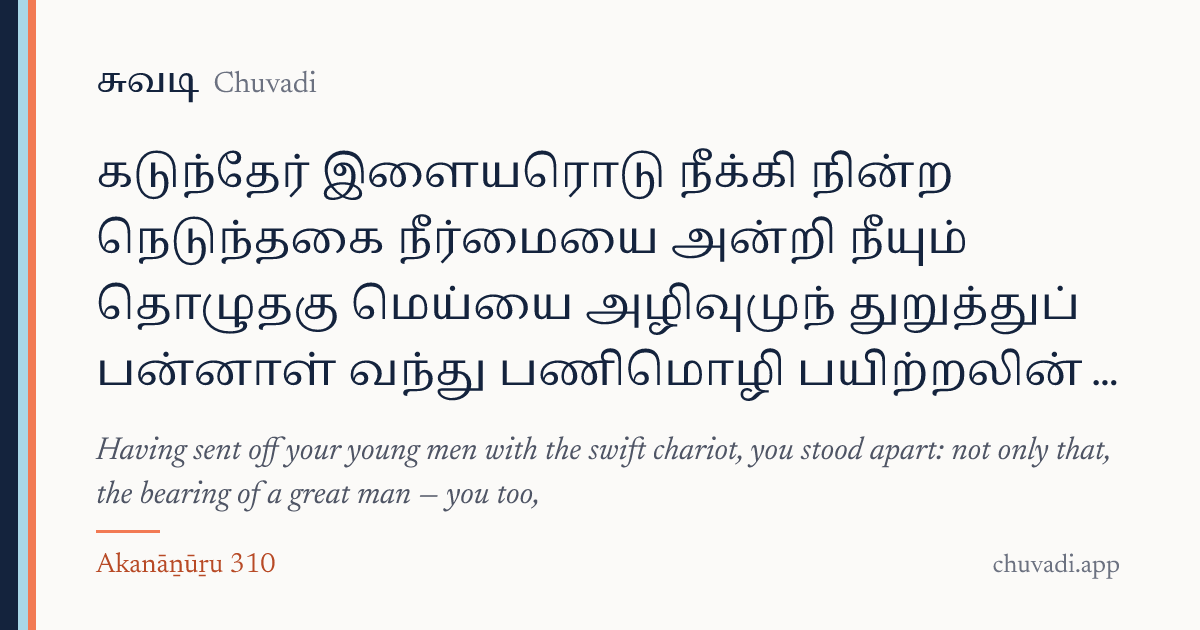
விரைந்து செல்லும் தேரையும் இளைஞர்களையும் விலக்கி அனுப்பிவிட்டுத் தனியே நின்ற பெருந்தகைமையின் இயல்பு மட்டுமன்றி, நீயும் வணங்கத்தக்க உன் உடலின் தாழ்வை முன்னிறுத்திப் பல நாள் வந்து பணிவான சொற்களைத் திரும்பத் திரும்பச் சொன்னதால், குவளை போன்ற மையுண்ட கண்கள் கலங்க, இவளும் உன்மேல் பெரிதும் மயக்கமுற்றாள். எண்ணிப்பார்: தாய் வாழும் நீண்ட மாளிகையில் உறவினர் பாராட்டக் காதலோடு வளர்ந்த பெண் இவள். அத்தகையவர்கள் பெரும் அறியாமை உடையவர்கள், சிறிதளவு! ஆதலால், குன்றுபோலத் தோன்றும் குவிந்த மணலுடைய கடற்கரைத் தலைவனே! இன்று இங்கே தங்க விரும்பாதே! செல்க. பூ விரிந்த புன்னைக்கு மேலே பனைமரம் தோன்றும் அவ்விடம் கூப்பிடு தொலைவில்தான் உள்ளது. அங்கே, உப்பை ஏற்றிச்செல்லும் உமணரின் வண்டித்தொடரோடு வந்த களைத்த பெண்பறவை அஞ்சி ஓடும்படி, இடிபோல முழங்கி எழுந்த அலைகடல் உடைந்து வீழும் பெருநீரையே வேலியாகக் கொண்ட எம் சிறிய நல்ல ஊர்!
இது நெய்தல் திணை; களவில் வந்து பணிந்து வேண்டும் தலைவனிடம் தோழி கூறியது. இங்கே களவில் சந்திக்க வேண்டாம், எம் ஊருக்கு வந்து முறைப்படி பெண் கேள் என்று அவனை மணவழியில் தூண்டுகிறாள். «பெருமடம் உடையரோ சிறிதே» என்ற அடியின் பொருள் உறுதியாகத் தெரியவில்லை.
ஆங்கிலம் · English translationAI
Translation
- Having sent off your young men with the swift chariot, you stood apart:
- not only that, the bearing of a great man — you too,
- putting forward the humbling of your body, worthy of worship,
- came on many days and pressed on her your humble words;
- so that her kohl-dark kuvaḷai eyes are weeping, over you
- she too has fallen into great bewilderment. Consider:
- in the tall house where her mother lives, praised by her kin,
- she is a girl who has grown up in love and tenderness,
- and such girls have great simplicity — a little! And so,
- man of the shore where heaped sand rises like hills,
- do not wish to stay here today! Go:
- where above the flowering punnai the palmyra shows,
- it lies within call, see — and there
- the weary hen bird that came with the carts of the salt merchants
- flees as the roaring sea rises up
- and breaks with the voice of thunder:
- our good little town, with the great waters for its hedge!
What the poem says
The heroine's friend speaks to the hero; this edition names no speaker, but 'her' and 'our town' point to the friend. The hero has been coming for many days to the shore, sending his chariot and attendants away and humbling himself with entreaties. The heroine, moved, is now deeply troubled over him.
The friend explains: the girl was raised lovingly in her mother's great house, praised by all her kin, and such girls are simple, or, she adds with a twist, 'a little' so. She will not meet him here in secret today. Instead the friend points him to their own village, close enough to hear a shout, where a palmyra stands above the flowering punnai and the thunderous surf frightens away a tired bird that came with the salt carts. The invitation is plain: come to the town openly and ask for her.
The final scene of the sea breaking 'like thunder' and the bird fleeing may suggest the uproar that secret meetings would cause, or simply mark the village as a real place on the shore.
Line 9 is uncertain. Perumaṭam uṭaiyarō ciṟitē may mean 'they have great simplicity, a little', said ironically, or 'have they great simplicity? only a little'. Lines 1–3 are also compressed: the hero's 'humbling' (aḻivu) seems to be his self-abasement in pleading. The neytal label fits.