




அகநானூறு 316
பாடல் · The poem
Tap a word to see where else it occurs.
பொருள் · Meaning in TamilAI
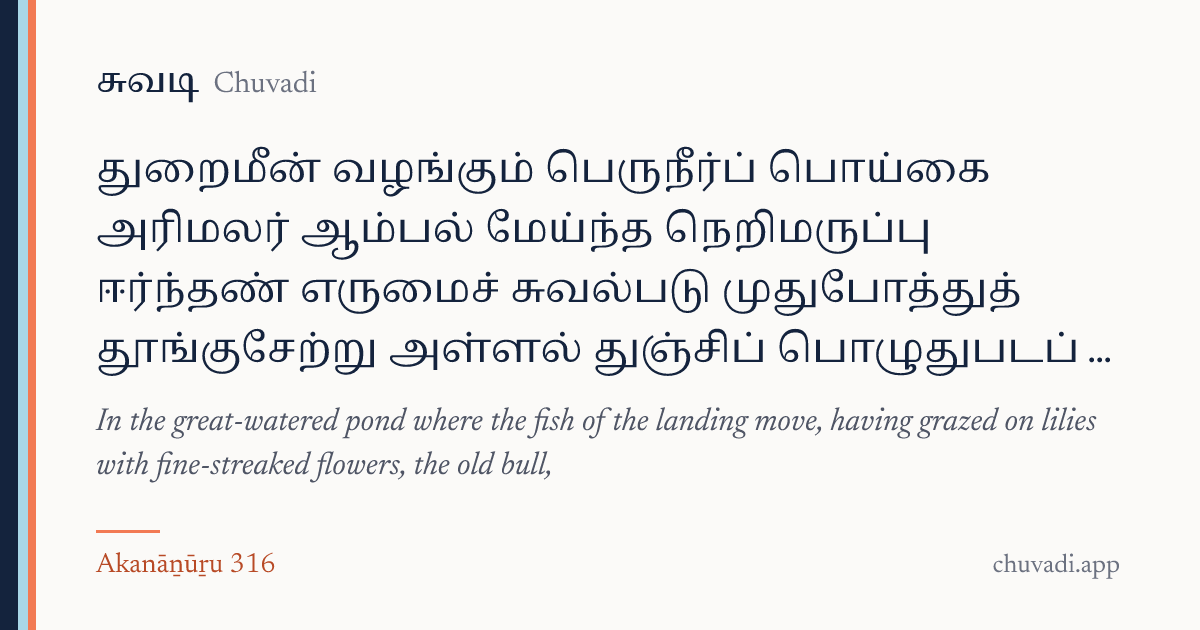
துறையில் மீன்கள் உலவும் பெருநீர்ப் பொய்கையில், நுண்ணிய வரிகளுடைய மலர்களையுடைய ஆம்பலை மேய்ந்த, வளைந்த கொம்பும், குளிர்ந்த ஈரமும், காய்த்துப்போன திமிலும் உடைய முதிய எருமைக்கடா, ஆழ்ந்த சேற்றில் துயின்று, பொழுது சாய்ந்ததும் கொழுத்த வரால் மீன்கள் நசுங்கும்படி திரும்பி வந்து, நிறமுள்ள பகன்றைக் கொடியைச் சூடிக்கொண்டு, போருக்கு ஆயத்தமான மள்ளரைப் போலப் பழைய ஊருக்குள் புகும். அத்தகைய ஊரனைத் தேரில் வந்த, தேர்ந்தெடுத்த அணிகளும் தளர்ந்த தோள்களும் உடைய, ஊரைக் கவரும் கல்லாத பரத்தையர் மீண்டும் மீண்டும் அழைத்துச் செல்கின்றனர். «அவனுடைய பரத்தைமையை என்னால் தாங்க முடியாது» என்று வீணாக நீ இப்படிப் பிணங்குவது தகுமோ, இல்லறம் நடத்தும் பெண்ணே? அவ்வாறு பிணங்கியே வாழ வல்லவர்கள், திருமகள் நீங்கியபின் சிறிது தானியத்தைப் புடைத்தெடுத்துத் தாமே சமைத்து உண்டு தனித்தவர்களாகி, இனிய மழலைச்சொல் பேசும் புதல்வர் வற்றிய முலையைச் சுவைக்க வாழ்பவர்கள் ஆவர் என்பதை அறிந்தும், ஐயோ, பிணங்குபவர்கள் அதை அறியாதவர் போல இருக்கிறார்களே!
இது மருதத் திணை; பரத்தைமை காரணமாகப் பிணங்கும் தலைவியைத் தோழி ஊடல் தணியுமாறு அறிவுறுத்தியது. ஆம்பலை மேய்ந்து சேற்றில் துயின்று செருக்கோடு ஊர் புகும் எருமை, பரத்தையரிடம் இன்பம் துய்த்து வரும் தலைவனைக் குறிக்கும் உள்ளுறை. எட்டாம் அடியின் தொடரமைப்பு சற்றுத் தெளிவற்றது.
ஆங்கிலம் · English translationAI
Translation
- In the great-watered pond where the fish of the landing move,
- having grazed on lilies with fine-streaked flowers, the old bull,
- the cool, wet buffalo with bent horns and calloused hump,
- slept in the deep, clinging mire, and as the day sinks
- goes home, crushing the fat-fleshed varāl as he goes,
- wearing the bright creeper of the pakaṉṟai, and into the old town
- he comes like a wrestler girt for battle: the man of that town —
- the women who came brought in chariots, with chosen jewels and slackened arms,
- unschooled women who seize the town, bring him and bring him again;
- 'I cannot bear his whoring,' saying so, in vain
- can you sulk like this, lady of the house?
- Those who can bear to live on in such a sulk,
- when the Red Lady of fortune leaves them, sifting out a little food,
- cooking for themselves and eating alone,
- with their sweet-voiced sons sucking at withered breasts,
- come to live like this; though they know it,
- ah, they do not know it, those who quarrel so!
What the poem says
The heroine's friend speaks to the heroine; this edition names no speaker, but the address 'lady of the house' and the advice point to the friend. The heroine is sulking because her husband keeps going to courtesans, and the friend warns her against carrying the quarrel too far.
The opening is a full uḷḷuṟai. An old buffalo bull has grazed on water lilies in the pond, slept in the mire, and now comes home at dusk crushing fish under his hooves, a pakaṉṟai creeper draped on him, swaggering into town like a wrestler ready for a fight. The buffalo is the husband: he has fed on the 'lilies' of the courtesans' quarter and returns home bold and unrepentant.
The friend's argument is practical and blunt. Women who hold out in their anger end up abandoned by Tiru, 'the Red Lady' of prosperity, gleaning a little grain, cooking and eating alone while their children suck at dry breasts. They know this, and yet behave as if they did not. Better, she implies, to accept him back.
The courtesans are called 'unschooled women who seize the town' (ūrkoḷ kallā makaḷir), a contemptuous phrase. Line 8 is compressed; who comes in the chariot is not wholly clear. The marutam label fits.