




அகநானூறு 320
பாடல் · The poem
Tap a word to see where else it occurs.
பொருள் · Meaning in TamilAI
உயர்ந்த அலைகளுடைய கடற்பரப்பில் வளைத்து இழுக்கும் விசையால் பிடித்து, படகோட்டி கொண்டுவந்த கொடிய கண்ணுடைய வலிய மீனை, தழையாடை அணிந்த அல்குலையுடைய செல்வமிக்க இளம்பெண்கள் விழா நடக்கும் தெருவில் விலைகூறி விற்கின்றனர். அத்தகைய கடற்கரைச் சோலையுடைய சிற்றூரைச் சேர்ந்த பெருங்கடற்கரைத் தலைவனே! மலர் போன்ற அழகிய மையுண்ட கண்களுடைய எம் தோழியின் துயரம் அலர் பேசும் வாய்களிலிருந்து நீங்கும்படி நீ அருள் செய்யாமல் பொய்த்தாலும், நீண்ட உப்பங்கழியில் இரைதேடிய குட்டைக்கால் அன்னம் அடும்புக்கொடி படர்ந்த மணல்மேட்டில் தன் அழகிய சிறகுகளைக் கோதும், பருத்த அடியுடைய புன்னையின் தாது அணிசெய்யும் பெரிய துறையில், நடுங்கும் நுண்மணலைப் பிளந்துகொண்டு கொடிஞ்சியுடைய நீண்ட தேரில் வந்து, மணல்பாவைகள் சிதையும்படி நீ வந்து இவள் தோள்களை முதன்முதல் தழுவிய நாளில் செய்த சூளுரையும் பொய்யோ, அறிந்த சான்றாகக் கடல் இருக்கும்போது?
இது நெய்தல் திணை; களவு நீண்டு அலர் பரவியபோது வரைவு கடாவித் தோழி தலைவனிடம் கூறியது. கடலைச் சான்றாக வைத்துச் செய்த சூளை நினைவூட்டி அவனை மணம் செய்யத் தூண்டுகிறாள். சிதைந்த மணல்பாவை அவள் இளமையைக் கலைத்ததைக் குறிக்கலாம் என்று கொள்ள இடமுண்டு; பாடல் அதை வெளிப்படச் சொல்லவில்லை.
ஆங்கிலம் · English translationAI
Translation
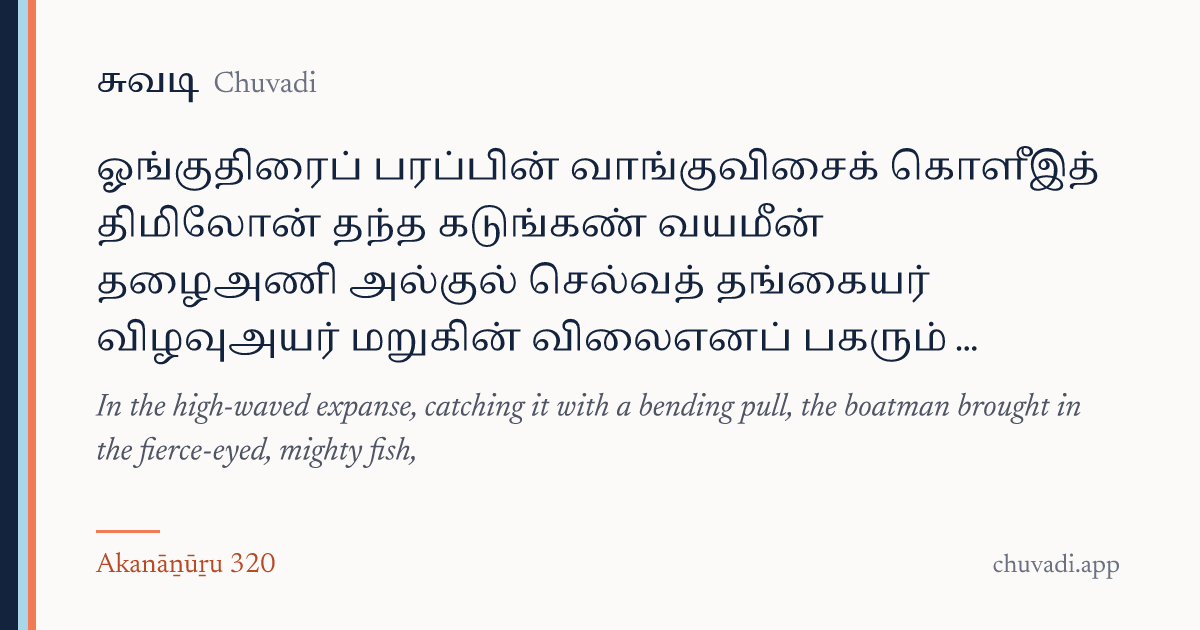
- In the high-waved expanse, catching it with a bending pull,
- the boatman brought in the fierce-eyed, mighty fish,
- and the rich young sisters, with leaf skirts on their hips,
- cry it for sale along the festive street:
- man of the great waters' shore, with the small village by the grove!
- The grief of our friend with kohl-dark eyes lovely as flowers —
- though you prove false and grant no grace to free it from the gossips' mouths,
- where the short-legged swan that has searched the long backwater
- preens its lovely wings on the dune where aṭumpu spreads,
- at the great harbour adorned with pollen of the broad-standing punnai,
- splitting the trembling sand with your long chariot and its koṭiñci,
- spoiling the sand dolls, you came, and you,
- on the day you first enjoyed her shoulders —
- was that oath also false, with the sea as the knowing witness?
What the poem says
The heroine's friend speaks to the hero; this edition names no speaker, but 'our friend' makes the voice plain. He has been meeting the heroine in secret, gossip has spread, and he has done nothing to end it by marrying her.
The opening is a busy neytal scene: a fisherman hauls in a great fierce-eyed fish from the high waves, and the young women of the fishing families, in leaf skirts, cry it for sale in the festive street. The village is prosperous and public; what is caught is quickly known to all, as the lovers' affair now is.
The friend's charge is pointed. Even if he will not be kind and relieve the heroine's grief by silencing the gossip, was his oath also false? She reminds him of the first day: he drove his tall chariot over the soft sand, trampling the sand dolls the girls had made, near the great harbour where a swan preens its wings among punnai pollen, and he swore to her, with the sea as witness. In Sangam poetry such oaths are often taken before a natural witness, and the sea 'that knows' stands for the truth he cannot escape.
The koṭiñci is an ornamental post or fitting on a chariot. The trampled sand dolls may hint at the girlhood he disrupted, though the poem does not say so. The neytal label fits.