



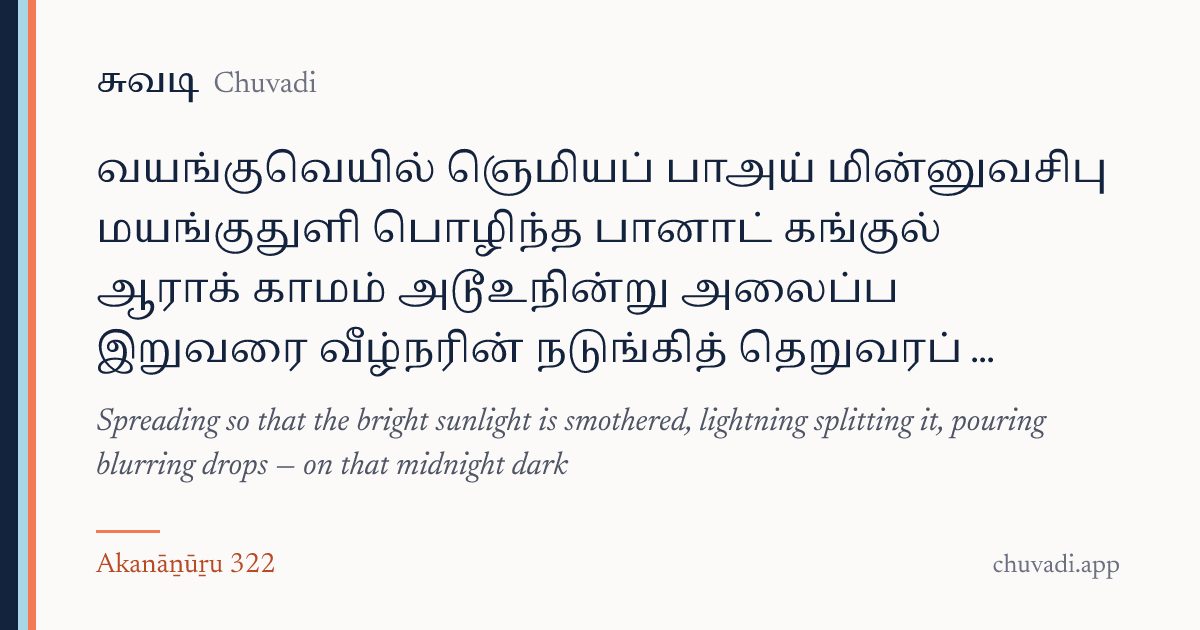

அகநானூறு 322
பாடல் · The poem
Tap a word to see where else it occurs.
பொருள் · Meaning in TamilAI
ஒளிரும் வெயில் மறையும்படி பரந்து, மின்னல் பிளக்க, கலங்கிய மழைத்துளிகள் பொழிந்த நள்ளிரவு இருளில், தீராத காமம் உன்னை வருத்தி அலைக்கழிக்கிறது. செங்குத்தான மலையிலிருந்து விழுகிறவர்களைப் போல நடுங்கி, பாம்பை அடித்த கோலைப் போலத் தனியாக இரவைக் கழித்து, நெஞ்சே, நீ மெலிகிறாயோ? இடிபோல் முழங்கி, களிறுகள் நேருக்கு நேர் மோதி வாள்கள் கலக்கும் போர்க்களத்தில், ஒளிரும் வேல் படையும் விரைந்த தேரும் உடையவன் திதியன். அவனுடைய பொதியில் மலையில், பெருகி வரும் வெள்ளம் இறங்கும் மரம் அடர்ந்த புதர்க்காடு உண்டு; பிறைபோன்ற கொம்புடைய கொடிய பன்றியைக் கொன்று அதன் உடலை உண்ணும் வரிப்புலி அங்குச் சாரலில் முழங்குகிறது; பாறையில் கட்டிய இனிய தேனைக் குறவர் அறுக்கிறார்கள்; முயல்பவர்களும் ஏறி முடிக்க முடியாத உயர்ந்த சிகரங்கள் அங்கே உள்ளன. அணுகுவதற்கு அரிய அந்தப் பொதியில் மலையைப் போல, என்னை வருத்தியவள் பெறுவதற்கு அரியவள்!
குறிஞ்சித் திணை. மழை இரவில் தலைவியைக் காண முடியாமல் வருந்தும் தலைவன் தன் நெஞ்சிடம் கூறுகிறான். அடைவதற்கு அரிய பொதியில் மலை, தலைவியை அடைவதன் அருமைக்கு உவமை. 'பாம்பு எறி கோல்' என்ற உவமையின் நுட்பமான பொருள் உறுதியாகத் தெரியவில்லை; அச்சத்தோடு கைவிடப்பட்ட நிலையைக் குறிப்பதாகக் கொள்ளலாம்.
ஆங்கிலம் · English translationAI
Translation
- Spreading so that the bright sunlight is smothered, lightning splitting it,
- pouring blurring drops — on that midnight dark
- while desire that is never sated keeps crushing and tossing you,
- trembling like those who fall from a steep cliff, fearfully,
- alone like the stick that struck a snake, you spend the night —
- are you wasting away, my heart? With thunder's roar,
- in battle where tuskers meet eye to eye and swords are confused,
- Titiyaṉ of the swift chariots and army of gleaming spears —
- in his thickets dense with trees where the coming floods run down,
- where over the fierce boar with tusks like the crescent moon
- the striped tiger feeding on the carcass roars on the slope,
- and the Kuṟavar cut the sweet honey from the rock —
- with long peaks that strivers cannot finish, hard to climb,
- like Potiyil, hard to enter,
- is she who has tormented me, hard to win!
What the poem says
The hero speaks to his own heart. He has gone at night, in heavy rain, to meet the girl he loves, and perhaps failed to meet her; in any case he lies awake with a longing he cannot satisfy. He pictures his heart trembling like someone falling from a cliff, and alone 'like a stick that struck a snake', an image that seems to mean something left shaking and thrown aside after a frightening act. Its exact force is not certain.
The second half compares the girl to Potiyil, the mountain of the chieftain Titiyaṉ, described here as a great fighter with chariots and spears. Potiyil is steep, wooded and wild: floods pour down it, a tiger roars over the boar it has killed, hill-folk climb its rocks for honey, and its high peaks defeat those who try to climb them. The girl, he says, is as hard to reach as that mountain.
The phrase kuṟai ār koṭuvari in line 11 is taken here as 'the striped tiger eating the carcass' of the boar in line 10; another reading would make the boar and the tiger simply two animals roaming the slope. The word aṇaṅkiyōḷ, 'she who torments', is a usual word for a beloved whose beauty attacks the lover like a goddess. The poem fits kuṟiñci well: hills, night and a lover's secret visit.