



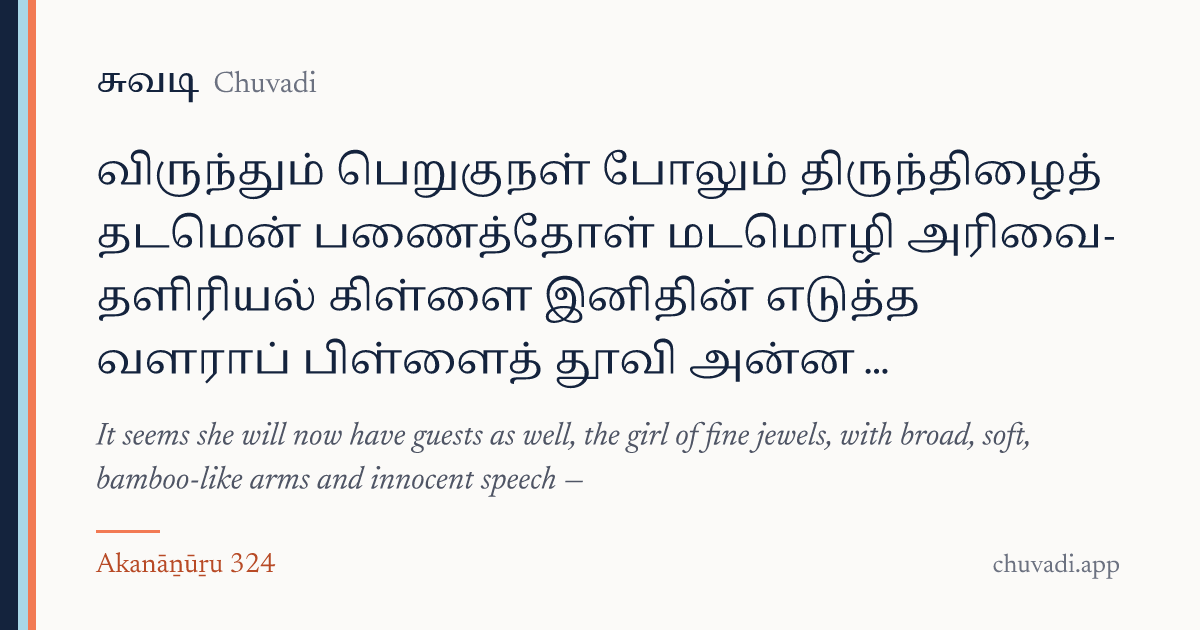

அகநானூறு 324
பாடல் · The poem
Tap a word to see where else it occurs.
பொருள் · Meaning in TamilAI
அழகிய அணிகலன்களையும், மூங்கில் போன்ற அகன்ற மென்மையான தோள்களையும், கள்ளமற்ற பேச்சையும் உடைய அவள், இனி விருந்தினரையும் வரவேற்கப் பெறுவாள் போலும். தளிர்போல் மென்மையான கிளி தன் குஞ்சிலிருந்து மெதுவாக எடுத்த இறகின் மென்மையைப் போன்ற பசும் பயிர்கள், நீண்ட மழையால் வளர்ந்து காட்டில் நிற்கின்றன. பறையின் கண்ணைப் போல வட்டமான நிறைந்த சுனைகள் தோறும், துளி விழும் இடங்களில் நீர்க்குமிழிகள் மிகுதியாகத் துள்ளி, சேற்றுநீரில் முடிச்சுப் போலத் தோன்றி மறைகின்றன. காற்று கிளைகளிலிருந்து உதிர்த்த மணமுள்ள, வண்டுகள் உண்ணும் மலர்கள், மீன்கொத்தியின் இறகைப் போல மணல் ஓடைகளில் வரிவரியாகப் பரந்து கிடக்கின்றன; அவற்றைத் தேர்ச்சக்கரம் வெட்டிச் செல்கிறது. குளிர்ந்த நிலத்தில் சக்கரம் பிளந்த தடத்தில், விரையும் பாம்பைப் போல நீர் ஓடுகிறது. இவ்வழியில், முல்லை மலரும் மாலையில் ஊருக்குள் புகவேண்டும் என்று எண்ணி, பெருந்தகையாகிய தலைவனின் தேர் விரைந்து செல்கிறது!
முல்லைத் திணை. வினை முடித்துத் திரும்பும் தலைவனின் தேரைக் கண்டவர் கூறுவது; பேசுபவர் தோழியோ, தலைவனோடு வருபவரோ என்று பாடல் தெளிவாகச் சொல்லவில்லை. கணவன் இல்லாதபோது விருந்தோம்பல் நின்றிருந்தது; அவன் வருகையால் அது மீண்டும் தொடங்கும் என்பது முதல் வரியின் கருத்து. எட்டாம் அடியின் பொருள் உறுதியாகத் தெரியவில்லை.
ஆங்கிலம் · English translationAI
Translation
- It seems she will now have guests as well, the girl of fine jewels,
- with broad, soft, bamboo-like arms and innocent speech —
- like the down that a parrot, tender as a young shoot, gently lifted
- from its unfledged nestling,
- in the woodland of green crops raised by the long rains;
- in every brimming pool round like the face of a drum
- bubbles where the drops fall leap up in plenty,
- rising like bosses on the muddy water, then vanishing;
- as the wind shakes them from the branches, fragrant, spread out,
- like the kingfisher's wing, striping the streams of sand,
- the fragrant flowers that bees feed on are cut by the wheel
- on the cool ground at the side, along the track it splits,
- while water runs rushing like a swift full snake —
- so goes the chariot of the noble man,
- bent on entering the town at the jasmine evening!
What the poem says
A man is coming home at the end of the season of absence, and someone watches his chariot hurry through the rain-soaked woodland. The speaker is not named. The first line, 'it seems she will now have guests as well', sounds like the heroine's friend or a woman of the household, thinking that with the husband back the house will again be able to welcome guests, a duty a wife could not properly do alone. It could also be one of the hero's party. The poem does not settle this.
Most of the poem describes the mullai land after the rains. The young crops are as soft as the down of a parrot's chick. Bubbles jump and burst on the drum-round pools. Flowers shaken down by the wind lie in stripes on the sandy streams like the markings on a kingfisher's wing. Through all this the chariot wheel cuts its track, and water rushes along the rut like a fast snake.
The last line names the hour: mullai mālai, the jasmine evening, the time when the waiting wife suffers most and the time when the returning husband hopes to arrive. Line 8 is unclear; toḷi poru pokuṭṭu is taken here as bubbles swelling on the muddy water like bosses, but the wording is uncertain.