




அகநானூறு 326
பாடல் · The poem
Tap a word to see where else it occurs.
பொருள் · Meaning in TamilAI
இனிமை ஊறும் அழகிய வாயும், பரந்த தித்தியும், போர்புரிவது போன்ற பெரிய குளிர்ந்த கண்களும், அகன்ற தோள்களும், சிறிய நெற்றியும் உடைய அந்த இளம்பெண் உண்மையில் அழகானவள்தான்! செல்வர்களின் ஊரில், விரைந்து ஓடும் தேர்கள் குழிபடுத்திய தெருவில், உணவு சமைக்கப்படும் வாயில்களில் நீண்ட கொடிகள் அசைகின்றன. அங்குள்ள, பெரிய கதிர்களுடைய வயல்களின் மிகுந்த அழகைப் போன்ற தன் அழகைத் தானே பாராட்டிக்கொண்டு, நடையழகால் பொலிந்து, அவள் விழாவுக்குச் செல்ல விரும்புகிறாள். வெற்றி வேலும் அணிகலன் பூண்ட யானைகளும் உடைய சோழரின் வீரன், மூங்கில் கோலால் ஆழம் அளக்க முடியாத காவிரி பாயும் நிலத்தில், நீர் நிறைந்த மதகுகளை உடைய போர் என்ற ஊரின் தலைவன் பழையன். அவன் எறியும் வேல் தப்பாதது போல, அவளுடைய கண்கள் தம்மைப் பார்த்தவர்களைத் தப்ப விடுவதில்லை!
மருதத் திணை. பரத்தையைப் பற்றித் தலைவியோ தோழியோ கூறுவதாகத் தோன்றுகிறது; பேசுபவர் யார் என்று பாடல் வெளிப்படையாகச் சொல்லவில்லை. அவள் விழாவுக்குச் சென்றால் தலைவன் அவளிடம் சிக்கிவிடுவான் என்ற எச்சரிக்கையும் வருத்தமும் புகழ்ச்சிக்குள் மறைந்துள்ளன. 'அட்ட வாயில்' என்பதன் சரியான பொருள் உறுதியாகத் தெரியவில்லை.
ஆங்கிலம் · English translationAI
Translation
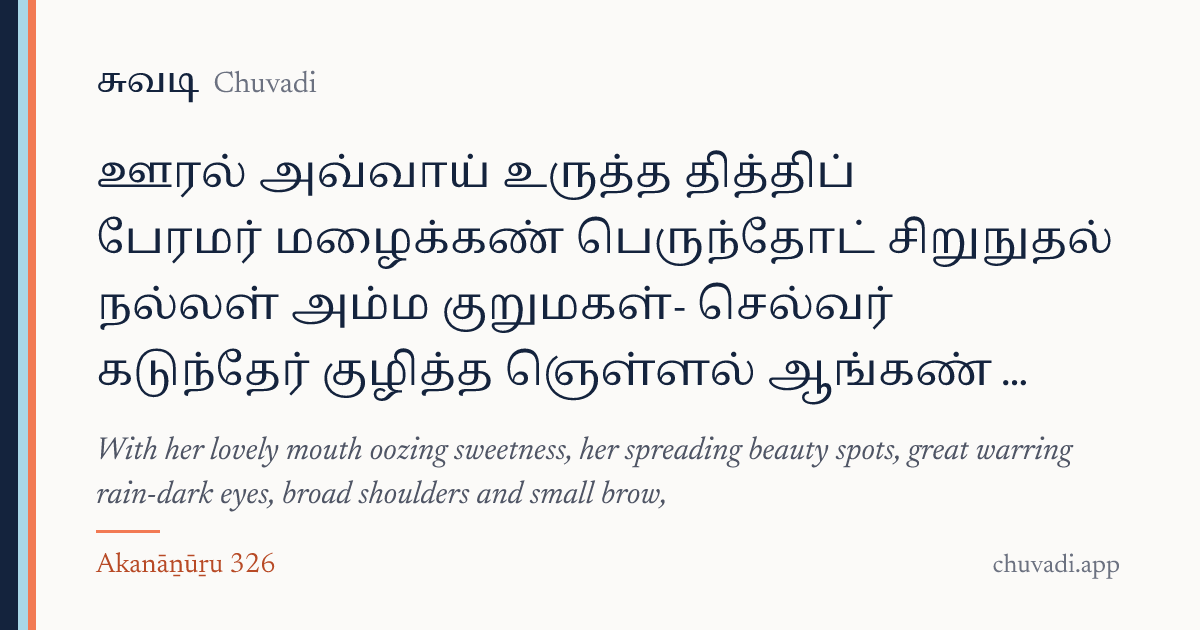
- With her lovely mouth oozing sweetness, her spreading beauty spots,
- great warring rain-dark eyes, broad shoulders and small brow,
- she is lovely indeed, that young girl! In the wealthy men's town,
- at the street that swift chariots have rutted,
- at doorways where food is cooked and tall flags sway,
- like the great beauty of the fields with their heavy ears of grain,
- praising her own beauty, splendid in the grace of her walk,
- she wants to go to the festival; with victorious spear,
- the warrior of the Cōḻar, whose elephants wear ornaments,
- lord of Pōr in the Kāviri's lands whose depth no pole has measured,
- with its sluices brimming with water,
- Paḻaiyaṉ — like the spear he hurls,
- her eyes never miss, when it comes to those who look at her!
What the poem says
This marutam poem praises a young woman, and the praise has an edge. The speaker is probably the wife, or her friend speaking for her, talking about a courtesan or a new rival who wants to go to the town festival dressed in all her beauty. The festival is where the husband will see her. The poem itself does not say who speaks, so this reading rests on the usual marutam situation of the unfaithful husband.
The girl's charms are listed: a sweet mouth, beauty spots (titti), large dark eyes, broad shoulders, a small forehead. Her beauty is compared to the rich fields beside a wealthy town, where chariots cut ruts in the streets and flags fly over the busy doorways. These are pictures of a prosperous marutam town.
The last lines bring in Paḻaiyaṉ, a warrior of the Cōḻa king and lord of Pōr on the Kāviri, whose thrown spear never misses. Her eyes are like that spear: no man who looks at her escapes. Read as the wife's words, this is a warning, perhaps with some bitterness, that the husband will be caught. The poem says only what it says about Paḻaiyaṉ and Pōr. In line 5 aṭṭa vāyil, 'doorways where food is cooked', is not clear; it may mean houses where food is cooked and given out, or shops.