




அகநானூறு 33
பாடல் · The poem
Tap a word to see where else it occurs.
பொருள் · Meaning in TamilAI
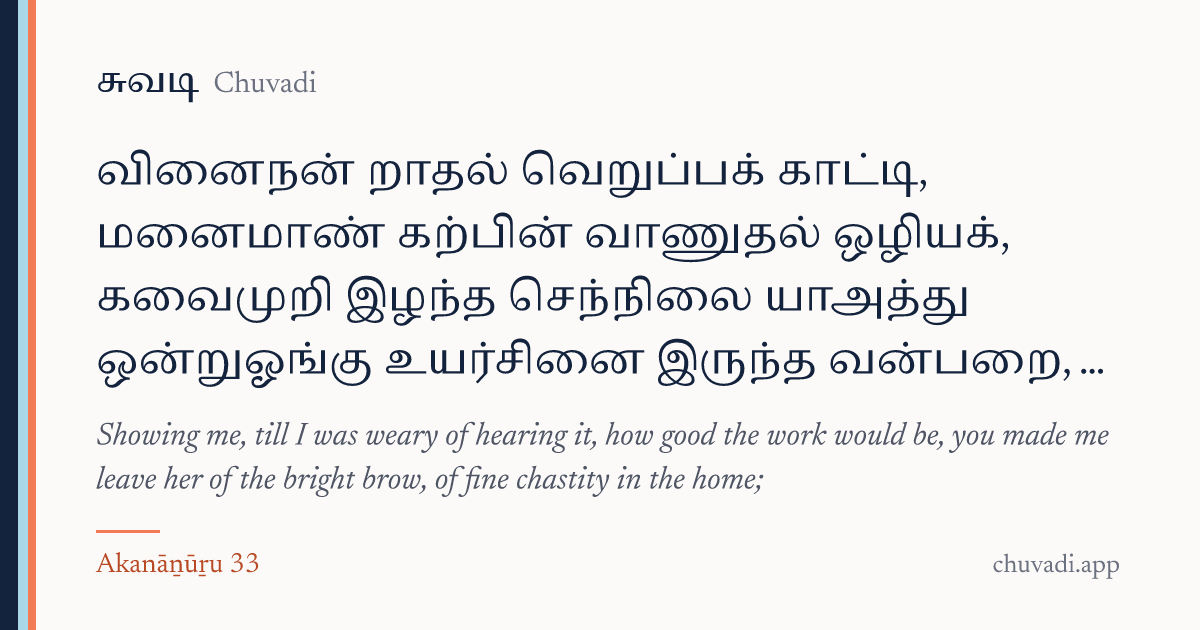
வினையின் நன்மையை நான் சலிக்கும்படி எடுத்துக் காட்டி, வீட்டில் சிறந்த கற்புடைய ஒளிரும் நெற்றியுடையவளைப் பிரியச் செய்தாய். கவைத்த தளிர்களை இழந்து சிவந்து நிமிர்ந்து நிற்கும் யா மரத்தின் ஒரே உயர்ந்த கிளையில் அமர்ந்த வலிய சிறகுடைய, இரையைப் பற்றுவதில் வல்ல சீழ்க்கை ஒலியுடைய ஆண்பருந்து, வளைந்த அலகுடைய தன் பெண்பருந்தை வரும்படி இளி இசையைத் தேடும் இனிய குரலில் அழைக்கும் பாலைவழியில், 'பயணம் அரிது' என்று சொல்லாமல் சென்றாய். அங்கே சென்ற பின், மலர்களைவிடச் சிறந்த கரிய அழகிய மழைபோன்ற கண்களின் கலங்கிய பார்வையை நினைத்தாய். உளிபோன்ற முனையுடைய வெப்பமான பரல்கற்கள் நிறைந்த வழிகளில் பல குன்றுகளைக் கடந்த பின், நான் தனியனாகும்படி நீ பின்தங்க முடிவு செய்தாயானால் — முன்பே, போரில் வெல்லும் வானவனின் கொல்லிமலை உச்சியில் வளரும் மெல்லிய மூங்கில் போன்ற வளைந்த மணிக்கட்டுடைய திரண்ட தோளும், வரிகள் அழகுசெய்யும் அல்குலும், வெண்பற்களும் உடையவளிடமிருந்து நீ பிரியாமல் இருந்திருந்தால் நன்றாக இருந்திருக்கும். அன்று எங்களை நீ புரிந்துகொள்ளாவிட்டாலும், இன்று நாம் தொடங்கிய வினையைப் பாதியில் தடுத்தால், பிறர் சிரிக்கும் பழிப்பொருளைத்தானே நீ பெறுவாய்?
இது பாலைத் திணை; பாதி வழியில் திரும்ப விரும்பும் நெஞ்சுக்குத் தலைவன் மறுத்துக் கூறுவது. துணையை அழைக்கும் பருந்து, தன் துணையைப் பிரிந்து வந்த தலைவனின் நிலையை நினைவூட்டுகிறது. 'இளி' என்பது பண்ணிசையின் ஒரு சுரம். பதின்மூன்று முதல் பதினேழு வரையிலான அடிகளின் தொடரமைப்பு செறிவானது; 'அப்போதே பிரியாமல் இருந்திருந்தால்' என்று இங்கே கொள்ளப்பட்டது.
ஆங்கிலம் · English translationAI
Translation
- Showing me, till I was weary of hearing it, how good the work would be,
- you made me leave her of the bright brow, of fine chastity in the home;
- on the yā tree, red and upright, that has lost its forked shoots,
- perched on its one tall, high branch, the strong-winged
- male of the whistling kite, skilled at seizing prey,
- calls to his hook-beaked mate to come to him
- with a sweet voice that searches out the iḷi note — on that road
- you did not say 'the journey is too hard'; you went, and there
- her rain-like eyes, dark and lovely, finer than flowers,
- their troubled look you remembered; and now, on paths of chisel-pointed
- hot gravel, having swum across many hills,
- so that I am left alone, if you
- have resolved to stay behind — earlier,
- on the heights of Kolli of the Vāṉavaṉ of conquering wars,
- like its slender bamboo were her rounded shoulders with their bending arms,
- her streaked, adorned waist, her white teeth — from her side
- if you had not parted then, it would have been good indeed.
- Though you did not understand us then, today, if our
- undertaken work you block halfway,
- will you not earn what others laugh at?
What the poem says
The hero speaks to his heart on the road. It was his heart that talked him into leaving, praising the venture until he was tired of hearing it. Now, many hills into the journey, the same heart remembers her eyes and wants to turn back. He rebukes it.
The road is drawn in one image. On a yā tree stripped of its shoots, a male kite sits on the single high branch and calls to his mate with a sweet, searching cry. The bird calling for its mate in the waste is a pointed picture: it is the hero who has left his. The heart did not object to this road at the start; it went, and only there began to think of her dark, rain-like eyes.
The hero's argument is about timing. If the heart meant to stay with her, it should have refused to leave at the beginning; it would have been good not to part from her, whose shoulders were like the slender bamboo on Kolli, the mountain of the Vāṉavaṉ (a title of the Cēra king), here praised only for his victorious wars. But to turn back now, with the work half done, would earn only ridicule: 'will you not gain what others laugh at?' The pālai hero is caught between love and honour, and this time honour, or the fear of mockery, decides.
'Iḷi tēr tīṅkural' (line 7) refers to iḷi, one of the notes of the Tamil musical scale; the kite's cry is likened to a voice seeking that note. Lines 13–17 are compressed and are taken as a single conditional: 'if you had not parted from her then'.