




அகநானூறு 331
பாடல் · The poem
Tap a word to see where else it occurs.
பொருள் · Meaning in TamilAI
உயர்ந்து நிற்கும் அடிமரமும் சிவந்த தளிரும் உடைய இருப்பையின், கடைந்த தந்தம் போன்ற மிகுதியான வெண்பூக்களை, ஆட்டுமந்தை பரந்தது போலக் கிடக்கும் குட்டிகளையுடைய பெண்கரடி, பூத்த கிளைகளை உருவித் தின்கிறது. அது தின்று மிச்சமாக விட்டவற்றை, பசுந்தழை ஆடை அணிந்த பழையர் குலப் பெண்கள், கணுக்கள் திரண்ட நீண்ட மூங்கில் கோல்களால் சேர்த்து, மலைச்சிற்றூரின் தெருக்கள் தோறும் திரிகிறார்கள். இத்தகைய பல சிற்றூர் நாடுகளைப் பின்னே விட்டுவிட்டுச் சென்றவர் அன்பில்லாதவர், தோழி! எப்போதும், கரிய தண்டும் இறுக்கிய நரம்புகளும் உடைய சிறிய யாழை இசைக்கும் பாணர்கள் ஆரவாரிக்க, பல அணிகலன்களைப் பரிசாக வழங்கி, பகல் அவையில் வீற்றிருந்த, கள்ளின் மகிழ்ச்சி நிறைந்த திதியன், வேளிரோடு போர் செய்வதற்காக உறையிலிருந்து உருவிய வாளின் கூர்முனையைப் போன்ற, வறண்ட பாலைவழியைக் கடந்து சென்றவர் அவர்!
பாலைத் திணை. பொருள் தேடிப் பிரிந்த தலைவனைப் பற்றித் தலைவி தோழியிடம் கூறுகிறாள். வள்ளலான திதியன் போருக்கு உருவிய வாள், வழியின் கொடுமைக்கு உவமை. எட்டாம் அடியில் அச்சில் உள்ள 'பிறக்கெரழிய' என்பது 'பிறக்கொழிய' என்பதன் பிழை எனக் கொள்ளப்பட்டது. மூன்றாம் அடியின் உவமைப் பொருள் உறுதியாகத் தெரியவில்லை.
ஆங்கிலம் · English translationAI
Translation
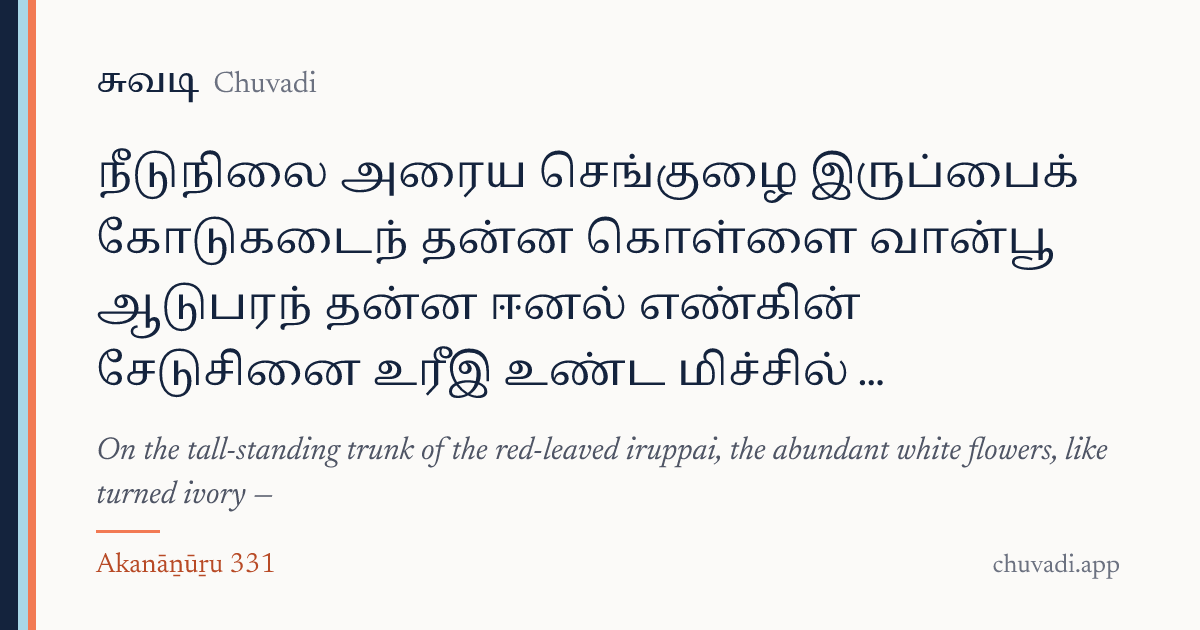
- On the tall-standing trunk of the red-leaved iruppai,
- the abundant white flowers, like turned ivory —
- the she-bear with young, sprawling like a flock of goats,
- strips the laden branches and eats, and the leftovers
- the women of the Paḻaiyar, wearing fresh green leaf-skirts,
- gather with sticks of long, thick-noded bamboo,
- and wander, every street they wander, in the small hill hamlet —
- leaving behind many lands of small villages,
- those who went are without love, friend! Ever,
- as bards with dark-stemmed little yāḻ, their hard frets well made,
- shouted aloud, giving them many gifts,
- Titiyaṉ, rich in the joy of toddy, who sat in the day-assembly,
- to fight with the Vēḷir, drew it out —
- like the edge of that sword is the barren wasteland they crossed!
What the poem says
The heroine tells her friend that the man who has gone away to earn wealth has no love for her. Everything else in the poem describes the country he has crossed, and her judgement sits in the middle (lines 8–9).
The first part is a scene from that country. An iruppai tree is covered in white flowers. A she-bear with her young strips the branches and eats, and the women of the Paḻaiyar, dressed in leaf-skirts, collect what she drops with long bamboo sticks and carry it from street to street in their hill village. This edition says nothing more about the Paḻaiyar. The lines give a place that is poor but full of small activity, and the man has passed through many such villages to get further away.
The closing simile is grim. The empty wasteland is like the edge of the sword that Titiyaṉ drew to fight the Vēḷir. Titiyaṉ is pictured as a generous host who sat in his daytime court with plenty of toddy, giving many gifts to bards who played the small yāḻ. The generosity makes the drawn sword more frightening. The poem does not say how the fight ended.
In line 8 the printed பிறக்கெரழிய is a misprint, and the reading taken is பிறக்கொழிய, 'leaving behind'. Line 3, āṭu parantaṉṉa, 'spread out like goats', probably describes the bear and her cubs sprawling on the ground, but that is uncertain.