




அகநானூறு 334
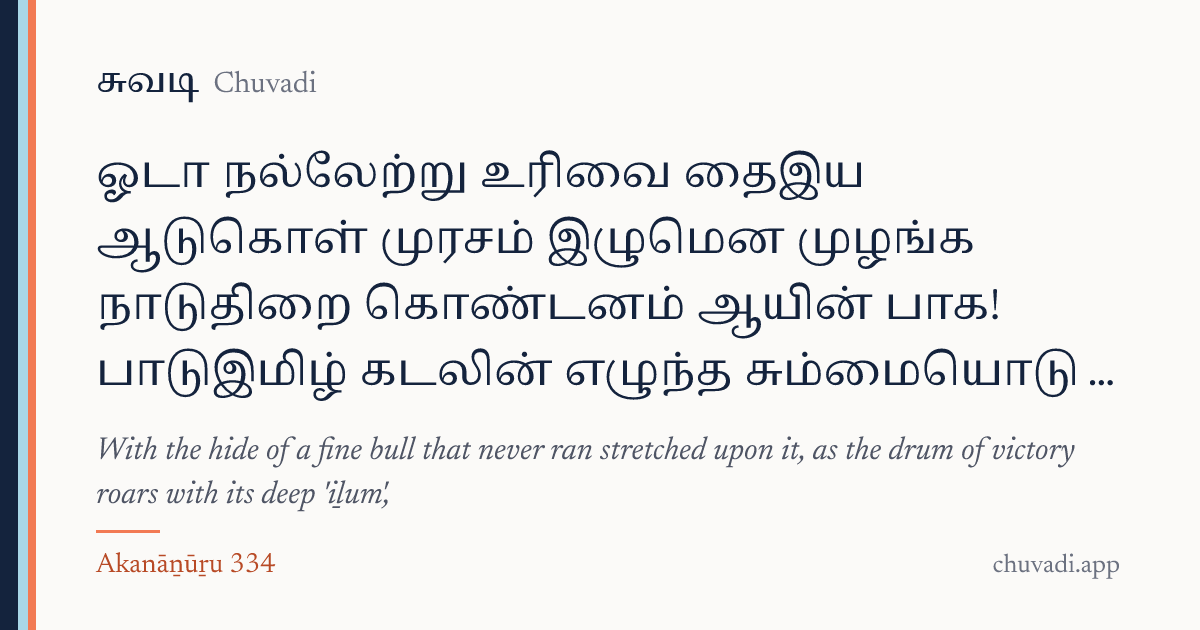
பாடல் · The poem
Tap a word to see where else it occurs.
பொருள் · Meaning in TamilAI
புறங்கொடுத்து ஓடாத நல்ல எருதின் தோலைப் போர்த்திய வெற்றி முரசு 'இழும்' என்று முழங்க, நாட்டின் திறைப்பொருளைப் பெற்றுவிட்டோம்; ஆதலால், பாகனே! ஒலிக்கும் கடலிலிருந்து எழுவது போன்ற ஆரவாரத்தோடு, பெரிய களிற்றின் கையைப் போல மழைக்கால்களை இறக்கி, கரிய பெண்யானைக் கூட்டம் போலக் கூடித் திரண்டு, வளைந்த கைகளையுடைய பெண்கள் விளையாடும் கழங்குக் காய்களைப் போன்ற ஆலங்கட்டிகளோடு விரைந்த துளிகளைச் சிதறி, வானம் மழை பெய்யத் தொடங்கிவிட்டது. வானத்தில் ஒளிரும் சிறகுடைய அன்னங்கள் வரிசையாகப் பறப்பதுபோல, சேர்ந்து பூட்டிய, ஓடப் பழகிய நான்கு குதிரைகள் இழுக்கும், கொடிஞ்சி உடைய நெடிய தேரின் வேகம் குறையாமல், மயில்கள் கூட்டமாக அகவும், மழை பெய்த அகன்ற காட்டு நிலத்தில், வலிய சக்கரம் ஈர நிலத்தைப் பிளந்து செல்லும்படி ஓட்டுவாயாக! பூப்போன்ற நிறமும் பொலிவும் போரிடுவது போன்ற மையுண்ட கண்களும், அடர்ந்த கூந்தலும், அழகிய சிறிய நெற்றியும் உடையவளை இங்கேயே காணும்படி விரைந்து செலுத்து!
முல்லைத் திணை. போர் முடித்துத் திரும்பும் தலைவன் தேர்ப்பாகனிடம் கூறுகிறான். கார்காலம் தொடங்கியது அவன் திரும்புவதாகச் சொன்ன காலம் வந்ததைக் காட்டுகிறது. மழைமேகம், ஆலங்கட்டி, அன்னவரிசை ஆகிய உவமைகள் அவனுடைய ஆவலையும் விரைவையும் காட்டுகின்றன.
ஆங்கிலம் · English translationAI
Translation
- With the hide of a fine bull that never ran stretched upon it,
- as the drum of victory roars with its deep 'iḻum',
- now that we have taken the country's tribute, charioteer!
- with a din like that rising from the loud-sounding sea,
- letting down legs of rain like the great trunk of a tusker,
- crowding together like a herd of dark cow-elephants,
- with hailstones like the kaḻaṅku pebbles that girls with curved arms play at,
- scattering swift drops,
- the sky has begun to rain; like, in the sky,
- the row-flight of swans with gleaming wings,
- the four horses yoked together, trained to run,
- let the tall chariot with its koṭiñci keep its fierce gallop,
- through the wide field taken by the rains, where peacocks call in flocks,
- its strong-rimmed wheel cutting the wet earth —
- drive on, so I may see right here the flower-hued,
- splendid, battling, kohl-lined eyes,
- the thick, abundant hair and the fine small brow!
What the poem says
A king's general or a chieftain, the hero, speaks to his charioteer at the end of a campaign. The tribute has been taken and the drum of victory, covered with the hide of a bull that 'never ran', is sounding. Now the rains have begun, the season when he promised to be home. He tells the driver to go fast.
The storm is described in a run of similes. The clouds crowd like a herd of cow-elephants and drop rain like an elephant's trunk. They roar like the sea. The hail is like the pebbles (kaḻaṅku) that girls toss in their game. The chariot, drawn by four horses running together, should move like a line of swans flying. Its wheels should cut the wet ground of the mullai fields where peacocks are calling.
The end shows what he is hurrying towards: her eyes, her thick hair and her small forehead. The verb 'see right here' (īṇṭē kāṇa) puts her before his eyes as if he had already arrived. This is a typical mullai poem: the returning husband, the rains, the hurry to get home.
The koṭiñci in line 12 is an ornamental part of the chariot, often thought to be a carved front rail or a post at the front. Its exact form is uncertain, so the word is kept untranslated.