




அகநானூறு 341
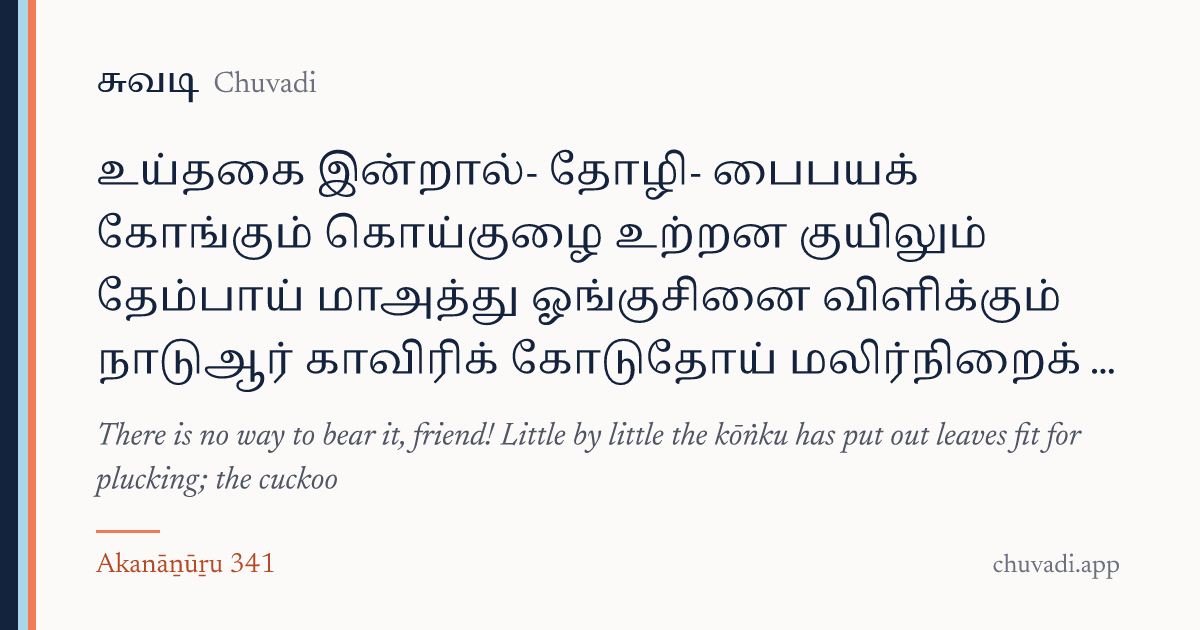
பாடல் · The poem
Tap a word to see where else it occurs.
பொருள் · Meaning in TamilAI
தோழி, இனி உயிர் பிழைக்க வழியில்லை! மெல்ல மெல்லக் கோங்கு மரம் கொய்யத்தக்க தளிர்களை ஈன்றுவிட்டது; தேன் சொட்டும் மாமரத்தின் உயர்ந்த கிளையில் குயில் கூவுகிறது. நாட்டை நிறைக்கும் காவிரியில், கரையைத் தொடும்படி பெருகிய வெள்ளம், மூங்கில் கோலையும் அடித்துச் சென்ற அந்தப் பெருக்கு, இப்போது வற்றிவிட்டது. அதன் பின்வந்த நாள்களில், மேகம் கடந்து போனதுபோல, கருநிறக் கால்களாகப் பிரிந்து கலந்து ஓடும் மணல் ஓடைகளில், புல்லை மேய்ந்த, அசையும் திமிலையுடைய நல்ல காளை, துள்ளும் இளம் பசுவோடு களைப்பு நீங்க நீர் பருகுகிறது. குட்டையான காஞ்சி மரத்தின் மாலைபோன்ற மென்மையான பூங்கொத்துகள் பொன்போன்ற நுண்ணிய மகரந்தத்தைச் சொரிய, அவை இரண்டும் சேர்ந்து குவிந்த நீண்ட மணல்மேட்டில் உறங்குகின்றன. இது உண்மையில் வளம் நிறைந்த இளவேனில் காலம்தான்; ஆனால் சிறந்த அழகை நுகரும் துணை உடையவர்களுக்கு மட்டுமே!
பாலைத் திணை. பிரிந்து சென்ற தலைவன் திரும்பாத இளவேனில் காலத்தில் தலைவி தோழியிடம் கூறுகிறாள். துணையோடு கூடி உறங்கும் காளையும் பசுவும், தனித்து வாடும் அவளுடைய நிலைக்கு எதிர்க்காட்சியாக நிற்கின்றன. 'மாக்கால்' என்பதன் சரியான பொருள் உறுதியாகத் தெரியவில்லை.
ஆங்கிலம் · English translationAI
Translation
- There is no way to bear it, friend! Little by little
- the kōṅku has put out leaves fit for plucking; the cuckoo
- calls from the high branch of the honey-dripping mango;
- the Kāviri that fills the land, its swelling flood brimming to the banks,
- the flood that swept away the bamboo poles, has shrunk; on the days after,
- like the clouds having passed, in the dark-footed, mingling streams of sand,
- having grazed the grass, the fine bull with quivering hump,
- with the frisky young cow, drinks its fill to rest;
- the short-stemmed kāñci, its garland-like soft clusters
- dripping fine gold-hued pollen, and gathered together
- they sleep on the heaped long sand of the dunes:
- this is the rich spring season, surely —
- for those who have a partner to enjoy their fine beauty!
What the poem says
The heroine speaks to her friend. Spring (vēṉil) has come, the season of plenty and of lovers, and her man is away. 'There is no way to bear it,' she begins, and the rest of the poem shows why. The whole world is pairing off and enjoying itself.
She sets out the signs of the season. The kōṅku is putting out fresh leaves, the cuckoo calls from the mango, and the Kāviri, which had flooded high enough to sweep away the boatmen's poles, has gone down and left clean streams over the sand. A bull and a young cow graze, drink and lie down together on the dunes under the kāñci trees, which drop golden pollen on them. It is a picture of contentment, and every part of it reminds her of what she lacks.
The last two lines turn it around. Yes, this is the rich spring, 'for those who have a partner to enjoy their beauty'. The bull and the cow resting together are the clearest example. The poem stands under pālai because of the separation, though its landscape is the river country of the Kāviri in spring. In line 6, mākkāl, 'dark-footed', is taken as the darker channels of the receding water; the exact sense is uncertain.