




அகநானூறு 343
பாடல் · The poem
Tap a word to see where else it occurs.
பொருள் · Meaning in TamilAI
வளையும் மூங்கிலைப் போன்ற திரண்ட மூட்டுகளையுடைய அகன்ற தோள்களும், சில தேமல்களும் பல அணிகலன்களும் அணிந்த மென்மையான மார்பகங்களும் உடைய அவளுடைய அழகிய மார்பைத் தழுவ விரும்புகிறாய். செல்லும் வழியில், மரம் ஏற்றிச் செல்லும் உமணர் மகனின் வண்டிச்சக்கரம் உரசி, தேய்ந்த உச்சி சிதைந்த வலிய நடுகல் நிற்கிறது; அதன் மாலை வாடிவிட்டது; அதன் பக்கங்கள் கழுவப்படவில்லை; கூரிய உளியால் செதுக்கிய அதன் எழுத்துகளின் வரிகள் மறைந்துவருகின்றன; வழிப்போக்கர் அதை வேறு பயனுக்குப் பயன்படுத்துகிறார்கள். கண்ணைச் சுடும் கவர்வழிகளுடைய அந்தக் காட்டில், அகன்ற நிலத்திலுள்ள யா மரத்தின் அழகிய தளிருடைய பெரிய கிளையின் வீடுபோன்ற நிழலில், கடந்துபோகும் வெயிலைத் தவிர்ப்பதற்காக, நீண்ட காதும் குட்டைக் காலும் உடைய ஆண்கழுதையின் முதுகில் நிறைந்த பண்டச்சுமையைப் பாரம் தாங்காமல் இறக்கிவைத்து, மீண்டும் சுமையை ஏற்ற இயலாதவர்களுக்குத் துயரில் துணையாக இருந்து, உயர்ந்த முயற்சியை மேற்கொண்டவனே! இப்போது திரும்பி நின்று அவளை நினைக்கிறாய், என் நெஞ்சே, வாழ்க! கள்ளின் மகிழ்ச்சியைப் போன்ற மகிழ்ச்சி தரும், செவ்வரியோடிய மயக்கும் குளிர்ந்த கண்களும், சில சொற்களால் பொலியும் பவளம்போன்ற வாயும், பல சிறப்புகளும் உடைய அந்தப் பேதைப் பெண்ணைப் பிரிந்து வந்தவன் நீயே!
பாலைத் திணை. பொருள் தேடச் சென்ற வழியில் தலைவியை நினைத்து வருந்தும் தன் நெஞ்சிடம் தலைவன் கூறுகிறான். கவனிப்பாரற்ற நடுகல் பாலை வழியின் வெறுமையைக் காட்டுகிறது. பதினான்காம் அடியின் பொருள் உறுதியாகத் தெரியவில்லை.
ஆங்கிலம் · English translationAI
Translation
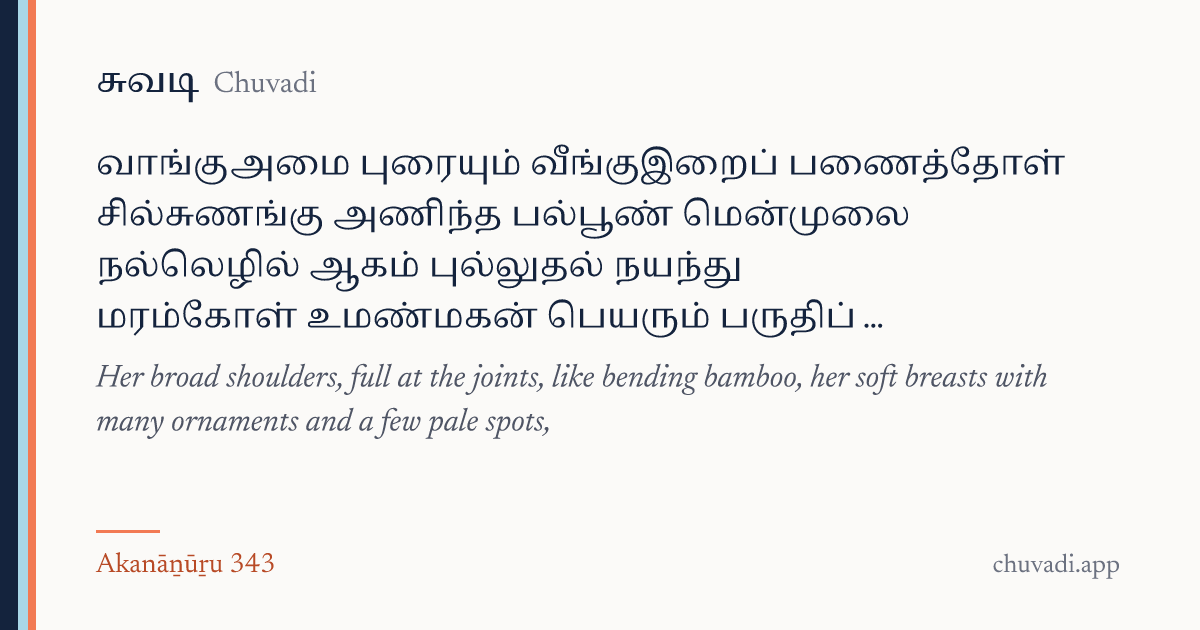
- Her broad shoulders, full at the joints, like bending bamboo,
- her soft breasts with many ornaments and a few pale spots,
- longing to embrace her finely lovely chest —
- where the turning wheel of the salt-merchant's son who carries timber
- has chipped the worn top of the hard-headed hero-stone,
- its garland withered, its sides unwashed,
- its letters cut by the sharp chisel, their lines fading, which
- travellers on the road put to other uses,
- in that forest of eye-scorching forking paths,
- on the broad branch, with lovely shoots, of the yā in the wide land,
- in shade like a house, to escape the passing sun,
- the long-eared, short-legged male donkey
- has had the load of goods on its back taken off for the weight,
- and to those who could not take up their packs again, you became a companion in distress,
- you who set yourself to a lofty task: now, turning back,
- you think of her — may you live, my heart! — like the joy of toddy,
- joyful, her streaked, intoxicating, rain-dark eyes,
- her coral mouth bright with few words,
- the innocent girl of many excellences — you who left her!
What the poem says
The hero speaks to his heart on the journey. It drove him to leave the girl for 'a lofty task', earning wealth. Now, in the middle of the wasteland, it has turned back and keeps thinking of her and longing to hold her. The poem begins and ends with her: her shoulders and breasts at the start, her eyes, few words and red mouth at the end. The desert lies in between.
The wasteland is pictured through a hero-stone (naṭukal), set up in memory of a man who fell, perhaps defending cattle or travellers. It is neglected now. A cart wheel has chipped its top, its garland has dried, it has not been washed, and its carved letters are wearing away. Travellers put it to 'other uses'; the poem does not say which. Under a yā tree, merchants have unloaded their donkeys and cannot go on, and the heart, he says, kept company with such weary men.
The detail of the inscription is worth noticing: the stone carries letters cut with a chisel. The poem says only that, and nothing about what they record. Line 14 is difficult. Peyarpaṭai koḷḷār is taken as 'those who could not take up their loads again', and the 'companion in distress' as the hero's heart among them, but other readings are possible.