




அகநானூறு 349
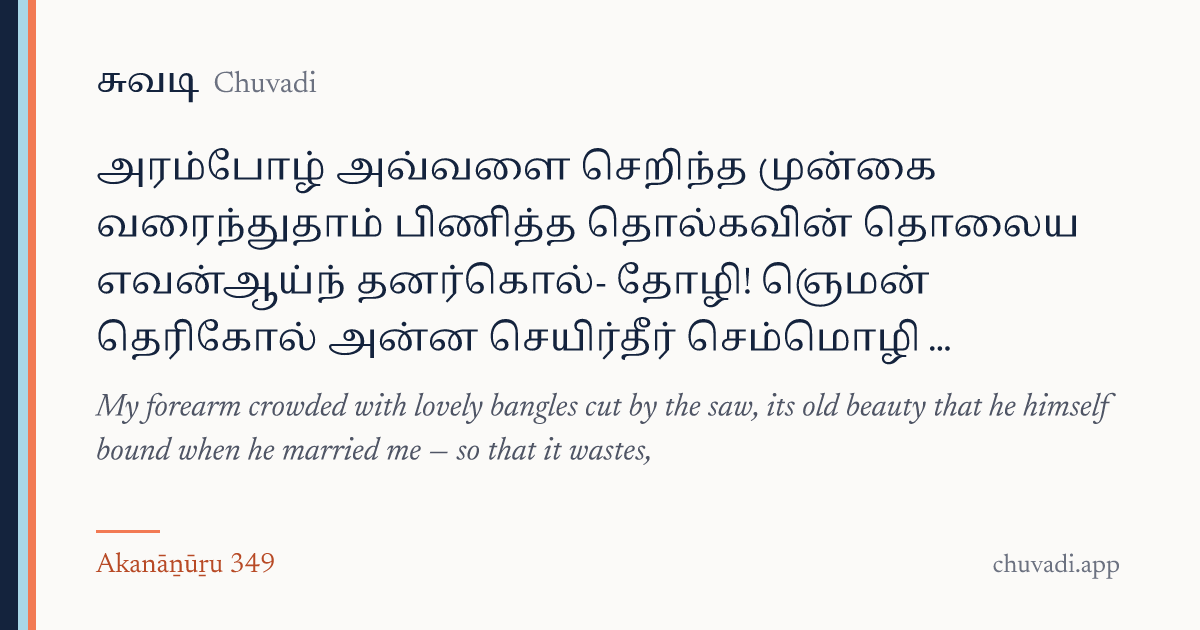
பாடல் · The poem
Tap a word to see where else it occurs.
பொருள் · Meaning in TamilAI
அரத்தால் அறுத்துச் செய்த அழகிய வளையல்கள் நெருங்கிய என் முன்கையை, மணம்செய்து தாமே பிணித்த அந்தப் பழைய அழகு அழியும்படி விட்டுச் செல்ல, அவர் எதை ஆராய்ந்து முடிவு செய்தாரோ, தோழி! துலாக்கோலின் தெரிகோலைப் போலக் குற்றமற்ற நேர்மையான சொல்லை உடையவன் நன்னன்; வறுமையால் வாடும் சுற்றத்தோடு பாணர்கள் சென்றால், வலிமை மிக்க உள்ளத்தோடு பகைவரின் எல்லை பாழாகும்படி அணுகமுடியாத அரண்களை அழித்துப் பெற்ற பெருஞ்செல்வத்தை யோசிக்காமல் வாரி வழங்குபவன். அவனுடைய நல்ல நாட்டில் உள்ள ஏழில் குன்றத்தின் சரிவு ஒளிபெறும்படி, அழகிய அடியோடு உயர்ந்து நிற்கும் கரிய அடியுடைய வேங்கையின், தீப்போன்ற பூக்களைக் கவளமாக உண்ட களிறு, களைத்த தன் பெரிய கையைத் தன் வரியுடைய நெற்றிமேல் வைத்திருக்கிறது; அது பாறைமேல் ஏறும் பாம்பைப் போலத் தோன்றுகிறது. அதற்கும் அப்பால், மொழி மாறும் நாட்டின் பாலைவழியைக் கடந்து சென்றுவிட்டாரே!
பாலைத் திணை. பொருள் தேடி வேற்றுநாட்டுக்குச் சென்ற தலைவனைப் பற்றித் தலைவி தோழியிடம் கூறுகிறாள். 'சொல்பெயர் தேஎம்' என்பது தமிழ் அல்லாத வேறு மொழி பேசும் நாடு. செல்வத்தை வாரி வழங்கும் நன்னனின் புகழ், பொருளுக்காகப் பிரிந்த தலைவனோடு மறைமுகமான ஒப்பாக அமையலாம்.
ஆங்கிலம் · English translationAI
Translation
- My forearm crowded with lovely bangles cut by the saw,
- its old beauty that he himself bound when he married me — so that it wastes,
- what was he weighing, I wonder? — friend! Like the balance's
- assaying rod, his upright speech is free of fault;
- when bards with their worn-out families go to him,
- with a heart full of strength, so that the frontier lies waste,
- he storms hard strongholds, and the great treasure of riches
- he pours out without a second thought: in Naṉṉaṉ's good land,
- on the slope of the hill of Ēḻil, so that it glows,
- the dark-stemmed vēṅkai standing tall on its fine trunk —
- having eaten mouthfuls of its flowers like flame, the tusker
- lays its weary great trunk across its streaked brow,
- and it looks like a snake climbing the rock:
- he has crossed the wasteland of the land where speech changes!
What the poem says
The heroine speaks to her friend. Her husband has gone abroad. She asks what he could have been weighing up when he chose to leave and let her wrists grow thin. These are the wrists he 'himself bound' when he married her, a reference to the bangles or the wedding thread put on at marriage.
The middle of the poem praises Naṉṉaṉ. His word is as exact as the rod of a balance, he storms enemy forts, and he gives away the treasure he wins to poor bards and their families 'without a second thought'. In his land is the hill of Ēḻil, where an elephant eats the flame-red flowers of a vēṅkai and then rests its tired trunk over its forehead, so that the trunk looks like a snake climbing a rock. The poem says this much about Naṉṉaṉ and nothing more should be added.
The last line gives the measure of the distance. He has crossed into 'the land where speech changes' (col peyar tēyam), beyond the Tamil country, where another language is spoken. The praise of a generous king may carry an unspoken contrast: Naṉṉaṉ gives his wealth away freely, while her husband has left her to go after wealth. The reading of lines 3–4 as describing Naṉṉaṉ's speech, not the bards', is the more natural one, though the syntax allows both.