



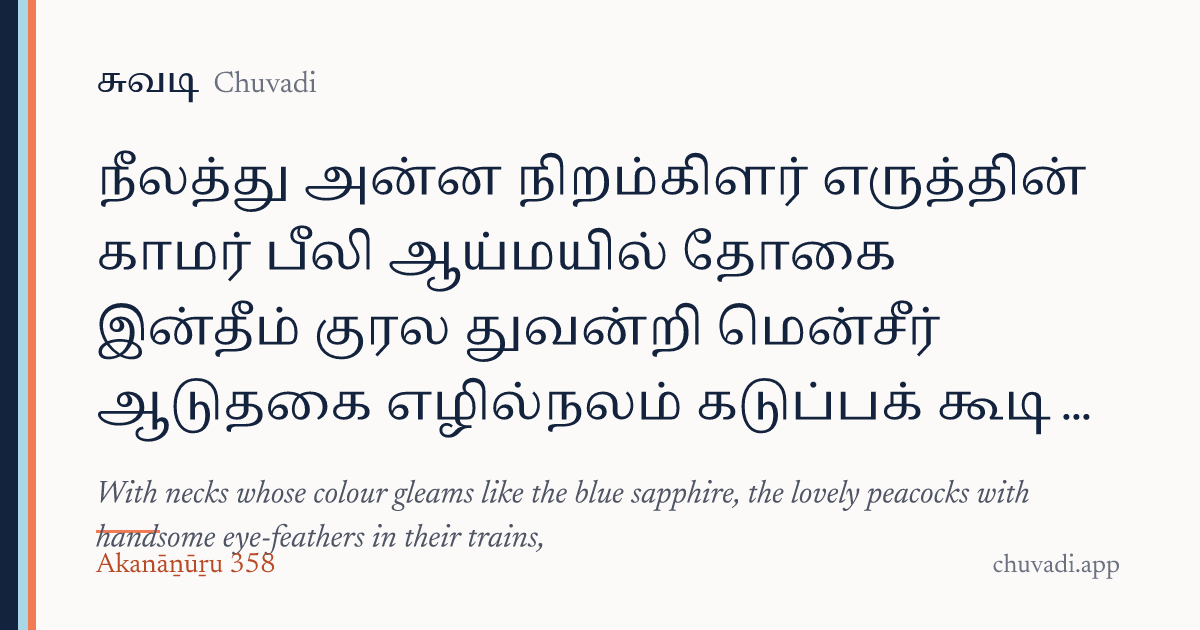

அகநானூறு 358
பாடல் · The poem
Tap a word to see where else it occurs.
பொருள் · Meaning in TamilAI
நீலமணியைப் போல ஒளிரும் நிறமுடைய கழுத்தும், அழகிய கண்கள் கொண்ட தோகையும் உடைய மயில்கள், இனிய குரலோடு நெருங்கிக் கூடி, மென்மையான தாளத்தோடு ஆடும் அழகைப் போல, உன் தோழியர் கூடுகிறார்கள். ஆனால், கண்ணைப் போன்ற இதழ்களையுடைய குளிர்ந்த நறுமணக் குவளை மலர்களைச் சிறுதொடராகக் கட்டிய நறுமணமுள்ள அடர்ந்த கூந்தலோடு, நீர் நிறைந்த நெடிய சுனையில் நீ ஆயத்தோடு ஆடவில்லை. சோர்ந்த மனத்தவளாகித் தனிமை கொண்டிருக்கிறாய். இவ்வாறு மாறிய உன் நிறத்தைப் பார்த்து அன்னை கேட்டால், ஐயோ, நான் என்ன சொல்வேன்? நெருங்கிய பெரிய மலையிலிருந்து இறங்கும் நீண்ட வெள்ளை அருவி, முகபடாம் அணிந்த யானையின் உயர்ந்த முதுகில் ஏற்றிய அசையும் கொடியைப் போலத் தோன்றும், உயர்ந்த சிகரங்களையுடைய மலைநாட்டுத் தலைவன் உண்டாக்கிய இந்த நோயை என்னவென்று சொல்வேன்?
குறிஞ்சித் திணை. களவுக் காதலால் மெலிந்த தலைவியிடம் தோழி கூறுகிறாள். அன்னை கேட்டால் உண்மையைச் சொல்ல முடியாது என்ற தோழியின் கவலை, களவு வெளிப்படும் அச்சத்தையும், மணம் விரைவில் நடக்கவேண்டும் என்ற குறிப்பையும் காட்டுகிறது. தொலைவிலும் தெரியும் அருவி, மறைக்க முடியாமல் வெளிப்படும் காதலைக் குறிப்பதாகவும் கொள்ளலாம்.
ஆங்கிலம் · English translationAI
Translation
- With necks whose colour gleams like the blue sapphire,
- the lovely peacocks with handsome eye-feathers in their trains,
- with sweet, sweet voices, crowding together, in soft measure —
- like their dancing grace and beauty, your companions gather;
- but with the cool, fragrant kuvaḷai whose petals rival eyes
- fastened in short strings in your fragrant, thick hair,
- in the long spring of deep water you do not play with them;
- you have become weary in mind, and lonely;
- seeing your colour that has turned like this,
- if mother asks me, alas,
- what shall I say? — the crowding
- great mountain down which the long white waterfall comes,
- like the swaying banner raised high on the back
- of an elephant with a forehead plate, appears:
- the high-peaked hill-man — the sickness he has caused?
What the poem says
The heroine's friend speaks to her. The other girls gather to bathe and play at the mountain spring, as graceful as dancing peacocks, but the heroine stays apart, sad and alone, and her colour has changed. The friend is worried. If the girl's mother notices and asks what is wrong, what can she say? She can hardly tell her the truth: that the illness was caused by the man from the hills.
The friend's question is a familiar move in kuṟiñci. It shows the danger that the secret love will be discovered, and it may also prompt the heroine, or the hero if he is within hearing, to think of marriage. The mother's question could lead to a veṟiyāṭal, the rite in which a diviner decides that a god has possessed the girl, and a love that cannot be spoken of would then be misread.
The closing image describes the hero's mountain. A long white waterfall comes down a great rock like a banner fluttering on the back of a war-elephant with a forehead plate. The waterfall appears and is seen from far away, much as the girl's secret is beginning to show. The poem says only that the hero 'caused' (uṟīiya) the sickness, which is love-sickness in the usual sense.