



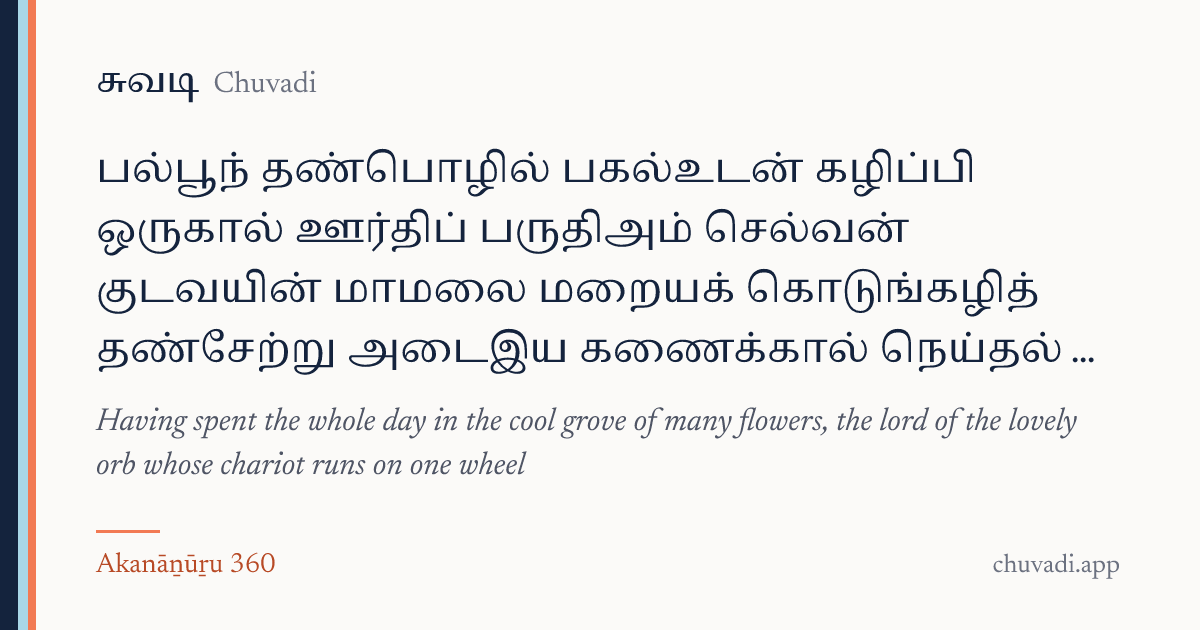

அகநானூறு 360
பாடல் · The poem
Tap a word to see where else it occurs.
பொருள் · Meaning in TamilAI
பல பூக்கள் நிறைந்த குளிர்ந்த சோலையில் பகல் முழுவதும் கழித்து, ஒற்றைச் சக்கரத் தேருடைய அழகிய வட்ட வடிவக் கதிரவன், மேற்கிலுள்ள பெரிய மலைக்குப் பின் மறைகிறான். வளைந்த கழியின் குளிர்ந்த சேற்றில் வேரூன்றிய திரண்ட தண்டுடைய நெய்தல் மலரின் நுண்ணிய மகரந்தத்தை உண்ட வண்டுக்கூட்டங்கள் அதை விட்டு நீங்குகின்றன. அஞ்சத்தக்க கடும் வலிமையுடைய இரண்டு பெருந்தெய்வங்கள் ஓர் உருவில் இணைந்து தோன்றும் தோற்றம் போல, மாலை வானத்தோடு கடல் அழகு கொள்கிறது. இவ்வாறு வந்த மாலையில் நீ பிரிந்து சென்றால், இவள் பெரிதும் தனிமைத் துயர் அடைவாள். ஆதலால், தாளம் தவறாத, நன்கு பழக்கிய, செருக்குடைய குதிரை, ஊர் உறங்கும் நள்ளிரவில் கனைக்காமல் காத்து, நெடிய தேரைத் தொலைவில் நிறுத்திவிட்டு, மலையிலிருந்து இறங்கும் களிற்றைப் போல மெல்லக் குவிந்த மணல்மேடுகளைக் கடந்து, இரவில் வருவாயாக, வலிய கடல்நீருடைய கடற்கரைத் தலைவனே! மீன்கூட்டத்தை உண்ணும் நாரையோடு பனைமரத்தின் மேல் அன்றில் பறவை தங்கும், முற்றத்தில் பொன் உதிர்ந்தது போல நல்ல நறுமண மலர்கள் பரந்து கிடக்கும், மணம் கமழும் புன்னைச் சோலையில் நாம் அமைத்த குறியிடத்துக்கு வா!
நெய்தல் திணை. மாலையில் பிரிந்து செல்லும் தலைவனைத் தோழி இரவுக்குறிக்கு வரும்படி அழைக்கிறாள். குதிரை கனைக்காமலும் தேரைத் தொலைவில் நிறுத்தியும் வரச் சொல்வது களவு வெளிப்படும் அச்சத்தைக் காட்டுகிறது. 'இருபெருந் தெய்வம்' யார் என்று பாடல் பெயர் சொல்லவில்லை; செவ்வானமும் கருங்கடலும் இணைந்த காட்சிக்கு உவமையாக வருகிறது.
ஆங்கிலம் · English translationAI
Translation
- Having spent the whole day in the cool grove of many flowers,
- the lord of the lovely orb whose chariot runs on one wheel
- hides behind the great western mountain; in the curving backwater,
- set in the cool mud, the stout-stemmed neytal's
- fine pollen the bees have drunk, and now they leave it;
- like the form in which two great gods of fearsome, fierce power
- are joined together in one appearance,
- the sea, with the evening sky, puts on its beauty;
- now that evening has come, if you go, then she
- will be utterly desolate, surely; and therefore,
- your fine-trained, spirited horse that never misses the beat,
- at midnight when the town sleeps, keep it from neighing,
- leave the tall chariot far off, and softly,
- like a tusker coming down a hill, crossing the heaped sand,
- come in the night — lord of the shore of mighty waters! —
- where, with the heron that feeds on shoals of fish, on the palmyra
- the aṉṟil roosts, in the yard where, as if with gold,
- fine fragrant flowers lie strewn:
- to our trysting place, made in the fragrant punnai grove!
What the poem says
The heroine's friend speaks to the hero at sunset. The sun, described as a god in a one-wheeled chariot, sinks behind the western mountain. The bees leave the closing neytal flowers, and the red evening sky meets the dark sea. If he leaves now, the friend says, the heroine will be desolate. So he should come back at night, secretly and carefully, to their usual meeting place in the punnai grove.
Her instructions are practical. Stop the horse from neighing in the sleeping town. Leave the chariot well away. Cross the sand dunes softly, like an elephant coming down a hill. These details show the risks of a secret love on the shore, where the night meeting must not be found out.
The image of the evening in lines 6–8 compares the sea under the sunset sky to 'the joined form of two great gods of fearsome power'. The poem does not name the gods. The picture seems to be of one red god and one dark god sharing a single form, matching the red sky over the dark sea. The trysting place is lovingly described: a heron and an aṉṟil bird roost on a palmyra, and fallen punnai flowers lie 'like gold' on the ground. The aṉṟil is the bird said never to leave its mate, and it fits a poem about bringing lovers together. Line 9 is taken as 'if you leave in this evening', though peyariṉ could also mean 'when evening passes'.