



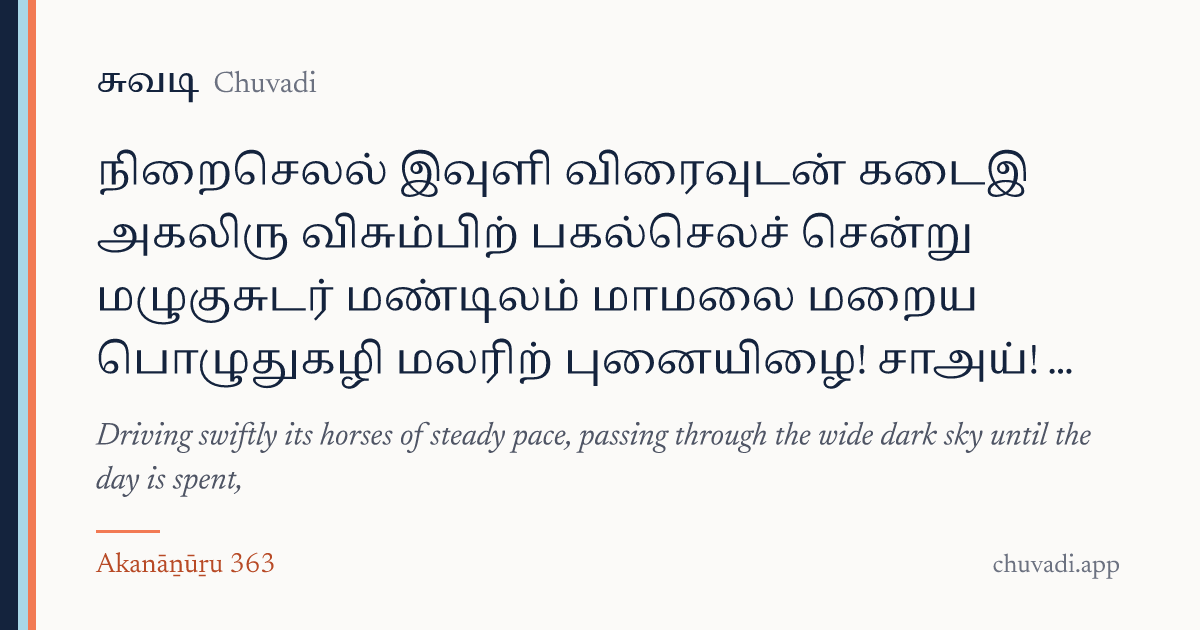

அகநானூறு 363
பாடல் · The poem
Tap a word to see where else it occurs.
பொருள் · Meaning in TamilAI
நிலையான நடை கொண்ட குதிரைகளை விரைவாகச் செலுத்தி, அகன்ற கரிய வானில் பகல் முடியும் வரை சென்று, ஒளி மங்கிய கதிரவன் பெரிய மலைக்குப் பின்னே மறைகிறான். அழகிய அணிகலன்களை உடையவளே! நேரம் கடந்த மலரைப் போல வாடி, படுக்கையைத் தழுவிக் கொண்டு வருந்தாதே. சிறிய இலைகளை உடைய நெல்லி மரத்தின் குற்றமற்ற பசுங்காய்களைக் கடுங்காற்று உதிர்க்க, அவை கல் நிறைந்த வழியின் ஓரத்தில் பொன்னால் செய்த காசுகளைப் போல அழகாகச் சிதறிக் கிடக்கின்றன. வழியின் அருகே பாதையைப் பார்த்துக் காத்திருந்த, கொலையையே கொள்கையாகக் கொண்ட கொடிய மறவர்கள் வழிச்செல்வோரின் உயிர்நிலைகளில் குத்தினர். வேலால் பெரும் புண்பட்டு வருந்துவோரை அடைந்த, வளைந்த அலகும் கூரிய நகமும் உடைய ஆண் பருந்து, தன் கூட்டத்தைத் தெளிந்த குரலால் அழைத்து அந்த ஊனுக்குக் கூவுகிறது. அத்தகைய கொடிய வெப்பமான பாலைநிலத்தைக் கடந்து சென்றவர், தாம் எண்ணிய செயலில் வெற்றி பெற்று, இவ்விடத்தை விரும்பி, அருகே வந்துவிட்டார், தோழி! இனி உன் மைதீட்டிய, இணையான, புதுமலர் போன்ற கண்கள் மான்பிணையின் பார்வையோடு மீண்டும் பேரழகு பெறும்.
இது பாலைத்திணைப் பாடல்; மாலைப்பொழுதில் வருந்தும் தலைவியிடம், தலைவன் வினை முடித்து வந்துவிட்டான் என்று தோழி கூறுகிறாள். அவன் கடந்த வழியின் கொடுமை, அவன் வருகையின் அருமையைக் காட்டுகிறது. பொற்காசு போலச் சிதறிய நெல்லிக்காயும், பிணம் தின்ன அழைக்கும் பருந்தும் அருகருகே வைக்கப்பட்டுள்ளன; வருகையால் தலைவியின் கண்கள் அழகு மீளும் என்பது அகமரபு.
ஆங்கிலம் · English translationAI
Translation
- Driving swiftly its horses of steady pace,
- passing through the wide dark sky until the day is spent,
- the orb with dimming rays sinks behind the great mountain;
- like a flower whose hour is past, O you of fine jewels, wasting away,
- do not lie clinging to your bed and grieve. Where the straight-trunked
- nelli with sparse leaves lets its spotless green fruit
- be shaken down by fierce wind beside the stony track,
- to lie scattered, lovely as coins wrought of gold;
- where, close to the path, keeping watch on the road, sat
- cruel-handed warriors whose creed is fierce killing,
- who struck the men going that way in their vital parts;
- and, reaching those who lie suffering deep wounds from the blade,
- the male kite with curved beak and sharp talons
- calls its kin with clear cries to the rich carrion —
- he who crossed that cruel, hot wasteland, in the work he set out to do
- has come out victorious, and, longing for this place,
- he has come close! — friend! — so that your dark-lovely,
- paired, fresh-flower-like, kohl-lined eyes
- with their doe-like gaze may take on great beauty again.
What the poem says
The friend speaks to the heroine at sunset, the hour when a woman separated from her lover feels his absence most. She begins with a picture of the sun driving its horses across the sky and sinking behind the mountain, and tells the heroine, wasting like a flower past its time, not to lie grieving on her bed. Then she gives the news: he has finished what he went to do, and has come near.
Most of the poem describes the road he travelled, in the usual pālai way, to show how much he has endured and so how much his return is worth. Green nelli fruit, shaken down by the wind, lies on the stony track like gold coins; robbers wait by the path and stab travellers; a kite calls its flock with clear cries to feed on the wounded and dead. The beauty of the scattered fruit sits beside the horror of the carrion, and that contrast is typical of the wasteland poems.
The ending ties his return to her body: her paired eyes, like fresh flowers, with the gaze of a doe, will regain their great beauty. In akam convention a woman's eyes, shoulders and brow lose their beauty in separation and come back with union.
The opening line about the sun's horses describes the sun as a charioteer, an image found in other Sangam poems. 'Kaṇai-arai' in line 5 is read here as 'arrow-straight trunk'; it may simply mean 'thick-trunked'. This edition names no poet.