




அகநானூறு 368
பாடல் · The poem
Tap a word to see where else it occurs.
பொருள் · Meaning in TamilAI
தோல்செருப்பு அணிந்த கானவன் சுட்டு எரித்த அகன்ற புனத்தில், பெருமழையின் ஈரம் கரியைக் கழுவிவிட, உழுத நிலத்தில் வளர்ந்த பசுந்தினையின் நீண்ட கதிர்களைக் காக்கும் ஒளிவீசும் வளையணிந்த சிறுமியர்க்கு ஊஞ்சலாக ஓர் அசையும் கிளையை விட்டுவைத்து, கிளைகளில் கொத்துகள் நிறைந்து, சிறு குன்றின் அருகே நிற்கும் நீண்ட அடியுடைய வேங்கை, இளமயிலின் கொண்டை போலத் தோன்றும் நாட்டை உடையவன் அவன். உயர்ந்த மலைச்சரிவில் காந்தள் சோலையில், குரங்குகளும் அறியாத மரம் நெருங்கிய புதரில், காவலுள்ள சுனையின் நீலமணி போலத் தெளிந்த இனிய நீரில், பிடியோடு கூடிய களிறு போல என்னோடு பல நாள் விளையாடி, பின் அப்பால் சென்றுவிட்டான். சில நாட்கள் கழியும் முன்னே, மூங்கிலில் முதிர்ந்த தேன் போன்ற கள்ளை உண்டு, வண்டு மொய்க்கும் மாலை அணிந்தோர் மகிழும் இச்சிற்றூரில், தோழி, நீ வாழ்க! கொங்கர் இடுப்பில் மணி கட்டித் தெருக்களில் ஆடும் உள்ளி விழாவைப் போல, இது பலர் வாயிலும் பட்டு அலராக ஏன் பெருகிவிட்டது?
இது குறிஞ்சித்திணை; களவுக்காதல் ஊரில் அலராகப் பரவியதைத் தலைவி தோழியிடம் கூறுகிறாள். அலர் பெருகுவது தலைவனை மணத்துக்குத் தூண்டும் என்பதால், இது அவன் கேட்கக் கூறியதாகவும் இருக்கலாம். ஆரவாரமான உள்ளி விழா, எங்கும் பரவிய அலரின் உவமை; அவ்விழாவைப் பற்றிப் பாடல் சொல்வதற்கு மேல் இங்கே எதுவும் சேர்க்கப்படவில்லை.
ஆங்கிலம் · English translationAI
Translation
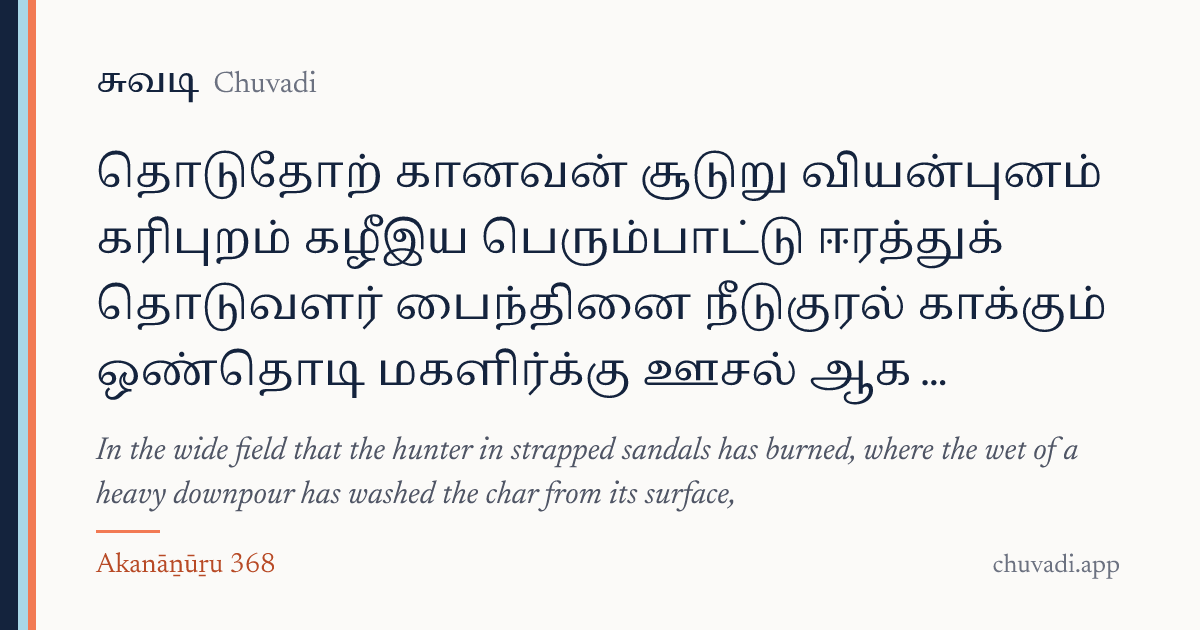
- In the wide field that the hunter in strapped sandals has burned,
- where the wet of a heavy downpour has washed the char from its surface,
- those who guard the long ears of green millet grown in the tilled soil,
- girls with bright bangles — to serve them as a swing
- it has spared a swaying bough; crowded with clusters on its branches,
- the tall-trunked vēṅkai beside the low hill
- looks like the crest of a young peacock: the man of that land,
- in a grove of kāntaḷ on the side of the high mountain,
- in a thicket dense with trees that even monkeys do not know,
- in the sweet water, clear as sapphire, of a guarded pool,
- played with me, like a bull elephant joined with its mate,
- for many days, then went away beyond; and before a few days
- had passed, growing on and on,
- while honey-sweet liquor ripened in lovely bamboo
- delights those with bee-thronged garlands in this small town —
- why is it — long may you live, friend! — that, like the Koṅkar's
- festival where, bells tied at the waist, they dance in the streets,
- the Uḷḷi festival,
- it has become gossip, falling into many mouths?
What the poem says
The heroine speaks to her friend about the rumour (alar) that has spread through the village about her secret love. Her lover, a man of the hills, used to meet her in a hidden pool deep in the forest and play with her in the water 'like a bull elephant with its mate'. He then went away, and within a few days the talk about them grew and grew.
The opening describes his country. On a slope burned for millet and washed by rain, girls guard the crop, and a tall vēṅkai beside a hillock has left one swinging branch for them as a swing; its flower-laden crown looks like the crest of a young peacock. The secret meeting place is a kāntaḷ grove on the high mountain, so thick with trees that even monkeys do not find their way in, with a pool of water clear as a sapphire.
The rumour is compared to the Uḷḷi festival of the Koṅkar, in which people tie bells at their waists and dance in the streets: loud, public, and everywhere at once. The poem gives no more about this festival than these lines.
In kuṟiñci convention, gossip is dangerous but can also push the lover toward marriage, so her complaint may be meant for him to overhear. 'Kaṭi cuṉai' in line 10 can mean either a 'guarded' or a 'fragrant' pool. This edition names no poet.